Cordillera Neo-Volcánica
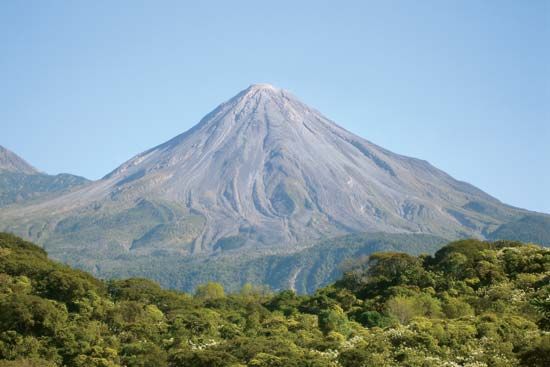
The Cordillera Neo-Volcánica is a relatively young mountain range composed of active and dormant volcanoes that stretches across central Mexico, from Cape…
What is Cordillera Neo-Volcánica?
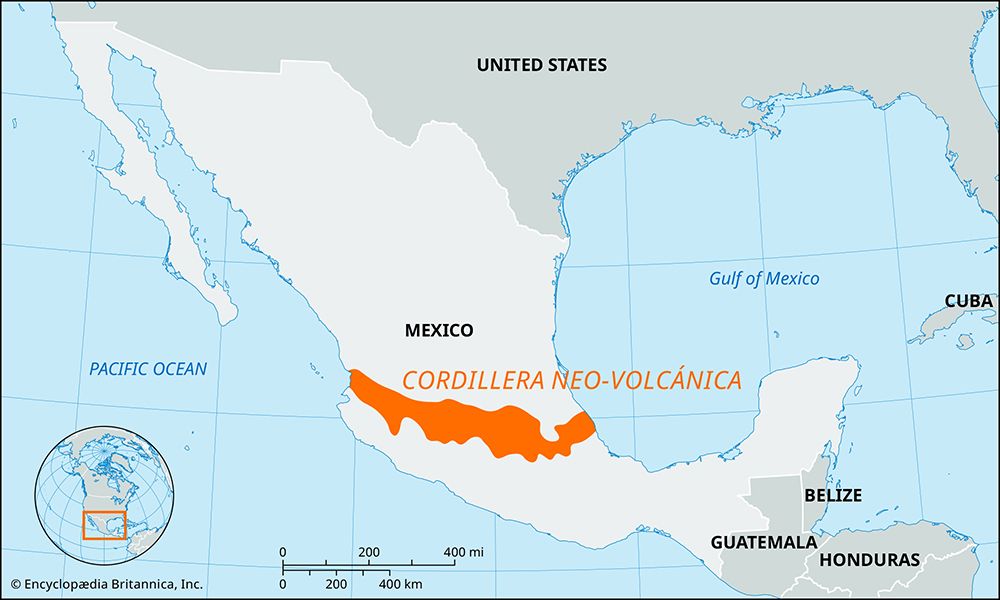
The Cordillera Neo-Volcánica is a relatively young mountain range composed of active and dormant volcanoes that stretches across central Mexico, from Cape Corrientes on the west coast to Jalapa and Veracruz on the east coast.1
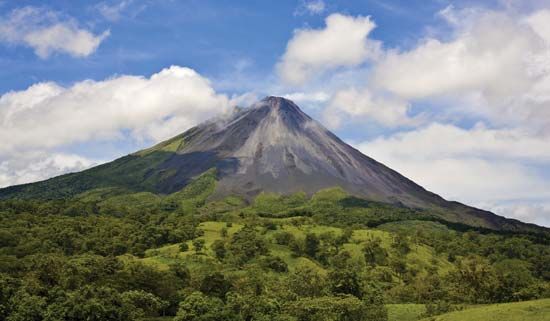
Serving as the southern boundary of the Mesa Central, the range features several prominent volcanic peaks, including Pico de Orizaba, Popocatépetl, Iztaccíhuatl, and Colima. Its formation is linked to a significant volcanic episode that began in the Pliocene Epoch and continues to the present day.12
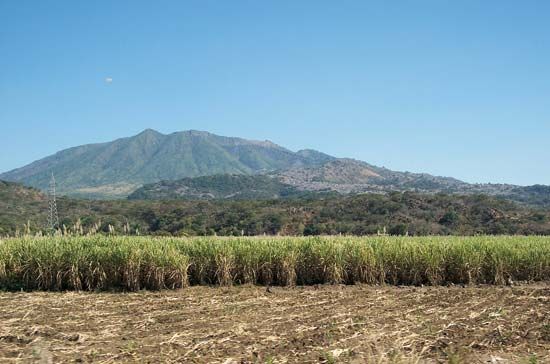
The region is economically significant, as its temperate climate and fertile volcanic soil support large populations and commercial agriculture. Additionally, the range is mined extensively for minerals such as silver, lead, zinc, copper, and tin.1
How do volcanic soils benefit agriculture in Mexico?
Volcanic soils in Mexico, particularly those found in the Mesa Central, are considered the richest in the country. These chernozem-like soils are deep, easily crumbled, and highly fertile due to their abundance of base minerals.3
The agricultural benefits of these soils stem from the long-term decomposition of nutrient-rich volcanic fallout, which creates some of the most productive land globally. Because of these favorable properties, these dark soils have been cultivated continuously for many centuries.43
However, it is important to note that these lands are not immune to degradation. Overuse has led to significant sheet erosion in some areas, which exposes tepetate—a hardened lime layer that can hinder further cultivation. While volcanic deposits provide the foundation for highly productive agriculture, sustainable land management is essential to prevent the loss of these valuable resources.3
What is the difference between an active and a dormant volcano?
The distinction between active and dormant volcanoes is primarily based on their history of eruptions and current level of activity.
- Active Volcanoes: These are volcanoes that have erupted in recent history and are expected to erupt again. Scientists monitor them closely using tools like seismographs, tiltmeters, and gas detectors to track magma movement and predict potential outbursts.1
- Dormant Volcanoes: These are volcanoes that are currently quiet but have the potential to erupt in the future. A volcano may be classified as dormant if it has not erupted for a significant period—such as Mount Fuji, which has been dormant since 1707—yet still shows signs of internal activity or is considered capable of future eruptions.6
While these classifications help in assessing risk, all volcanoes are part of dynamic geological systems. Volcanology continues to study these structures to better understand the Earth’s crust and provide early warnings for populations living near these sites.1
How does the Mexican Plateau relate to the surrounding mountain ranges?
The Mexican Plateau serves as the central core of Mexico’s physiography, defined and enclosed by the surrounding Sierra Madre mountain system. Its relationship with these ranges is characterized by both structural integration and distinct geological boundaries:2
- Western and Eastern Flanks: The plateau is flanked to the west by the Sierra Madre Occidental and to the east by the Sierra Madre Oriental. These ranges act as the plateau’s primary borders, with the Sierra Madre Oriental often considered a southern extension of the Rocky Mountains Oriental often considered a southern extension of the Rocky Mountains.92
- Southern Boundary: The southern edge of the plateau is marked by the Cordillera Neo-Volcánica. This geologically active range links the Sierra Madre Occidental and the Sierra Madre Oriental, effectively closing the plateau at its southern end.910
- Geological Origins: The uplift, folding, and faulting of the plateau occurred contemporaneously with the formation of the Rocky Mountains. While the plateau itself is a large, uplifted block, its margins have been dissected into the rugged terrain of the surrounding sierras.9
Sources
- Cordillera Neo-Volcánica — Encyclopædia Britannica
- Sierra Madre - Geology — Encyclopædia Britannica
- Mexico - Soils — Encyclopædia Britannica
- El Salvador - Soils — Encyclopædia Britannica
- volcano - Ash falls — Encyclopædia Britannica
- volcano - Six types of eruptions — Encyclopædia Britannica
- geology - Volcanology — Encyclopædia Britannica
- Mount Fuji: Top Questions — Encyclopædia Britannica
- Mexico - Physiographic regions — Encyclopædia Britannica
- Sierra Madre - Physiography of the Sierra Madre — Encyclopædia Britannica
- Sierra Madre — Encyclopædia Britannica
- plateau — Encyclopædia Britannica
Published on · 3 min read