Cordillera Negra
The Cordillera Negra is a mountain range of the Andes Mountains located in west-central Peru. Extending approximately 110 miles (180 km) southeast from the…
What is Cordillera Negra?
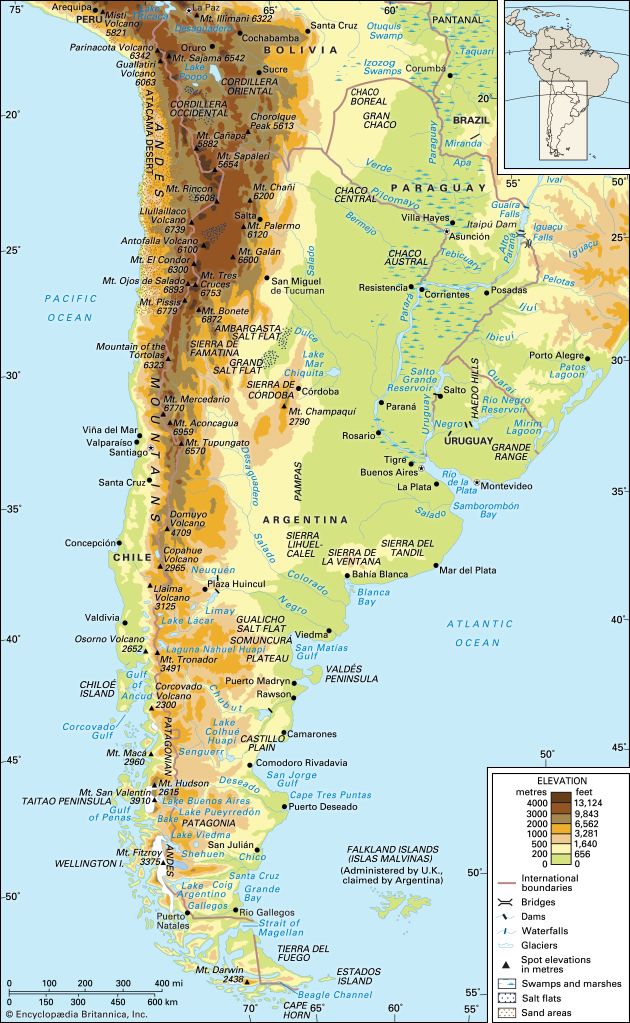
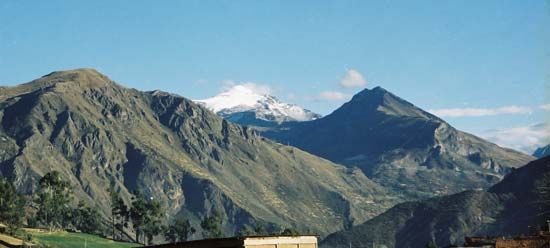
The Cordillera Negra is a mountain range of the Andes Mountains located in west-central Peru. Extending approximately 110 miles (180 km) southeast from the mouth of the Santa River, the range reaches a maximum elevation of 14,764 feet (4,430 meters).1
The range is separated from the Cordillera Blanca—a range characterized by permanently snowcapped peaks—by the upper Santa River Valley, also known as the Callejón de Huaylasón de Huaylas](https://www.britannica.com/place/Huaylas-Valley). The name “Cordillera Negra,” which translates to “Black Range,” refers to the fact that these mountains are not covered in snow, distinguishing them from their snow-covered neighbors to the east.12
What is the significance of the Callejón de Huaylas valley?
The Callejón de Huaylas, a valley formed by the upper Santa River in west-central Peru, is a region of significant geographical and economic importance. Situated between the snowless Cordillera Negra and the snowcapped Cordillera Blanca, the valley serves as a densely populated agricultural hub.314
Economic and Cultural Significance
- Agriculture: The valley supports subsistence farming, with crops such as potatoes and barley grown at higher elevations, and corn and alfalfa at lower altitudes.3
- Mining: The region is rich in mineral resources, including silver, lead, copper, cinnabar, and coal.35
- Tourism: Its picturesque villages, cool climate, and dramatic mountain scenery make it a major tourist destination.3
- History: The city of Huaraz, a key settlement in the valley, is built upon the remains of a pre-Columbian civilization and was honored by Simón Bolívar for its support during the struggle for independence from Spain.5
Natural Challenges
The valley is prone to natural disasters, including devastating earthquakes and glacial lake outburst floods, most notably the 1970 earthquake that caused widespread destruction and loss of life.35
Why does the Cordillera Blanca have snow while the Cordillera Negra does not?
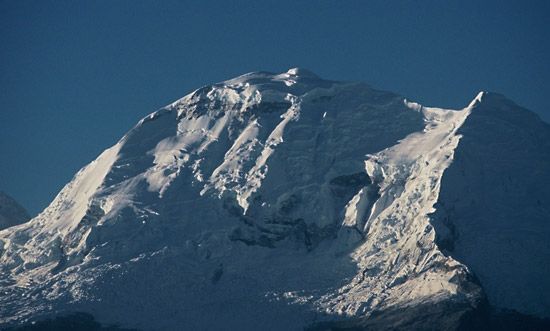
The difference in snow cover between the two ranges is primarily due to their respective elevations. The Cordillera Blanca is a complex highland featuring some of the highest peaks in the Andes Mountains, such as Mount Huascarán, which reaches 22,205 feet (6,768 meters). Because of these extreme altitudes, the range remains permanently snowcapped.12
In contrast, the Cordillera Negra is significantly lower, rising to a maximum elevation of 14,764 feet (4,430 meters). This lower altitude prevents the range from maintaining the permanent snow cover found on its neighbor to the east, which is why it is referred to as the “Black” range.21
How do the Andes Mountains influence the climate of Peru?
The Andes Mountains exert a profound influence on the climate of Peru, creating one of the world’s most complex arrays of microclimates through their role as a massive topographic barrier.8
Vertical Climatic Zones
The Andes create distinct vertical zones where temperature is primarily determined by altitude rather than latitude. This stratification allows for a wide range of environments within a short distance:
- Tierra caliente: Tropical and warm conditions at the base and foothills (up to 4,900 feet).87
- Tierra templada: A temperate, hospitable zone (8,200 to 11,500 feet) characterized by mild daytime temperatures.87
- Tierra fría: A cool, dry highland zone (11,500 to 14,800 feet) with significant temperature fluctuations between day and night.87
- Tierra helada: The high-altitude glacial summit areas, which experience constant freezing temperatures.87
Precipitation and Barriers
The mountains act as a critical barrier to wind and moisture. While the eastern slopes of the cordilleras receive heavy, seasonal rainfall from the Amazon basin, the western side of the Peruvian Cordillera Occidental experiences very little precipitation. This aridity is further reinforced by the cold Peru (Humboldt) Current, which stabilizes the air along the coast, contributing to the dry conditions of the region.87
Sources
- Cordillera Negra — Encyclopædia Britannica
- Andes Mountains - Physiography of the Central Andes — Encyclopædia Britannica
- Huaylas Valley — Encyclopædia Britannica
- Santa River — Encyclopædia Britannica
- Huaraz — Encyclopædia Britannica
- Andean Geosyncline — Encyclopædia Britannica
- South America - Factors influencing climate — Encyclopædia Britannica
- Andes Mountains - Climate — Encyclopædia Britannica
Published on · 3 min read