Cradle Mountain
Cradle Mountain is a prominent mountain located in the northwest-central region of Tasmania, Australia. Situated on the island's central plateau, the peak…
What is Cradle Mountain?
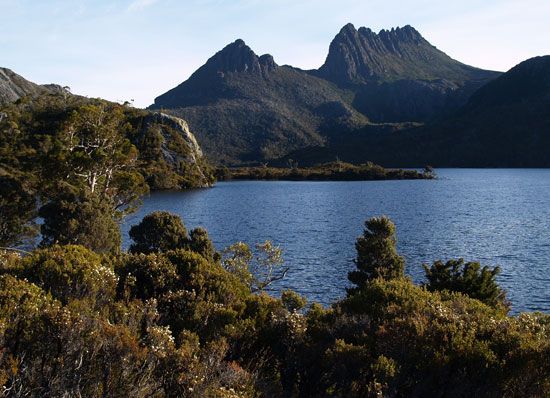
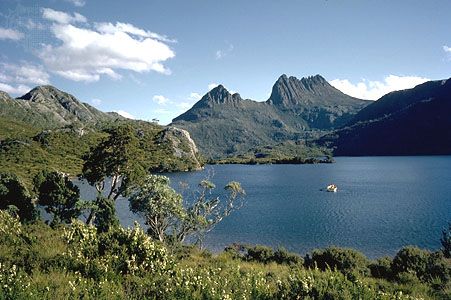
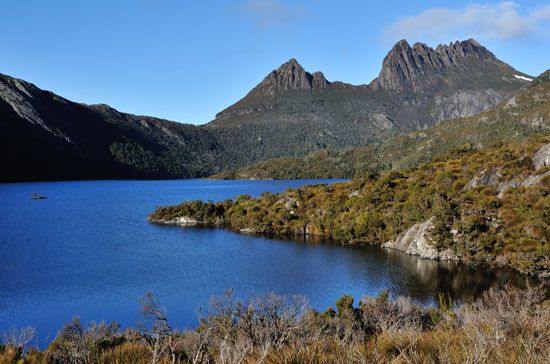
Cradle Mountain is a prominent mountain located in the northwest-central region of Tasmania, Australia. Situated on the island’s central plateau, the peak rises to 5,069 feet (1,545 meters) and is characterized by its arête—a narrow, jagged ridge—that resembles a cradle.1
The mountain serves as the northern boundary of the Cradle Mountain–Lake St. Clair National Park, a protected area renowned for its natural beauty and ecological diversity. This park is a key component of the Tasmanian Wilderness, which was designated a UNESCO World Heritage site in 1982. Surveyor Henry Hellyer is credited as the first European to scale the mountain in 1831. Despite its challenging climate, the area remains a popular destination for hikers.123
What is the Overland Track?
The Overland Track is a renowned 53-mile (85-km) walking trail located in Tasmania, Australia. It serves as a primary route through the Cradle Mountain–Lake St. Clair National Park, connecting the mountain in the north to the southern terminus at Lake Saint Clair.
Please note that the “Oregon Trail” mentioned in some historical contexts is a separate, 2,000-mile emigrant route in the United States and should not be confused with this Tasmanian walking track.24
What unique animals live in the Tasmanian Wilderness?
The Tasmanian Wilderness is home to a diverse array of unique wildlife, many of which are endemic to the region. The area’s ecological diversity supports several notable species, including:
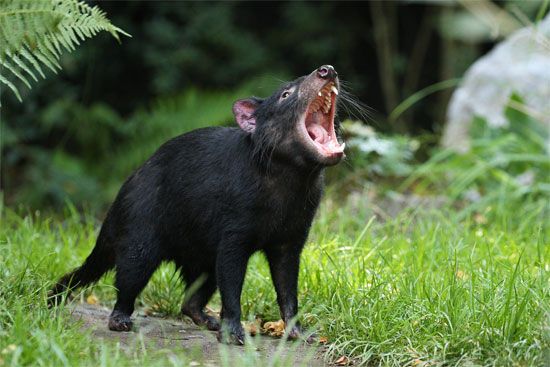
- Tasmanian devils: Stocky, carnivorous marsupials known for their scavenging habits and distinctive vocalizations.35
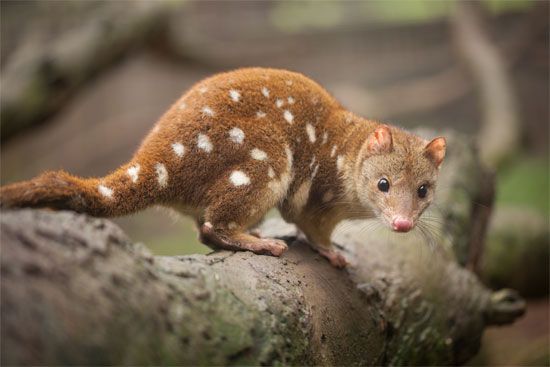
- Quolls: Often referred to as native cats, both spotted-tail and eastern quolls are found in the region.35
- Crustaceans and Amphibians: The wilderness supports unique burrowing crayfish and various endemic tree frogs.3
- Small Mammals: The region is home to long-tailed mice and broad-toothed rats.3
- Invertebrates: The area hosts specialized cave spiders.3
- Birds: The ground parrot is among the notable bird species found within the wilderness.3
The preservation of these species is a critical conservation priority, particularly as many native animals have faced significant threats from habitat loss and the introduction of nonnative species following European colonization.65
How was the landscape of Lake St. Clair shaped by glaciers?
The landscape of Lake Saint Clair was significantly shaped by the mechanical action of glaciers during the Pleistocene epoch. The lake occupies a deep valley that was carved and widened by glacial ice as it moved through the region.210
Following this period of glacial erosion, the valley was dammed by a moraine—a collection of heterogeneous sedimentary debris deposited at the glacier’s margin. This natural damming process allowed the valley to fill with water, creating what is now Australia’s deepest lake, with a maximum depth approaching 700 feet (215 metres). This process is a classic example of how glacial activity can transform mountainous terrain into lake-studded landscapes, a feature that also defines much of the surrounding Central Plateau of Tasmania.21011
Sources
- Cradle Mountain — Encyclopædia Britannica
- Lake Saint Clair — Encyclopædia Britannica
- Tasmanian Wilderness — Encyclopædia Britannica
- Oregon Trail — Encyclopædia Britannica
- marsupial - Paleontology and recent history — Encyclopædia Britannica
- Tasmania — Encyclopædia Britannica
- Tasmanian devil — Encyclopædia Britannica
- marsupial: Top Questions — Encyclopædia Britannica
- Macquarie Island — Encyclopædia Britannica
- lake - Basins formed by glaciation — Encyclopædia Britannica
- Tasmania - Relief — Encyclopædia Britannica
- Great Western Tiers — Encyclopædia Britannica
Published on · 2 min read