Amazon Basin
The Amazon basin is the world's largest drainage basin, covering approximately 34 percent of South America. Located in the central and eastern portions of…
What is the Amazon basin?
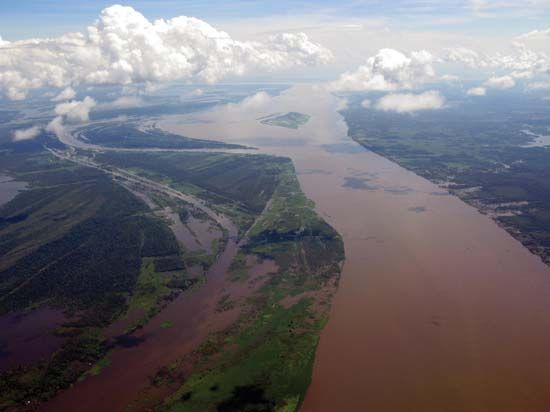
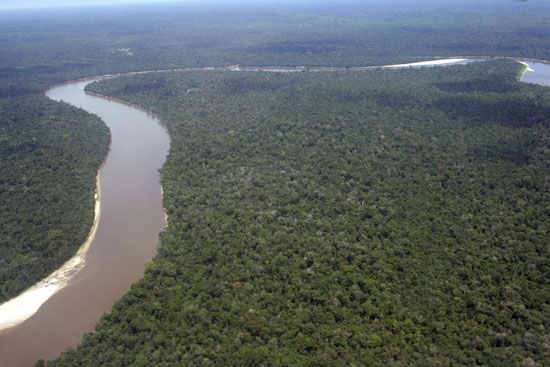
The Amazon basin is the world’s largest drainage basin, covering approximately 34 percent of South America. Located in the central and eastern portions of the continent, it spans roughly 6,100,000 square kilometers and serves as the watershed for the Amazon River, which carries about one-fifth of all freshwater runoff on Earth.12
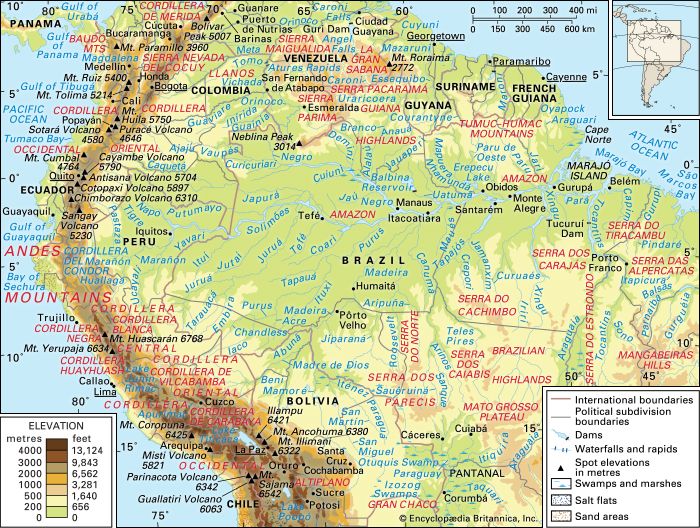
Geologically, the basin is a vast structural depression situated between the Guiana Highlands to the north and the Brazilian Highlands to the south. It encompasses parts of Bolivia, Brazil, Colombia, Ecuador, Guyana, Peru, Suriname, and Venezuela.31
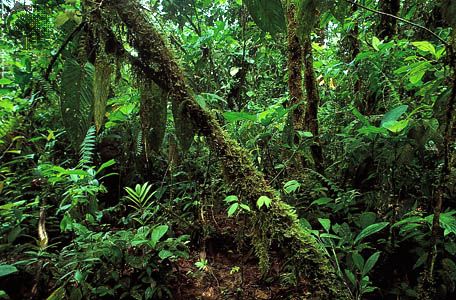
The basin is home to roughly 60 percent of the world’s rainforest and supports immense biodiversity, including 10 percent of the planet’s known life forms. Its diverse ecosystems range from wetlands and flooded forests to upland terra firme and the Cerrado grasslands.1
Where is the Amazon basin located?
The Amazon basin is located in the central and eastern portions of South America, covering approximately 34 percent of the continent’s land area. It is a vast structural depression situated between the Guiana Highlands to the north and the Brazilian Highlands to the south.421
The basin spans an immense region extending from the Andes Mountains in Peru in the west to the northeastern coast of Brazil, where the Amazon River empties into the Atlantic Ocean. It includes territory within eight countries:4
- Bolivia
- Brazil
- Colombia
- Ecuador
- Guyana
- Peru
- Suriname
- Venezuela4
What river flows through the Amazon basin?
The Amazon River is the primary river that flows through the Amazon basin. It is the largest river system in the world by volume and serves as the central drainage artery for the region, originating in the Andes Mountains of Peru and flowing eastward to the Atlantic Ocean in Brazil.com/place/Atlantic-Ocean) in Brazil.4
The river system is fed by more than 1,000 tributaries, including major rivers such as the Negro, Madeira, Japurá, Juruá, Purus, and Xingu. While the name “Amazon” is used for the entire river, its nomenclature varies by section and country; for instance, it is known as the Marañón in parts of Peru and the Solimões in Brazil before its confluence with the Negro River.64
Why is the Amazon basin important for the environment?
The Amazon basin is of critical importance to the global environment due to its vast scale and the essential ecosystem services it provides.
Biodiversity and Carbon Sequestration
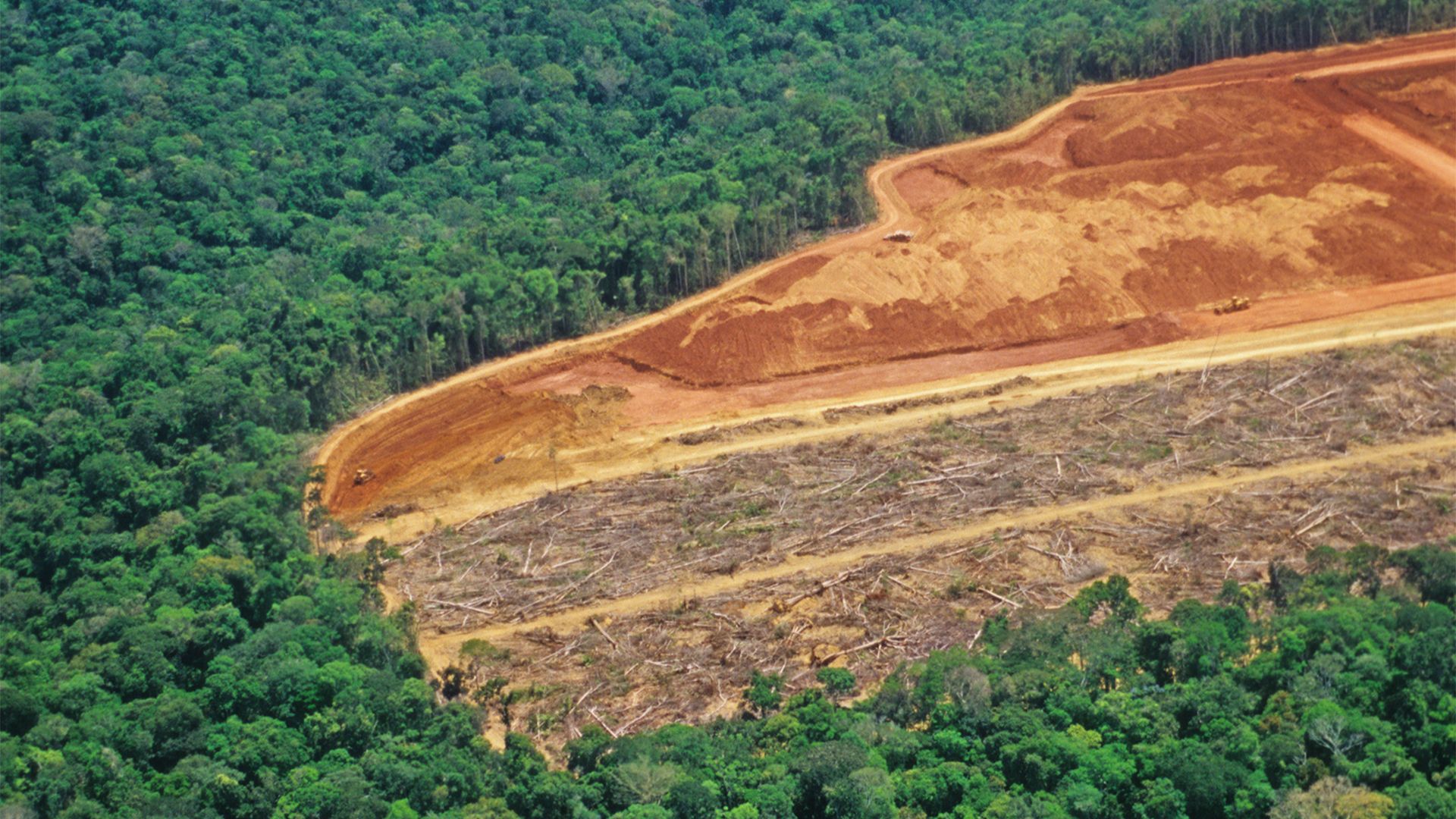
The basin contains roughly 60 percent of the world’s rainforest and serves as a biodiversity hot spot, harboring 10 percent of the planet’s known species. As a massive carbon reservoir, it plays a vital role in the carbon cycle by absorbing carbon dioxide from the atmosphere and storing it in biomass. When forests are cleared or burned, this stored carbon is released, contributing to anthropogenic climate change.2910
Climate and Water Regulation
The basin is essential for regulating regional and global climates. Through transpiration and evaporation, the forest recycles moisture, supplying about half of the region’s rainfall. This process is vital for maintaining the global energy balance; the loss of this forest cover would likely trigger widespread drought. Additionally, the basin manages approximately one-fifth of Earth’s freshwater runoff, providing critical flood control and water filtration.982
Sources
- Amazon River - Landforms and drainage patterns — Encyclopædia Britannica
- Amazon basin — Encyclopædia Britannica
- South America - Rivers of South America — Encyclopædia Britannica
- Amazon River: Top Questions — Encyclopædia Britannica
- Brazil - Amazon lowlands — Encyclopædia Britannica
- Amazon River - Physiography of the river course — Encyclopædia Britannica
- Amazon River — Encyclopædia Britannica
- Amazon River - Hydrology of the Amazon River — Encyclopædia Britannica
- Deforestation - Effects — Encyclopædia Britannica
- Why are rainforests so important? — Encyclopædia Britannica
- Status of the world’s tropical forests - Global implications of deforestation — Encyclopædia Britannica
Published on · 3 min read