Creeper
Creeper birds, specifically those in the family Certhiidae, possess specialized physical characteristics that enable them to climb tree trunks efficiently in…
What are the unique physical characteristics of creeper birds that help them climb trees?
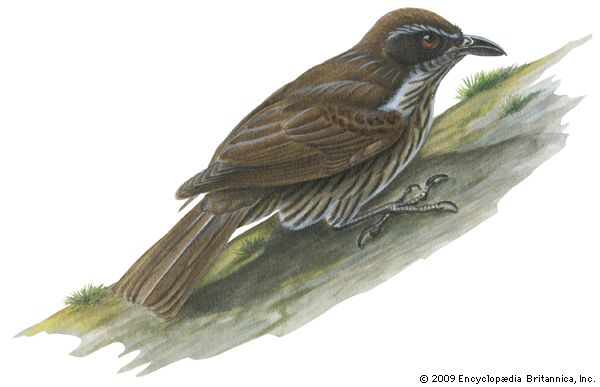
Creeper birds, specifically those in the family Certhiidae, possess specialized physical characteristics that enable them to climb tree trunks efficiently in search of insects. Their primary adaptations for this vertical locomotion include:12
- Stiffened Tail Feathers: Unlike some other climbing birds, such as the Australian treecreepers (Climacteridae), members of the Certhiidae family have long, stiff tail feathers that serve as a prop against the tree, providing essential support and stability as they climb.132
- Strong Legs: They are equipped with short, strong legs that allow them to cling to bark and move upward in short, vertical hops, often in a spiral pattern around the trunk.13
- Downcurved Bills: Their bills are downcurved and often as long as or longer than the rest of their head, which is an adaptation for probing into bark crevices to extract insects.12
These features form a functional complex that allows these birds to maintain their position while ascending trees.3
What is a creeper bird, and how does it differ from other bird species?
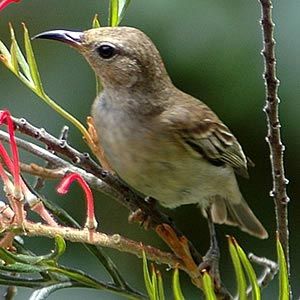
A “creeper” is a general term for small, slender birds that climb tree trunks to forage for insects. While the name is often associated with the family Certhiidae, it also refers to other groups with similar habits, such as the Australian treecreepers (Climacteridae) and the tropical woodcreepers (Dendrocolaptinae).618
These birds differ from other species through specialized adaptations for vertical movement:
- Locomotion: Most creepers, like the common tree creeper, climb by moving both feet simultaneously in short, vertical hops, often in a spiral pattern. Unlike nuthatches, which can descend trees headfirst, most creepers are restricted to upward movement.613
- Physical Structure: Many possess stiffened tail feathers that act as a prop against the bark for stability. They typically feature downcurved bills, which are highly effective for probing crevices.6831
- Classification: While they share similar behaviors, they belong to distinct families; for example, Australian treecreepers lack stiffened tail feathers and possess brush-tipped tongues, behaving more like honeyeaters.6
How do creeper birds build their nests, and where do they typically place them?
Creeper birds exhibit specific nesting habits that vary depending on their family classification.
For members of the family Certhiidae, such as the common treecreeper (Certhia familiaris), the nest is typically constructed as a soft cup made from a mass of rootlets. These birds characteristically place their nests behind a slab of loose bark on a tree trunk.9
In contrast, Australian treecreepers (family Climacteridae) utilize different nesting sites. These birds build their nests within existing tree hollows rather than behind bark.9
Generally, many birds that forage on tree trunks, including various woodcreepers, rely on natural cavities or holes in trees to house their young, often seeking out protected spaces that provide safety from predators.610
How many species of creeper birds exist, and what are some notable examples?
There is no single count for “creeper” birds because the term encompasses several distinct families and subfamilies of birds that share similar climbing behaviors. In total, there are well over 60 species across these groups.68
Notable Examples and Classifications
- Family Certhiidae: This family includes more than a dozen species of small, slender birds with downcurved bills that inhabit the Northern Hemisphere. A primary example is the common tree creeper (Certhia familiaris), also known as the brown creeper in North America. Another notable member is the spotted creeper (Salpornis spilonata) of Africa.61
- Family Climacteridae: Known as Australian treecreepers, this group consists of five species confined primarily to Australia and New Guinea. Unlike the Certhiidae, they possess brush-tipped tongues and lack stiffened tail feathers.6
- Subfamily Dendrocolaptinae: Commonly called woodcreepers, this group includes about 50 species of tropical American birds. Notable examples include the barred woodcreeper (Dendrocolaptes certhia) and the ivory-billed woodcreeper, which is known for its prominent streaking.8
Sources
- Certhiidae — Encyclopædia Britannica
- Piciform - Form and function — Encyclopædia Britannica
- Locomotion - Climbing birds and mammals — Encyclopædia Britannica
- Locomotion - Climbing — Encyclopædia Britannica
- Locomotion - Arboreal amphibians and reptiles — Encyclopædia Britannica
- Treecreeper — Encyclopædia Britannica
- Tail — Encyclopædia Britannica
- Woodcreeper — Encyclopædia Britannica
- Passeriform - Nesting — Encyclopædia Britannica
- Nest — Encyclopædia Britannica
- Creeper — Encyclopædia Britannica
- Apartments in the rainforest — Encyclopædia Britannica
Published on · 3 min read