Ibisbill
The ibisbill (Ibidorhyncha struthersii) is an Asian bird characterized by its long, red, down-curved bill, which resembles that of an ibis. It uses this…
What is ibisbill?
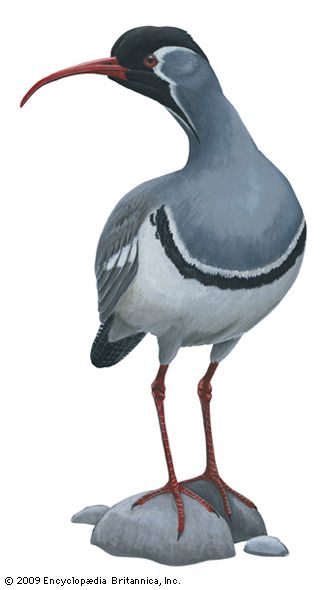
The ibisbill (Ibidorhyncha struthersii) is an Asian bird characterized by its long, red, down-curved bill, which resembles that of an ibis. It uses this specialized bill to probe for food beneath stones in streams and ponds.1
Physically, the ibisbill is a heavyset bird measuring approximately 40 centimeters (16 inches) in length. Its plumage is gray, accented by a black breast band and a facial mask. While it shares some similarities with the Recurvirostridae family—which includes avocets and stilts—the ibisbill is distinguished by its shorter legs. These birds are high-altitude dwellers, nesting at elevations of 3,000 meters (9,840 feet) or higher in the Himalayas and moving to the foothills during the winter months.1
What are avocets and stilts?
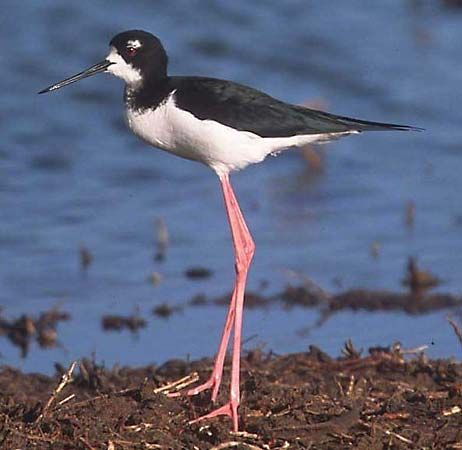
Avocets and stilts are members of the Recurvirostridae family, a group of moderately large wading birds within the order Charadriiformes.5
These birds are characterized by several distinct physical traits, including:
In terms of behavior, they share similarities with oystercatchers regarding their breeding habits, though their specific display patterns differ. Avocets typically nest in small colonies within grassy marshes that feature shallow open water, whether fresh or salt, and both parents share the responsibility of incubating their four eggs and protecting their young. Stilts are also somewhat colonial and may occasionally share the same marshland habitats as avocets, performing group displays during the breeding season.6
How do birds adapt to living at high altitudes like the Himalayas?
Birds have evolved remarkable physiological and behavioral adaptations to survive and navigate the extreme conditions of high-altitude environments like the Himalayas.
Respiratory Efficiency
The primary challenge at high altitudes is the scarcity of oxygen. Birds possess a highly efficient respiratory system that outperforms that of mammals. Their lungs are connected to voluminous air sacs, allowing for unidirectional, continuous airflow. This ensures that the lungs receive fresh, oxygenated air during both inhalation and exhalation, maximizing gas exchange.71
Metabolic and Physical Adaptations
- Metabolic Control: Species like the bar-headed goose can reduce their metabolic rate to conserve energy when oxygen levels are low.7
- Lightweight Structure: Birds have pneumatic (hollow) bones, which reduce their overall body weight and allow them to soar with minimal energy expenditure.7
- Energy Conservation: Many birds utilize thermal updrafts to gain elevation without active flapping. Soaring birds, such as eagles and vultures, use broad wings with slotted tips to ride these currents efficiently.7
What are some other examples of birds that use specialized bills to find food?
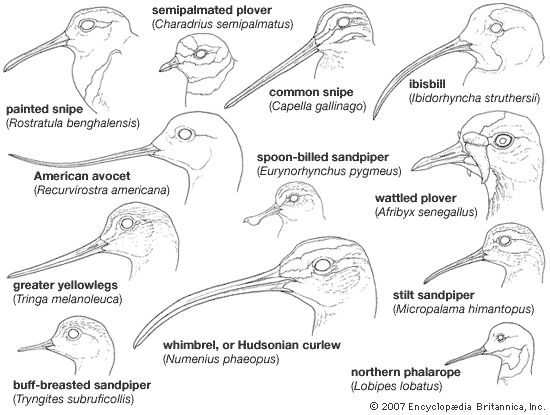
Bird bills are highly adaptive, evolving in response to specific feeding habits and environmental pressures. Beyond well-known examples like Darwin’s finches, many species exhibit specialized bill morphologies:
- Probing and Tactile Feeders: Many shorebirds, such as sandpipers and snipe, possess long, slender bills with mobile, tactile tips. These allow them to detect and grasp worms or larvae underground. Similarly, creepers use heavily constructed, downcurved bills to probe under tree bark.
- Seed and Fruit Specialists: Crossbills have bills specialized for extracting seeds from pine cones, while plantcutters possess serrated, conical bills for consuming leaves and buds.
- Unique Morphologies: The wrybill features a bill that curves to the right, and the spoonbilled sandpiper has a broad, spatulate tip. Skimmers have a unique lower mandible that is longer than the upper, designed for slicing through water.
- Tearing and Hooked Bills: Shrikes use a “toothed” bill with a hooked tip to tear apart prey, a feature also found in gulls and jaegers.
Sources
- ibisbill — Encyclopædia Britannica
- Ciconiiform - Feeding habits — Encyclopædia Britannica
- Ciconiiform - Annotated classification — Encyclopædia Britannica
- Ciconiiform - Bill shape — Encyclopædia Britannica
- Recurvirostridae — Encyclopædia Britannica
- Charadriiform - Shorebirds (suborder Charadrii) — Encyclopædia Britannica
- How high do birds fly? — Encyclopædia Britannica
- Himalayas - Animal life — Encyclopædia Britannica
- human respiratory system - High altitudes — Encyclopædia Britannica
- Respiratory system - Birds — Encyclopædia Britannica
- India - Birds — Encyclopædia Britannica
- Passeriform - Bill — Encyclopædia Britannica
- Charadriiform - Adaptations for feeding — Encyclopædia Britannica
Published on · 3 min read