Honeyeater
There are more than 180 species of honeyeater birds, which belong to the songbird family Meliphagidae. These birds are primarily found in Australia, New…
How many species of honeyeater birds are there, and what are some notable examples?
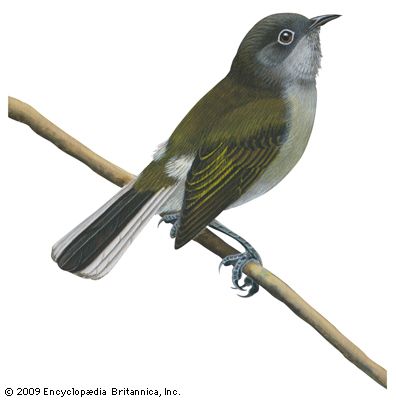
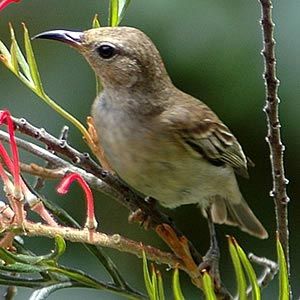
There are more than 180 species of honeyeater birds, which belong to the songbird family Meliphagidae. These birds are primarily found in Australia, New Guinea, and the islands of the western Pacific.
Notable examples include:
- White-eared honeyeater (Meliphaga leucotis): A representative of the 15-species genus Meliphaga, this bird is approximately 18 cm long and typically features distinctive ear tufts.1
- Scarlet honeyeater (Myzomela sanguinolenta): Also known as the bloodbird, this 11.5-cm species is part of the colorful Myzomela genus, which contains about 30 species often characterized by red and black plumage in males.1
- Wattlebirds (Anthochaera): These are among the larger members of the family, reaching lengths of about 35 cm, and are commonly found in the forests of eastern and southern Australia.1
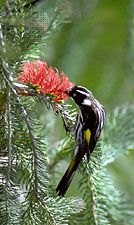
Are there any endangered species of honeyeater birds, and what threats do they face?
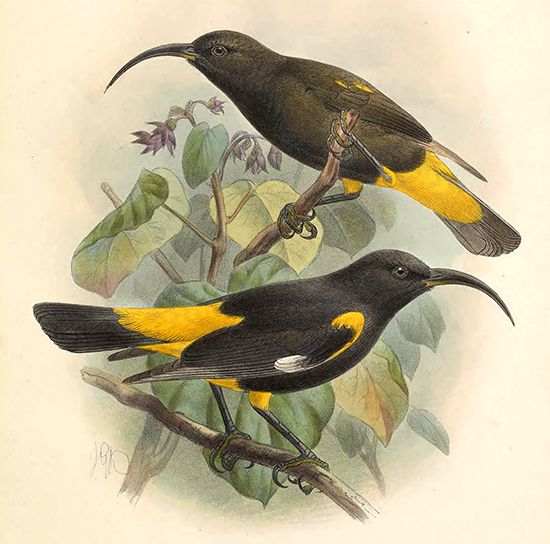
It is important to clarify that the term “honeyeater” refers to the family Meliphagidae, which is distinct from the Hawaiian honeycreepers (family Drepanididae). While the provided search results do not detail the conservation status of specific honeyeater species, they do highlight that Hawaiian honeycreepers have faced severe threats, leading to the extinction of at least 8 of their original 23 species, with most survivors currently considered endangered.1
The primary threats identified for these birds include:
- Habitat destruction: The loss of native forest environments has significantly reduced available living space and resources.1
- Introduced species: The introduction of foreign birds and mammals has disrupted native ecosystems, contributing to population declines.1
It is worth noting that while some birds, such as the honey guides, face ecological pressures from brood parasitism—where their nests are invaded by other species—the specific threats to the Meliphagidae family of honeyeaters are not addressed in the current knowledge base.34
How do honeyeater birds differ from hummingbirds, which also feed on nectar?
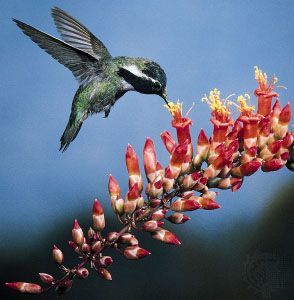
While both honeyeaters and hummingbirds have evolved specialized beaks and tongues to feed on nectar, they differ significantly in their feeding behavior and regional distribution.
Feeding Behavior
A primary distinction lies in how these birds access nectar:
- Hummingbirds: These birds typically feed on the wing, hovering in front of flowers to sip nectar with their long, tubular bills. Because they are highly active air acrobats with a very high metabolic rate, they must feed frequently—often every 15 to 20 minutes—and may visit up to 1,000 flowers per day.16
- Honeyeaters: Unlike hummingbirds, honeyeaters generally do not hover while feeding. In regions like Africa and Asia, bird-pollinated flowers often provide a landing platform or nearby perches, such as small twigs, to accommodate these birds as they feed.1
Distribution and Ecology
- Geography: Honeyeaters are primarily found in Australia, New Guinea, and the islands of the western Pacific. In contrast, hummingbirds are native to the Americas.71
- Dietary Variety: While both groups are nectarivores, honeyeaters have a broader diet that also includes insects and fruit.7
What are the defining characteristics of honeyeater birds?
Honeyeaters are members of the songbird family Meliphagidae, comprising over 180 species primarily found in Australia, New Guinea, and the islands of the western Pacific.124
Key defining characteristics include:
- Physical Appearance: They range in size from 10 to 35 cm (4 to 14 inches) and generally possess drab plumage with subtly distinctive head markings, though some species, such as those in the genus Myzomela, exhibit vibrant red and black coloration.1
- Specialized Anatomy: Their bills are typically slender and somewhat down-curved, while their tongues are uniquely adapted to be tubular and brush-tipped, allowing them to extract nectar and insects from flowers.124
- Diet and Behavior: Honeyeaters are omnivorous, feeding on nectar, insects, and fruit. They are social birds, often observed traveling in pairs or small flocks.1
- Diversity: The family includes various groups such as bellbirds, friarbirds, miners, and wattlebirds.1
It is important to distinguish these birds from Hawaiian honeycreepers, which belong to a different family (Drepanididae) and are not closely related to the Meliphagidae.15
Sources
- Honeyeater — Encyclopædia Britannica
- Meliphagidae — Merriam-Webster
- Coraciiform - Relationships with other species — Encyclopædia Britannica
- Hawaiian honeycreeper — Encyclopædia Britannica
- Honey guide — Encyclopædia Britannica
- Pollination - Birds — Encyclopædia Britannica
- 11 Questions About Birds Answered — Encyclopædia Britannica
- honeyeater — Merriam-Webster
Published on · 3 min read