Flowerpecker
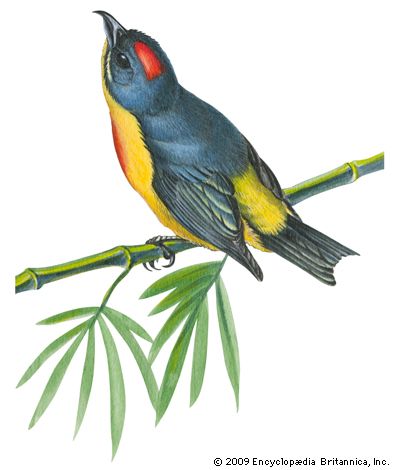
A flowerpecker is any of 44 species of small, short-tailed songbirds that make up the family Dicaeidae. These birds are found across southern Asia, the…
What is Flowerpecker?
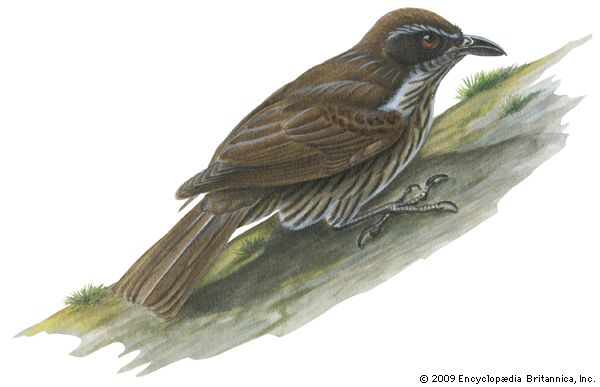
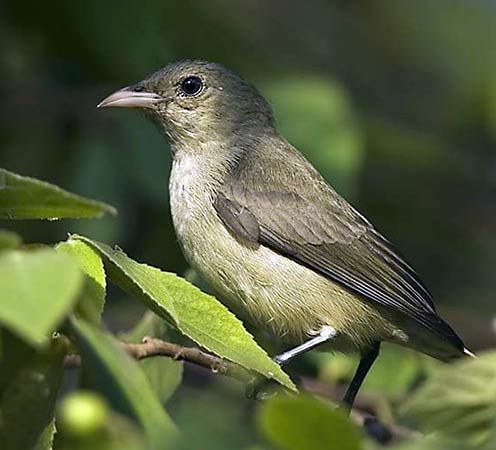
A flowerpecker is any of 44 species of small, short-tailed songbirds that make up the family Dicaeidae. These birds are found across southern Asia, the western Pacific islands, and Australia.12
Physically, flowerpeckers are characterized by a finely serrated bill and a specialized double-tubed, brush-tipped tongue. They are generally small, ranging from approximately 6 cm (2 inches) in the case of the pygmy flowerpecker (D. pygmeum) to about 23 cm (9 inches) for the largest species. Their diet consists primarily of insects and the berries of tropical mistletoes. They are known for their active behavior, often flitting through trees and shrubs while twittering, and they construct pouchlike, felted nests that may feature a porched side entrance.12
What are some other birds that belong to the order Passeriformes?
The order Passeriformes is the largest and most diverse group of birds, comprising approximately 5,700 species known as perching birds. Taxonomically, they are divided into two primary suborders: the more primitive suboscines (Tyranni) and the highly specialized oscines, or songbirds (Passeri).45
Beyond the flowerpeckers (Dicaeidae), the order includes a vast array of families adapted to diverse environments and feeding strategies, such as:
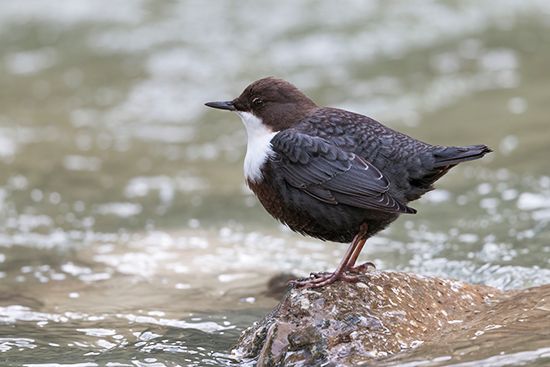
- Aerial and insectivorous birds: Swallows (Hirundinidae), flycatchers (Tyrannidae), vireos, shrikes (Laniidae), and dippers (Cinclidae). dippers (Cinclidae).7
- Bark and foliage gleaners: Woodcreepers (Dendrocolaptidae), nuthatches (Sittidae), and creepers (Certhiidae).6
- Seed and fruit eaters: Finches, tanagers (Thraupidae), waxbills (Estrildidae), cotingas, and plantcutters.6
- Other notable groups: Corvids (including ravens), titmice (Paridae), sunbirds (Nectariniidae), wrens (Xenicidae), cardinals, sparrows, lyrebirds (Menuridae), and birds-of-paradise.6
How do flowerpeckers help disperse mistletoe seeds in their environment?
Flowerpeckers (family Dicaeidae) play a vital role in the dispersal of tropical mistletoe seeds, particularly those of the family Loranthaceae.28
These birds have evolved a highly specialized gizzard that allows the sticky, viscid seeds of the mistletoe berries to pass through their digestive tract intact while retaining insects for nutrition. As the birds move between trees, they deposit these seeds in their droppings onto the branches of potential host plants. Additionally, birds may help disperse the seeds by wiping their beaks—to which the sticky seeds often adhere—against the bark of trees.28910
This relationship is a form of mutualism, as the mistletoe relies on the birds for reproductive success and dispersal, while the birds depend on the mistletoe berries as a food source.112
What are the main differences between flowerpeckers and sunbirds?
While flowerpeckers and sunbirds are both members of the order Passeriformes and share specialized adaptations for feeding on nectar, they belong to distinct families and exhibit several key differences:
- Taxonomy: Flowerpeckers belong to the family Dicaeidae, which contains about 44 species. Sunbirds belong to the family Nectariniidae, which includes approximately 95 species.
- Diet and Feeding: While both visit flowers, flowerpeckers are known for feeding on small fruits in addition to nectar. Sunbirds live chiefly on nectar. Unlike hummingbirds, sunbirds do not hover while feeding; they perch on the flower stalk to reach the nectar.
- Physical Characteristics: Flowerpeckers are generally smaller, ranging from 6 to 23 cm in length, and possess a double-tubed, brush-tipped tongue and a finely serrated bill. Sunbirds are typically 9 to 15 cm long and are noted for the brilliant, iridescent plumage of the breeding males.
- Distribution: Sunbirds are most numerous in Africa but occur eastward to Pacific islands. Flowerpeckers are found in southern Asia, the western Pacific islands, and Australia.
Sources
- Flowerpecker — Encyclopædia Britannica
- flower-pecker — Merriam-Webster
- Piciform - Distribution and ecology — Encyclopædia Britannica
- Passeriform — Encyclopædia Britannica
- Passeriform - Distinguishing taxonomic features — Encyclopædia Britannica
- Suboscine — Encyclopædia Britannica
- Passeriform - Size range and structural diversity — Encyclopædia Britannica
- Tropical rainforest - Relationships between the flora and fauna — Encyclopædia Britannica
- Seed - Dispersal by birds — Encyclopædia Britannica
- mistletoe: Top Questions — Encyclopædia Britannica
- mistletoe bird — Merriam-Webster
- Seed dispersal - Birds — Encyclopædia Britannica
- mistletoe — Encyclopædia Britannica
- Sunbird — Encyclopædia Britannica
- Pollination - Birds — Encyclopædia Britannica
Published on · 3 min read