Cuvier’s Dwarf Caiman
Cuvier’s dwarf caiman (Paleosuchus palpebrosus) is the smallest living member of the alligator family and the most diminutive crocodilian found in the…
What is Cuvier’s dwarf caiman?
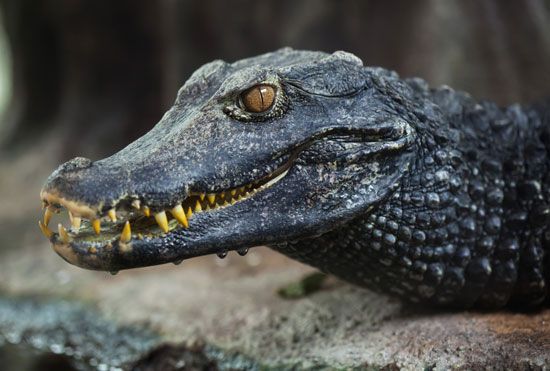
Cuvier’s dwarf caiman (Paleosuchus palpebrosus) is the smallest living member of the alligator family and the most diminutive crocodilian found in the Americas. First described by French zoologist Georges Cuvier in 1807, this species is native to the Amazon and Orinoco river basins, inhabiting diverse environments ranging from rivers to grassland pools.1
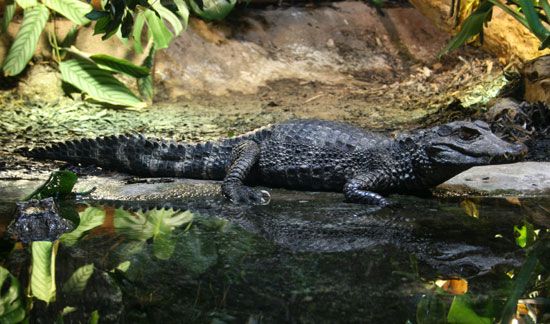
Physically, these caimans are small; adult males typically reach about 1.6 meters (5.3 feet) in length, while females average 1.2 meters (3.9 feet). They are characterized by a blunt, upturned snout and a dome-shaped head with prominent eyes. Despite their size, they are well-protected by bony plates called osteoderms, which deter most predators except for jaguars and large snakes.1
Currently listed as a species of least concern by the IUCN, they are widespread and potentially the most abundant crocodilian in the world.1
Where does the Cuvier’s dwarf caiman live?
Cuvier’s dwarf caiman (Paleosuchus palpebrosus) is widely distributed across northern South America, inhabiting the Amazon and Orinoco river basins. Its extensive geographic range spans from eastern Ecuador, Peru, and Colombia in the west to Brazil’s Atlantic coast in the east. The species is also found from northern Paraguay and Bolivia in the south, extending northward to Venezuela and Trinidad and Tobago.1
Within these regions, the caiman occupies diverse wet environments, ranging from rivers to temporary pools located in grassland habitats. Due to its high adaptability to various environmental conditions, it is considered one of the most abundant crocodilian species in the world.1
What does the Cuvier’s dwarf caiman look like?
Cuvier’s dwarf caiman (Paleosuchus palpebrosus) is a small, distinctively shaped crocodilian. Adults are relatively diminutive, with males averaging 1.6 meters (5.3 feet) and females 1.2 meters (3.9 feet) in length, weighing approximately 6–7 kg (13.2–15.7 pounds).1
Key physical features include:
- Head and Snout: They possess a short, blunt snout that curves upward from the nostrils toward a dome-shaped head. Their large, prominent brown eyes are set within bony processes on top of the head, featuring dark vertical slits for pupils.1
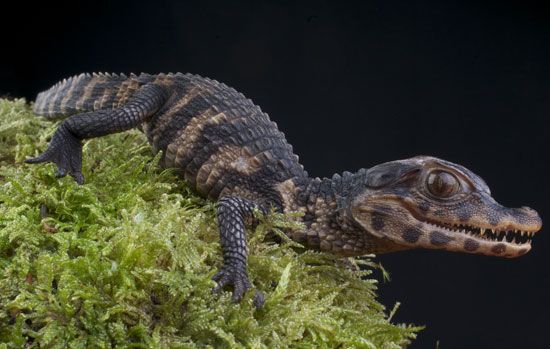
- Coloration: The top and sides of adults are reddish brown to brownish black, while the underside is lighter. Juveniles are a lighter shade of brown.1
- Markings: The tail features distinct banding that extends down its length, which is more prominent in juveniles. Additionally, the scales outside the lower jaws of many individuals are covered with dark spots or bands.1
- Body Armor: Their bodies and tails are covered in bony plates known as osteoderms, which provide significant protection.1
- Dentition: Their mouths contain approximately 80 teeth.1
What does the Cuvier’s dwarf caiman eat?
Cuvier’s dwarf caiman is a nocturnal hunter that searches for food either alone or in pairs across both aquatic and terrestrial environments. Its diet varies significantly based on the age of the individual:
Sources
- Cuvier’s dwarf caiman — Encyclopædia Britannica
- crocodile - Paleontology — Encyclopædia Britannica
Published on · 3 min read