Steneosaurus
Steneosaurus is a genus of extinct crocodiles that lived during the Jurassic Period, approximately 200 million to 146 million years ago. Their fossils have…
What is Steneosaurus?
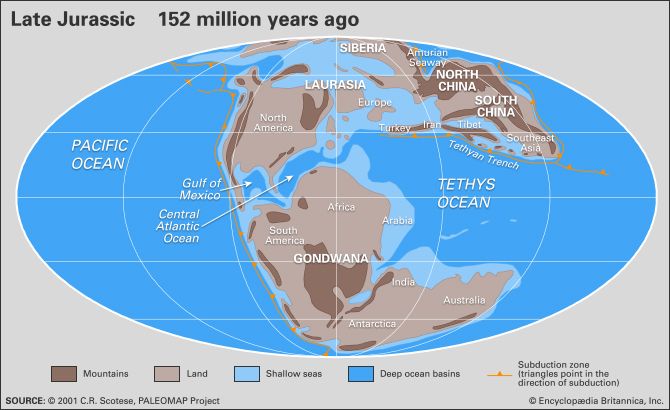
Steneosaurus is a genus of extinct crocodiles that lived during the Jurassic Period, approximately 200 million to 146 million years ago. Their fossils have been discovered in South America, Europe, and North Africa.1
These animals were adapted for life in shallow seas and possessed a distinctively light, narrow skull. Key physical characteristics included a long, slender snout with nostrils located at the very tip, which were connected to the throat by a long bony tube. They also featured many sharp teeth, which were likely used for catching and eating fish.1
It is important to note that Steneosaurus is a marine crocodylomorph and is distinct from Stegosaurus, which was a large, herbivorous dinosaur known for the bony plates on its back.2
How did Steneosaurus adapt to living in shallow seas?
Steneosaurus adapted to life in shallow seas through several specialized anatomical features that supported its aquatic, carnivorous lifestyle during the Jurassic Period.
Its primary adaptations included:
- Skull Structure: The animal possessed a very light and narrow skull, which featured large openings that likely reduced weight while maintaining structural integrity.1
- Specialized Snout and Respiration: It had a long, narrow snout with nostrils positioned at the very tip. These nostrils were connected to the throat by a long, bony tube, an arrangement that allowed the animal to breathe while the majority of its body remained submerged.1
- Feeding Mechanics: The presence of many sharp teeth suggests that Steneosaurus was well-equipped for catching and consuming fish, which were likely its primary food source in these marine environments.1
These features reflect the evolutionary trend among long-snouted ocean crocodiles of the era, where the placement of internal nasal openings (choanae) shifted toward the back of the skull to facilitate specialized breathing and feeding habits.3
What are the main differences between Steneosaurus and modern crocodiles?
The primary differences between Steneosaurus and modern crocodiles lie in their evolutionary classification, skull anatomy, and the development of their secondary palate.
- Classification: Steneosaurus belongs to the extinct suborder Mesosuchia, which thrived during the Jurassic and Cretaceous periods. In contrast, modern species belong to the suborder Eusuchia, which first appeared in the Upper Jurassic and includes all living alligators, caimans, and true crocodiles.13
- Palate Structure: A key evolutionary shift occurred in the placement of the choanae (internal nostrils). In Steneosaurus, the choanae were located in the posterior part of the palatine bones. In modern Eusuchia, the choanae are entirely enclosed by the pterygoid bones at the posterior border of the palate, a more advanced configuration for breathing while submerged.13
- Skull and Body: Steneosaurus possessed a specialized, light, and narrow skull with a long, slender snout adapted for catching fish in shallow seas. Modern crocodilians generally exhibit a more robust, heavy cylindrical body and a large, triangular head structure.53
What other marine reptiles lived during the Jurassic Period?
The Jurassic Period hosted a diverse array of marine reptiles that occupied various ecological niches in the world’s oceans. These creatures were highly specialized for aquatic life, representing some of the largest carnivorous animals of the Mesozoic Era.789
Key groups of Jurassic marine reptiles included:
- Ichthyosaurs: These reptiles were remarkably fishlike in appearance, featuring streamlined bodies, paddlelike limbs, and well-developed tails for high-speed swimming. They possessed exceptionally large eye orbits, which likely aided in hunting prey in deep or dim waters.107
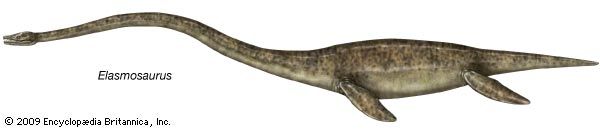
- Plesiosaurs: This group was characterized by a broad, stout torso and limbs modified into long, narrow flippers that allowed them to “fly” through the water. They were divided into two main lineages:911
- Plesiosauroids: Known for their long, flexible necks and relatively small heads, which they likely used to capture fish.911
- Pliosaurs: These were the “short-necked” plesiosaurs, often possessing massive skulls and powerful jaws. Some, such as Pliosaurus funkei (or “Predator X”), reached lengths of up to 15 meters (50 feet) and were apex predators.711
- Marine Crocodiles: Beyond the well-known ichthyosaurs and plesiosaurs, the Jurassic seas were also inhabited by large, specialized crocodilians belonging to the suborder Mesosuchia, which were adapted for life in shallow marine environments.712
Sources
- Steneosaurus — Encyclopædia Britannica
- dinosaur - Stegosauria — Encyclopædia Britannica
- crocodile - Paleontology — Encyclopædia Britannica
- crocodile — Encyclopædia Britannica
- reptile - Feeding habits — Encyclopædia Britannica
- crocodile - Annotated classification — Encyclopædia Britannica
- Jurassic Period - Vertebrates — Encyclopædia Britannica
- ichthyosaur — Encyclopædia Britannica
- sauropterygian — Encyclopædia Britannica
- plesiosaur — Encyclopædia Britannica
- Jurassic Period - Marine life — Encyclopædia Britannica
- Jurassic Period - Protists and invertebrates — Encyclopædia Britannica
Published on · 3 min read