Dachshund
The Dachshund is bred in three distinct coat types, each requiring a different approach to grooming and maintenance:
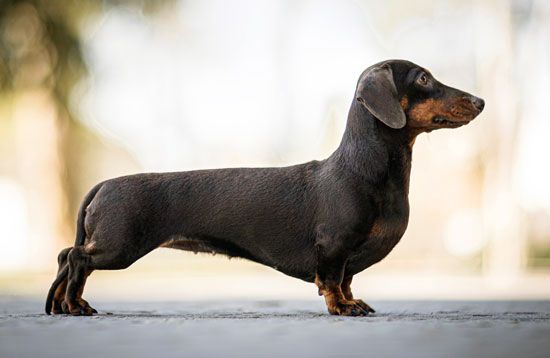
What are some unique challenges in grooming and maintaining a Dachshund’s coat?
The Dachshund is bred in three distinct coat types, each requiring a different approach to grooming and maintenance:
- Smooth: This variety is the easiest to maintain, requiring only occasional brushing to remove dead hair.1
- Longhaired: To keep the coat healthy and free of tangles, this variety should be combed once or twice every week.1
- Wirehaired: This coat type demands the most significant maintenance. It requires weekly combing to prevent matting and occasional stripping, a process that involves pulling dead hair out by hand to maintain the coat’s texture and health.1
Because these dogs are prone to intervertebral disk disease, it is important to ensure that grooming sessions are conducted in a way that avoids placing unnecessary stress on the dog’s back. Owners should be mindful of their pet’s physical limitations during any handling or grooming routine.1
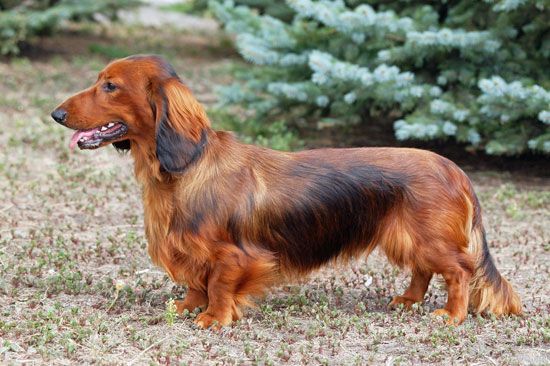
What are the physical characteristics that make Dachshunds unique among dog breeds?
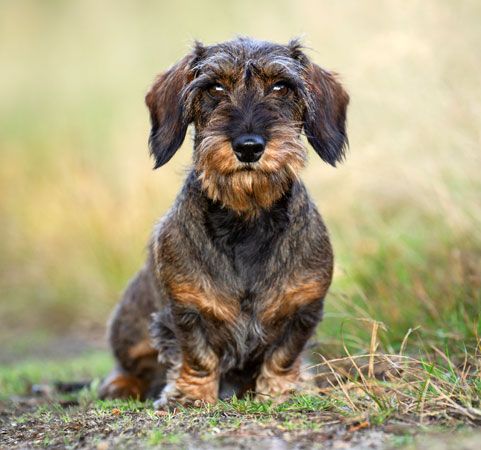
The Dachshund is defined by a distinct physical profile shaped by its historical purpose as a hunter of badgers. Its most recognizable characteristics include a long, low-slung body, a deep chest, a tapering muzzle, and long ears. These physical traits were specifically developed to allow the dog to navigate and enter subterranean tunnels to pursue prey underground.12
Beyond its unique silhouette, the breed is categorized into two sizes—standard and miniature—and three distinct coat types: smooth, longhaired, and wirehaired. While these dogs are known for their lively and independent nature, their unique skeletal structure—specifically their short legs and long spine—makes them genetically predisposed to intervertebral disk disease. Because almost all Dachshunds carry the genes associated with this condition, they require careful management to avoid spinal stress, such as jumping or navigating stairs.1
How do Dachshunds compare to other small dog breeds in terms of intelligence and trainability?
When comparing Dachshunds to other small dog breeds, it is important to note that their intelligence and trainability are heavily influenced by their independent, terrier-like disposition. Because they were originally bred to hunt badgers in enclosed underground spaces, they developed a fearless and relentless nature that often manifests as stubbornness during training sessions.1
While many small breeds are bred primarily for companionship, the Dachshund’s hound heritage drives it to follow scent trails, which can lead to selective hearing and a tendency to ignore commands to return when off-leash. Unlike breeds that are naturally eager to please, Dachshunds are independent thinkers who enjoy challenges but may be difficult to train if the methods are not rewarding. They respond well to positive reinforcement, but their temperament can vary significantly by variety: the wirehaired type is often more brash and feisty, while the longhaired variety is generally considered more docile and affectionate.1
The provided search results do not offer a direct comparison of intelligence metrics between Dachshunds and other specific small breeds, such as the Miniature Pinscher.
What are some recommended activities or exercises for Dachshunds to keep them healthy and happy?
To keep a Dachshund healthy and happy, it is essential to balance their need for physical activity with precautions to protect their vulnerable spinal column.
Recommended Activities
- Daily Exploration: Dachshunds thrive when given the opportunity to run, sniff, and investigate their surroundings. This is best achieved through a combination of time in a fenced yard and regular, supervised leash walks.
- Playtime: They enjoy various games, such as chasing balls, though they may not always return them.
- Dog Sports: Many Dachshunds excel in activities that tap into their hunting instincts, such as the barn hunt. They also frequently participate in racing events, often referred to as “wiener dog” competitions.
Essential Safety Precautions
Because the breed is genetically predisposed to intervertebral disk disease, owners must manage their activity to avoid spinal stress:
- Limit Jumping: Prevent the dog from jumping on or off furniture.
- Avoid Stairs: Minimize or prevent running up and down stairs.
- Prevent Twisting: Avoid activities that cause sideways or twisting torque of the back.
- Weight Management: Preventing obesity is critical to reducing strain on their long backs.
Sources
- Dachshund — Encyclopædia Britannica
- dog - Skeletal structure — Encyclopædia Britannica
- Doberman Pinscher — Encyclopædia Britannica
Published on · 3 min read