Daikon
Daikon (Raphanus sativus, variety longipinnatus) is a type of radish belonging to the Brassicaceae family. Native to East Asia, this vegetable is cultivated…
What is Daikon?
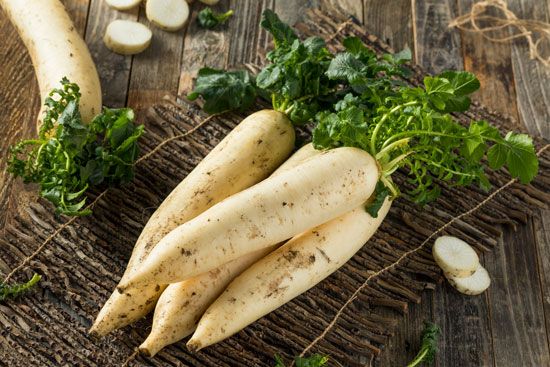
Daikon (Raphanus sativus, variety longipinnatus) is a type of radish belonging to the Brassicaceae family. Native to East Asia, this vegetable is cultivated for its large, edible white taproot, which can weigh up to 1 kg (2.2 pounds).1
The root features a crunchy texture and a mild, sweet, and slightly peppery flavor. Nutritionally, it is low in calories and a good source of vitamin C.1
Daikon is a staple in the cuisines of Japan, China, Korea, Vietnam, and India. It is highly versatile and can be served raw, pickled, or cooked. Common culinary applications include:
- Grated as a garnish for sashimi.
- Sliced for use in stir-fry dishes.
- Simmered in stews with rice and fish stock.
- Prepared as a spicy pickled condiment, such as the Korean muuch’ae kimchi.1
How is daikon used in traditional kimchi?
In traditional Korean cuisine, daikon is a versatile ingredient used in several varieties of kimchi. While it is sometimes used as a substitute for the traditional Korean radish (mu), it is also a primary component in specific preparations.21
Common ways daikon is used in kimchi include:
- Muuch’ae Kimchi: A spicy, pickled condiment made from sliced daikon and various seasonings.2
- Nabak Kimchi: A refreshing, minimally spicy “water kimchi” where daikon is sliced into delicate, thin squares and fermented in a brine made with Korean pear, garlic, onion, and ginger.1
- Dongchimi: A “winter kimchi” that functions as both a food and a beverage. It features radishes (such as daikon or mu) fermented in a large amount of brine, creating a fizzy, sweet-sour liquid.1
- General Preparation: Like other kimchi vegetables, daikon is typically sliced, seasoned with ingredients like red chili pepper, onion, and garlic, and fermented in brine.34
What are the nutritional benefits of eating radishes?
Radishes, including the common variety and the daikon radish, offer several nutritional benefits as part of a healthy diet. They are notably low in calories, making them a light and nutritious addition to various meals.51
A primary nutritional highlight of radishes is their high vitamin C content, which is essential for immune function and overall health. Beyond the roots, the young leaves of the radish plant are also edible and can be prepared similarly to spinach, providing additional dietary variety.51
Because they can be consumed raw, pickled, or cooked, radishes are a versatile way to incorporate these nutrients into your daily intake.51
How does daikon differ from common red radishes?
While both daikon and common red radishes belong to the same species, Raphanus sativus, and the Brassicaceae family, they exhibit significant differences in size, appearance, and culinary application.15
- Size and Weight: Common radishes are typically small, weighing only a few grams. In contrast, the daikon is a large East Asian variety that can weigh up to 1 kg (2.2 pounds).5
- Physical Characteristics: Common radishes vary widely in shape—from spherical to cylindrical—and can feature skin and flesh in colors ranging from white and red to purple and black. Daikon is more uniform, characterized by a cylindrical or tapered taproot with white or cream-colored skin and white flesh.51
- Culinary Use: While both are crunchy and share a cool, mildly peppery flavor, daikon is a staple in East Asian cookery, often grated as a garnish for sashimi or used in stews and kimchi, whereas common radishes are frequently consumed raw in salads.15
Sources
- Daikon — Encyclopædia Britannica
- kimchi: Top Questions — Encyclopædia Britannica
- Beyond the Cabbage: 10 Types of Kimchi — Encyclopædia Britannica
- kimchi — Encyclopædia Britannica
- Radish — Encyclopædia Britannica
Published on · 3 min read