Feijoa
Sorry, the Britannica knowledge base does not contain information regarding the specific time it takes for a feijoa plant to reach maturity and begin…
How long does it take for a feijoa plant to mature and produce fruit?
Sorry, the Britannica knowledge base does not contain information regarding the specific time it takes for a feijoa plant to reach maturity and begin producing fruit.
Are there any cultural or historical significances associated with the feijoa plant in its native regions?
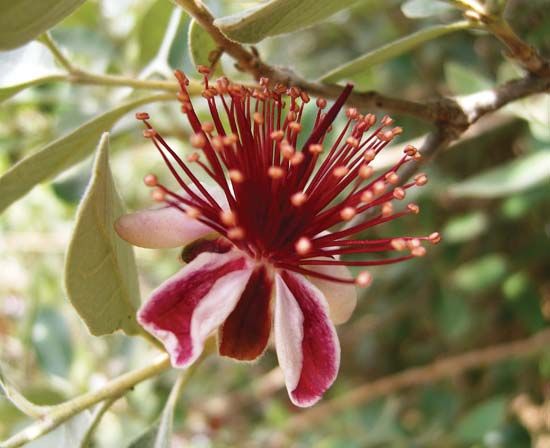
The feijoa (Acca sellowiana), a small evergreen tree in the Myrtaceae family, is native to southern Brazil, Paraguay, Uruguay, and parts of Argentina. While the plant is valued for its sweet, pineapple-flavored fruit and is often grown as an ornamental, the available historical and botanical records do not document specific cultural significances or traditional roles for the plant within its native South American regions.
The plant’s scientific name honors the Brazilian naturalist João da Silva Feijó, reflecting its botanical classification rather than a specific cultural legacy. Although it has been cultivated globally—notably becoming a significant commercial crop in New Zealand—its primary historical narrative in literature centers on its introduction to Europe and North America in the late 19th and early 20th centuries.12
Where is the feijoa plant native to, and in which regions is it now cultivated?
The feijoa (Acca sellowiana), a small evergreen tree belonging to the Myrtaceae family, is native to South America. Specifically, its native range includes southern Brazil, Paraguay, Uruguay, and parts of Argentina.12
Today, the plant is cultivated in various regions with mild, dry climates for its edible fruit and as an ornamental tree. Key areas of cultivation include:1
- New Zealand: The plant is grown commercially on a significant scale.2
- Europe: It was introduced to southern Europe in 1890.1
- United States: It was introduced to California around 1900.1
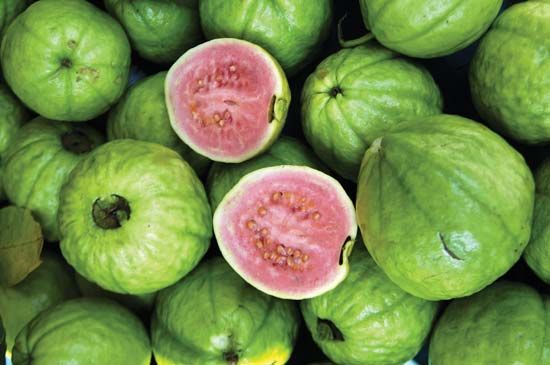
The fruit is prized for its sweet, pineapple-like flavor and is often consumed fresh, used in jams and jellies, or crystallized.1
How is the feijoa plant cultivated, and what are its growing requirements?
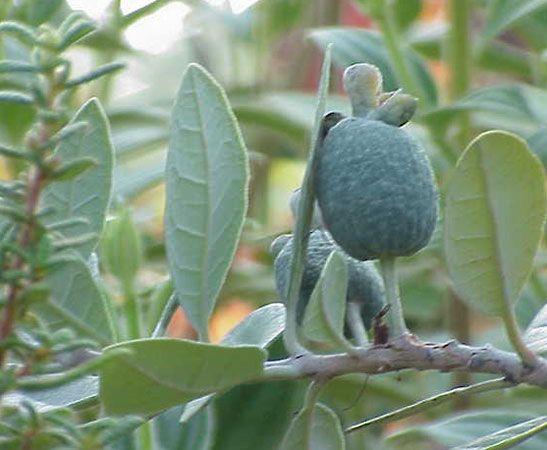
The feijoa (Acca sellowiana) is a small evergreen tree that thrives in mild, dry climates. While the provided information highlights its general environmental preference, it is primarily cultivated for its ornamental value and its edible fruit.1
Propagation Methods
The tree can be propagated using several horticultural techniques:
- Seeds: A common method for starting new plants.1
- Cuttings: Used to ensure genetic consistency.1
- Whip grafting: A technique often employed for commercial or specific variety propagation.1
- Layering: Utilizing the tree’s low-hanging branches to encourage root development.1
Harvesting and Handling
The fruit, which is approximately 5 cm (2 inches) long, reaches maturity when it falls from the tree. Once harvested, the fruits must be stored in a cool environment until they become soft enough to eat. The pulp is noted for its translucent, tender texture and distinct pineapple-like flavor.1
Sources
- feijoa — Encyclopædia Britannica
- feijoa — Merriam-Webster
Published on · 2 min read