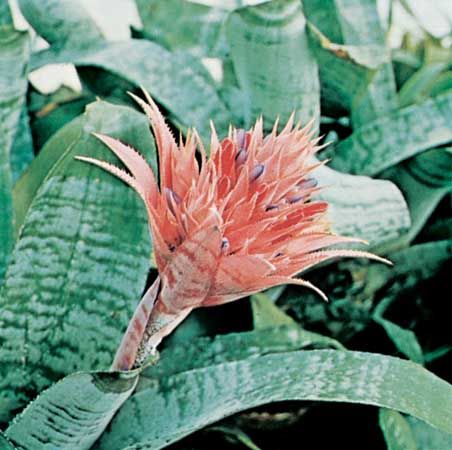
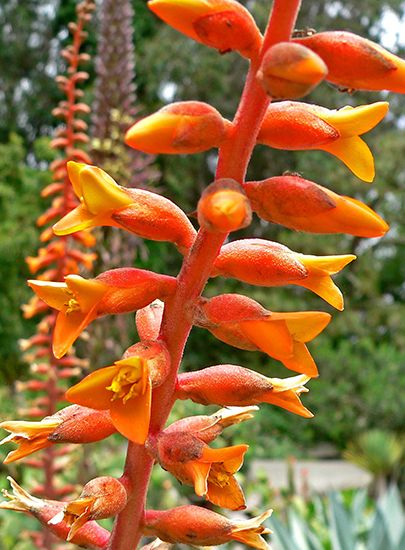
Bromeliaceae
The Bromeliaceae family holds significant economic value, primarily through food production, industrial materials, and the horticultural trade.
What is the economic importance of Bromeliaceae plants?
The Bromeliaceae family holds significant economic value, primarily through food production, industrial materials, and the horticultural trade.1
- Food Production: The most prominent economic product is the pineapple (Ananas comosus), a widely consumed fruit cultivated globally in tropical and subtropical regions. It is a staple ingredient in various international cuisines and is processed for worldwide distribution in canned and fresh forms.12
- Industrial Fibers: The leaves of certain species, such as Aechmea magdalenae and Neoglaziovia variegata, are harvested for their fibers. These are utilized in various regions to manufacture rope, fabric, and netting.1
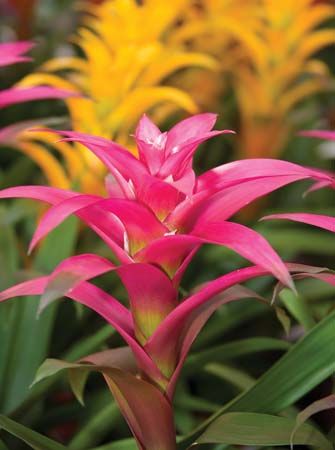
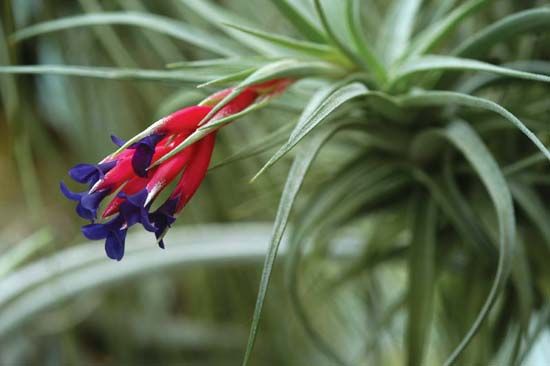
- Horticulture and Novelties: Many bromeliads are cultivated as ornamental plants for their attractive foliage and flowers. Additionally, various epiphytic Tillandsia species, commonly referred to as air plants, are commercially sold as novelties. Furthermore, Spanish moss (Tillandsia usneoides) is recognized as a major economic product of the family.1
What roles do Bromeliaceae plants play in their ecosystems?
Bromeliaceae plants play diverse and vital roles within their ecosystems, particularly in tropical environments where they function as essential structural components and biological hubs.13
Habitat Provision
Many bromeliads are epiphytes, growing on trees or cacti, which allows them to occupy niches high above the forest floor. A specialized group known as tank bromeliads forms a leaf rosette that collects water, creating a “virtual aquarium” that can hold up to 20 liters (5 gallons). These pools serve as critical habitats for hundreds of aquatic organisms, including:14
- Invertebrates: Insects, spiders, scorpions, mites, worms, and crabs.4
- Vertebrates: Frogs, salamanders, and snakes.4
Some species, such as the bromeliad tree frog (Bromeliohyla bromeliacia) and specific damselfly genera (Diceratobasis and Leptagrion), are found exclusively in these pools, making the plants indispensable for their survival.14
Trophic Interactions
Bromeliads are active participants in complex food webs. While they derive nutrients from rain and debris, some species have evolved to be carnivorous, capturing prey to supplement their nutrient intake. Furthermore, these plants facilitate intricate parental care strategies; for instance, the strawberry poison frog uses bromeliad pools as nurseries for its tadpoles, providing them with a protected environment.41
How have humans used Bromeliaceae plants throughout history?
Humans have utilized plants in the Bromeliaceae family for centuries, primarily for food, textiles, and household utility.
Food and Beverage
The most significant historical and modern use is the pineapple (Ananas comosus). Early European explorers, including Christopher Columbus and Sir Walter Raleigh, documented its use by indigenous peoples in the West Indies for both food and wine production. Following its discovery, the plant was rapidly disseminated by the Portuguese to Africa, India, and the South Pacific by the late 16th century.
Textiles and Cordage
Bromeliads are a source of leaf fiber, which is valued for its strength and sustainability.
- Cordage: Species such as Aechmea magdalenae and Neoglaziovia variegata have been traditionally harvested to manufacture rope, netting, and fabric.
- Fine Textiles: Pineapple leaf fiber is processed into a silky textile known as piña cloth. In the Philippines, this fabric is historically significant for creating the barong, a traditional embroidered shirt, as well as wedding gowns.
Household and Ornamental Use
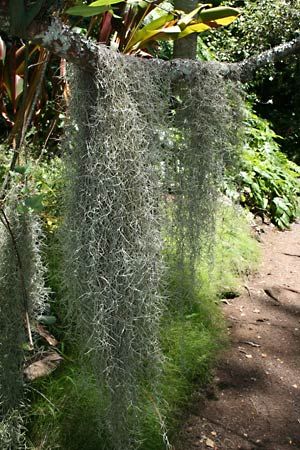
- Upholstery and Packing: Spanish moss (Tillandsia usneoides) has been historically utilized as a filler for packing boxes and as a material for upholstery.
- Horticulture: Many species are cultivated for their aesthetic appeal, and various epiphytic Tillandsia species are sold as ornamental novelties.
How do Bromeliaceae plants obtain nutrients and water?
Bromeliaceae plants have evolved specialized adaptations to thrive in diverse environments, particularly as epiphytes that lack direct access to soil-based nutrients and water.
Water and Nutrient Absorption
- Foliar Trichomes: Many epiphytic bromeliads, such as Spanish moss, utilize specialized hair-like structures on their leaves called trichomes. These structures are highly efficient at absorbing water and minerals directly from rain, mist, and atmospheric moisture.110
- Tank Structures: Known as tank bromeliads, many species form a central, hollow rosette of tightly packed leaves. This structure acts as a reservoir, collecting rainwater and organic debris—such as falling leaves and windblown dust—which provides a consistent source of water and nutrients.113
Supplemental Nutrition
While most bromeliads rely on photosynthesis, some species have adapted to nutrient-poor conditions through carnivory. Species such as Brocchinia reducta, B. hectioides, and Catopsis berteroniana use their urn-like leaf bases as pitfall traps. Unlike some other carnivorous plants, these bromeliads do not produce their own digestive enzymes; instead, they rely on bacteria to break down captured prey, allowing the plant to absorb the resulting nitrogenous compounds and salts.1112
Sources
- Bromeliaceae — Encyclopædia Britannica
- Pineapple — Encyclopædia Britannica
- Life in a bromeliad pool — Encyclopædia Britannica
- community ecology - Commensalism and other types of interaction — Encyclopædia Britannica
- nectary — Encyclopædia Britannica
- Tropical rainforest - Flora — Encyclopædia Britannica
- Spanish moss — Merriam-Webster
- Spanish moss — Encyclopædia Britannica
- leaf fiber — Encyclopædia Britannica
- epiphyte — Encyclopædia Britannica
- angiosperm - Dermal tissue — Encyclopædia Britannica
- carnivorous plant — Encyclopædia Britannica
Published on · 4 min read