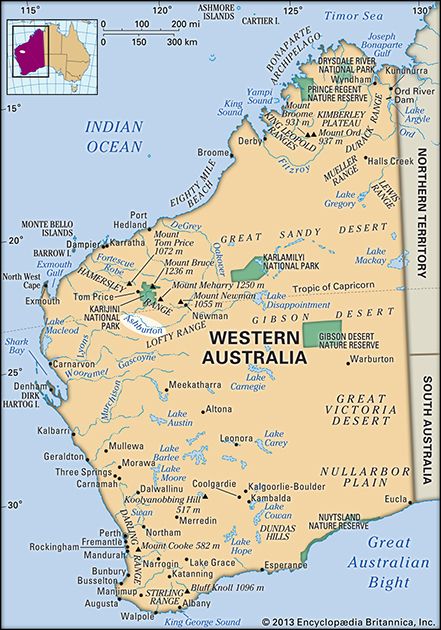
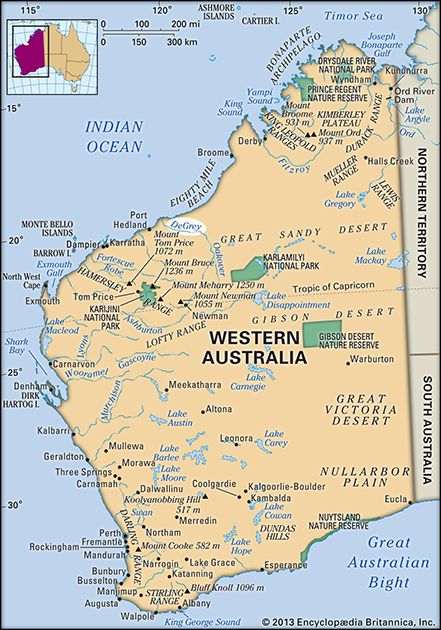
De Grey River
Sorry, the Britannica knowledge base does not contain information regarding the historical and cultural significance of the De Grey River to Indigenous…
What is the historical and cultural significance of the De Grey River to Indigenous Australian communities?
Sorry, the Britannica knowledge base does not contain information regarding the historical and cultural significance of the De Grey River to Indigenous Australian communities. The available records focus primarily on the river’s geography, its naming by European explorers, and its role in regional settlement and industry.1
What is the length and drainage basin size of the De Grey River?
The De Grey River, located in northwestern Western Australia, has a length of 118 miles (190 km) from the confluence of the Oakover and Nullagine rivers to its mouth at the Indian Ocean1.
Regarding the drainage basin size, the provided information does not contain data on the specific area of the river’s drainage basin.
How does the De Grey River compare to other major rivers in Western Australia?
The De Grey River is one of several significant watercourses in the Pilbara region of northwestern Western Australia, alongside the Fortescue and Ashburton rivers. Unlike the state’s two principal rivers—the Fitzroy, which is the largest in Western Australia, and the Ord, which feeds the massive Lake Argyle—the De Grey is a seasonally intermittent stream.12
While the major rivers of the southwest, such as the Swan, are often saline due to agricultural clearing, the De Grey and its counterparts in the Pilbara are characterized by their dramatic transformation from dry beds into raging torrents during the cyclone season. Unlike the perennial rivers of other regions that may be fed by snowmelt or consistent rainfall, the De Grey functions as a vital, albeit ephemeral, drainage system for the area surrounding the Hamersley Range.13
How does the De Grey River contribute to the local ecosystem and wildlife?
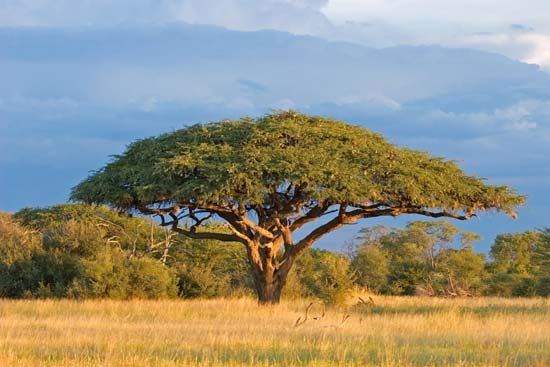
The provided search results do not contain specific information regarding the De Grey River’s direct contribution to the local ecosystem or its specific wildlife populations. While the broader Pilbara region is known for its acacia shrublands, eucalypt woodlands, and diverse fauna—including various reptiles, birds, and mammals—the specific ecological role of the De Grey River itself is not detailed in the available data.
Human activity in the river valley, such as the grazing of sheep, cattle, and horses, has been noted as a factor that can lead to habitat degradation and competition for food, which impacts the state’s native flora and fauna.14
Sources
- De Grey River — Encyclopædia Britannica
- Western Australia - Drainage — Encyclopædia Britannica
- New South Wales - Drainage — Encyclopædia Britannica
- Western Australia - Plant and animal life — Encyclopædia Britannica
Published on · 2 min read