Denisova Cave
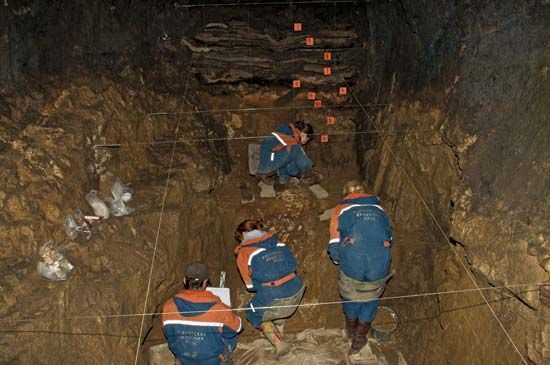
Excavations at Denisova Cave in Russia’s Altai Mountains have yielded significant insights into human evolution:
What are the key discoveries that have been made in the Denisova Cave?
Excavations at Denisova Cave in Russia’s Altai Mountains have yielded significant insights into human evolution:
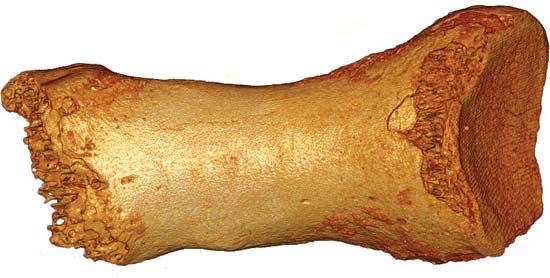
- Discovery of the Denisovans: The cave provided the first evidence of a previously unknown group of hominins, the Denisovans. Genetic analysis of a finger bone (found in 2008) and a tooth (found in 2000) revealed they were genetically distinct from both Neanderthals and modern humans.1
- Interbreeding: Genomic comparisons indicate that Denisovans interbred with early modern humans, as 4 to 6 percent of their genetic material is found in modern populations from Melanesia.12
- Occupational History: The site contains over 20 layers of artifacts, showing intermittent occupation by Denisovans, Neanderthals, and H. sapiens spanning from 280,000 years ago to the Middle Ages. These layers include tools from the Acheulean, Mousterian, and Levalloisian industries.1
What other prehistoric human species have been found in the Denisova Cave, and how did they coexist?
In addition to the Denisovans, evidence from Denisova Cave indicates that the site was inhabited by Neanderthals and early modern humans (H. sapiens) at different times throughout its history.1
Researchers suggest that these three distinct groups of hominins may have inhabited the Altai region concurrently around 40,000 years ago. While the cave shows evidence of intermittent occupation across more than 20 layers of artifacts, the groups did not necessarily occupy the space simultaneously in a social sense. Instead, the site served as a recurring location for these populations over a vast span of time, ranging from 280,000 years ago to the Middle Ages.1
Genetic studies have confirmed that these groups were not entirely isolated from one another; evidence shows that Neanderthals and Denisovans interbred with each other, and both groups also interbred with early modern humans as they migrated out of Africa.2
How have advances in genetic analysis techniques contributed to our understanding of the Denisova Cave inhabitants?
Advances in genetic analysis have been transformative for our understanding of the Denisova Cave inhabitants, primarily through the work of evolutionary geneticist Svante Pääbo, who received the 2022 Nobel Prize for his pioneering research.12
Key contributions include:
- Identification of a New Lineage: In 2010, scientists sequenced the mitochondrial DNA (mtDNA) from a finger bone found in the cave. The results revealed a genetic profile distinct from both Neanderthals and modern humans, confirming the existence of the Denisovans.1
- Nuclear Genome Sequencing: By extracting DNA from cell nuclei, researchers sequenced the Denisovan nuclear genome. This allowed for a precise comparison with other hominins, showing that Denisovans were a genetically distinct group that branched off from a common ancestor roughly one million years ago.1
- Evidence of Interbreeding: Genomic analysis revealed that 4 to 6 percent of the genetic material in modern Melanesian populations matches the Denisovan genome. This provided definitive evidence that Denisovans interbred with early modern humans as they migrated across Eurasia.12
Where is the Denisova Cave located, and what makes it significant in archaeological studies?
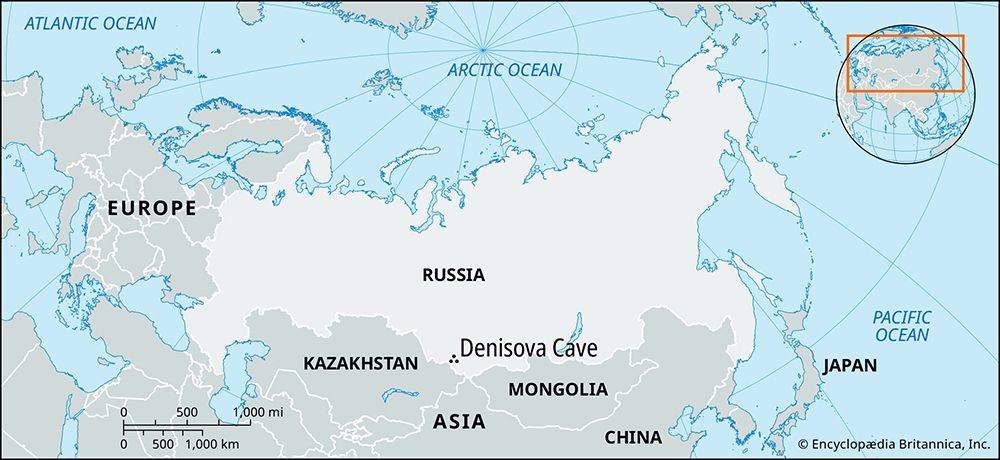
Denisova Cave is located in the Anui River valley, approximately 60 miles south of Biysk within the Altai Mountains of Russia.1
The site is of immense significance to paleoanthropology due to its extensive stratigraphic record, containing over 20 layers of artifacts that document human occupation spanning from 280,000 years ago to the Middle Ages. It is most famous for the discovery of the Denisovans, a previously unknown group of hominins identified through mitochondrial DNA and nuclear genome sequencing.1
This research, led by Svante Pääbo, fundamentally altered our understanding of human evolution by proving that Denisovans were a distinct lineage that interbred with both Neanderthals and early modern humans. The cave’s artifacts, including those from the Acheulean and Mousterian industries, provide a rare window into the complex interactions between these different hominin groups in Eurasia.1
Sources
- Denisova Cave — Encyclopædia Britannica
- Denisovan — Encyclopædia Britannica
- Homo sapiens - Evolution — Encyclopædia Britannica
Published on · 3 min read