Density-dependent Factor
A density-dependent factor is any force in ecology that influences the size of a population based on its density—the number of individuals per unit area.
What is density-dependent factor?
A density-dependent factor is any force in ecology that influences the size of a population based on its density—the number of individuals per unit area.1
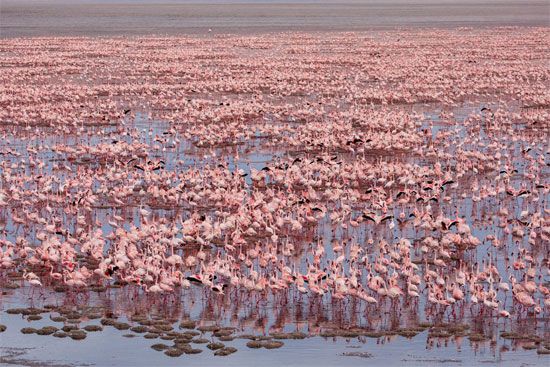
These factors, often biological in nature, are frequently referred to as regulating factors because they help maintain population density within a specific range. As a population becomes more crowded, the impact of these factors typically increases. For example:1
- Disease: Pathogens often spread more rapidly when individuals live in close proximity.1
- Competition: As density rises, competition for essential resources—such as food, water, nesting sites, and sunlight—intensifies, affecting a larger portion of the population.1
Conversely, if a population decreases due to mortality or migration, the influence of these density-dependent factors wanes, as individuals encounter one another less frequently and resource competition declines. Population dynamics are generally shaped by a combination of these factors and density-independent factors, which affect populations regardless of their size.1
What are some examples of density-independent factors?
A density-independent factor is any force in ecology that influences the size of a population regardless of how many individuals are present in a given area. Unlike density-dependent factors, which are typically biological, these forces often stem from physical or chemical phenomena.31
Common examples of density-independent factors include:
- Weather and Climate: Shifts in temperature or precipitation patterns can impact survival rates regardless of population size.34
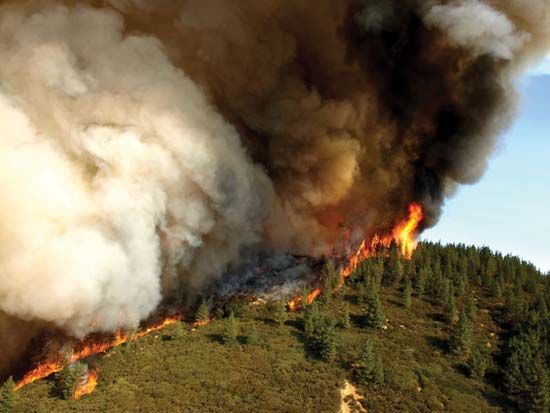
- Natural Disasters: Events such as flooding, wildfires, and landslides can cause significant mortality across a population, whether individuals are clustered together or widely dispersed.3
- Resource Availability: For certain organisms, the sudden loss of essential environmental components—such as a drop in oxygen levels due to flooding—acts as a density-independent factor, affecting the population indiscriminately.3
Because these factors do not adjust based on population size, they are often referred to as limiting factors. Most populations are shaped by a combination of these independent forces and density-dependent regulating factors.34
How does the concept of carrying capacity relate to population growth?
Carrying capacity is the maximum population size that a specific environment can sustain based on available resources like food, shelter, and water. It acts as a critical threshold: when a population is below this level, its numbers tend to increase, but when it exceeds this capacity, numbers typically decrease due to resource shortages.5
This relationship is mathematically described by the logistic function, which models population growth as an S-shaped, or sigmoid, curve. In this model, growth is initially rapid but slows as the population approaches the carrying capacity (represented as L), eventually leveling off as the environment reaches a point of stability.6
If a population exceeds its carrying capacity, it enters a state of overpopulation. This can lead to environmental degradation and, in severe cases, a population crash—a sudden, sharp decline in numbers caused by high mortality and reproductive failure. This regulation is often managed by density-dependent factors, such as increased competition for resources or the spread of disease, which intensify as a population becomes more crowded.71
Why do diseases spread more easily in dense populations?
Diseases spread more easily in dense populations primarily because individuals live in closer proximity, which increases the frequency of contact and facilitates the transmission of infectious disease. In ecology, this is classified as a density-dependent factor, where the rate of disease transmission rises as the number of individuals per unit area increases.18
However, high density alone is not the sole driver; problems often arise specifically when density leads to overcrowding. Overcrowded conditions frequently correlate with diminished sanitation and lower quality of living, which create environments where pathogens can thrive and spread rapidly. Furthermore, such environments can facilitate the evolution of new strains of viruses and bacteria through rapid cycling between hosts.9
Additionally, dense settings—particularly closed indoor spaces—can lead to superspreader events, where a disproportionately high number of cases are traced back to a single gathering or individual.10
Sources
- density-dependent factor — Encyclopædia Britannica
- population ecology - Lotka-Volterra equations — Encyclopædia Britannica
- density-independent factor — Encyclopædia Britannica
- population ecology - Factors affecting population fluctuation — Encyclopædia Britannica
- carrying capacity — Encyclopædia Britannica
- logistic function — Encyclopædia Britannica
- Overpopulation — Encyclopædia Britannica
- What Is a Superspreader Event? — Encyclopædia Britannica
- animal disease - Role of ecology — Encyclopædia Britannica
- Population density: Top Questions — Encyclopædia Britannica
- infectious disease - Population density — Encyclopædia Britannica
Published on · 3 min read