Density-independent Factor
In ecology, a density-independent factor is any force that influences the size of a population regardless of how many individuals are present per unit area.…
What is density-independent factor?
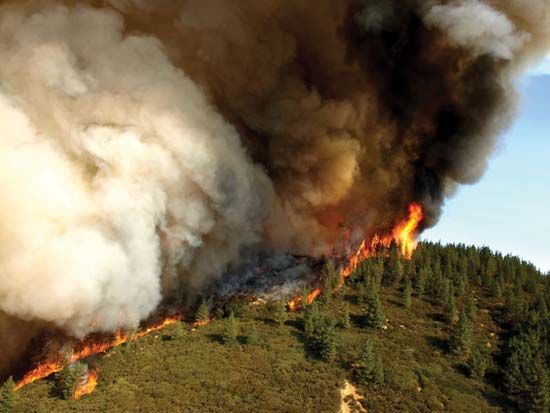
In ecology, a density-independent factor is any force that influences the size of a population regardless of how many individuals are present per unit area. Unlike density-dependent factors, which fluctuate based on population concentration, these forces typically stem from physical or chemical phenomena rather than biological interactions.12
Common examples include:
- Weather and Climate: Shifts in temperature or precipitation patterns.1
- Natural Disasters: Events such as flooding, wildfires, and landslides.1
- Environmental Conditions: The availability of essential resources like oxygen, which can impact survival rates regardless of population density.1
The population dynamics of most living things are shaped by a combination of these independent factors and density-dependent forces, with the relative impact of each varying significantly between different species and environments.12
How do density-dependent factors differ from density-independent ones?
In ecology, population size is influenced by two distinct categories of factors that differ primarily in how they respond to the number of individuals per unit area.
Density-Dependent Factors
These forces, often called regulating factors, change in intensity based on the population density. Their influence increases as a population grows and decreases as it thins out, helping to maintain density within a specific range. They typically stem from biological phenomena, such as:23
- Competition: As individuals crowd together, the struggle for food, water, and nesting sites intensifies.23
- Disease: Pathogens spread more rapidly when individuals live in close proximity.23
Density-Independent Factors
Also known as limiting factors, these exert their influence on a population regardless of how concentrated its members are. They are generally physical or chemical in nature rather than biological. Examples include:23
- Weather and Climate: Shifts in weather or climate patterns affect survival regardless of population size.3
- Environmental Events: Natural disasters or sudden changes in habitat conditions impact the population uniformly.2
Most populations are shaped by a combination of both types of factors, though their relative impact varies by species and environment.23
What are some examples of density-dependent limiting factors?
Density-dependent limiting factors are biological forces that influence a population’s size based on the number of individuals per unit area. These factors are often called “regulating factors” because they help maintain population density within a specific range.23
Key examples include:
- Competition: As a population grows, individuals must compete more intensely for essential resources such as food, water, sunlight, and nesting sites. The influence of this competition increases as the population becomes more crowded.23
- Disease: Infectious agents often spread more rapidly in high-density populations where individuals live in close proximity. Overcrowding can lead to poor living conditions and sanitation, further facilitating the transmission of disease.245
- Predation: High-density areas can attract predators, as the increased availability of prey makes it easier for them to hunt and thrive.6
As population density decreases—due to factors like mortality or migration—the intensity of these density-dependent pressures typically declines.2
How do natural disasters impact population growth over time?
Natural disasters, such as flooding, wildfires, and landslides, act as density-independent factors that impact population growth regardless of how many individuals are present in an area. Unlike density-dependent factors that regulate populations based on crowding, these physical events can cause sudden, uniform declines in population size.217
The long-term impact of these disturbances on a population depends heavily on the species’ dispersal capability and the proximity of surviving source populations. Following a disaster, the area may be recolonized by “fugitive” or “weedy” species, which are adapted to thrive in disturbed environments due to their high reproductive output and excellent dispersal traits.3
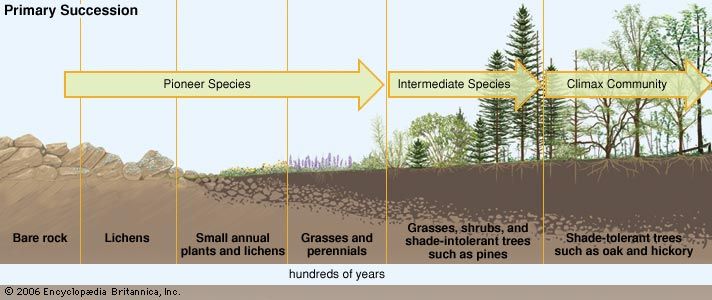
Over time, these early arrivals are often replaced by hardier, more competitive species that eventually form a stable climax community. However, if a population remains small for many generations following such disturbances, it faces the risk of losing genetic variation through sampling error, which can limit its ability to adapt to future environmental changes.38
Sources
- density-independent factor — Encyclopædia Britannica
- density-dependent factor — Encyclopædia Britannica
- population ecology - Factors affecting population fluctuation — Encyclopædia Britannica
- infectious disease - Population density — Encyclopædia Britannica
- disease - Epidemiology — Encyclopædia Britannica
- Population density: Top Questions — Encyclopædia Britannica
- ecological disturbance - Spatial distribution — Encyclopædia Britannica
- population ecology - Effects of population size — Encyclopædia Britannica
Published on · 3 min read