Diamondback Moth
The diamondback moth (Plutella xylostella) is a small moth characterized by several distinct physical features:
What are the distinctive physical characteristics of the diamondback moth?
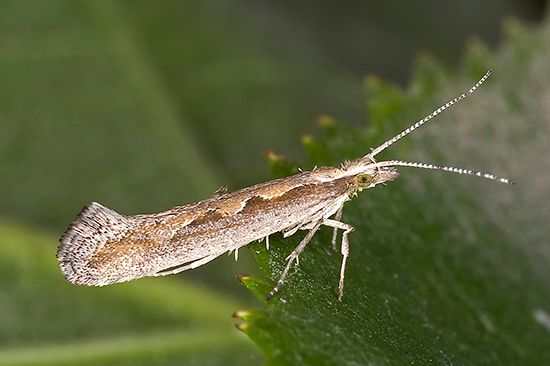
The diamondback moth (Plutella xylostella) is a small moth characterized by several distinct physical features:
- Size: The adult moth has a wingspan of approximately 15 mm (0.6 inch).1
- Wing Markings: The forewings feature wavy yellow radial lines that separate a brown anterior area from a cream-colored hind edge.1
- Diamond Pattern: When the moth is at rest and its wings are folded, these yellow lines align to form a series of diamond-shaped marks along its back, which is the origin of its common name.1
- Antennae Position: Unlike some of its relatives, such as the ermine moth, the diamondback moth holds its antennae directed forward when at rest.1
These moths are significant agricultural pests, particularly for plants in the Brassicaceae family, such as cabbage.1
How does the diamondback moth impact agriculture and crop production?
The diamondback moth (Plutella xylostella) is a significant agricultural pest that causes extensive damage to crops within the Brassicaceae family, including cabbages and related vegetables, on a global scale.1
The primary impact on crop production stems from the feeding behavior of the larvae, which can lead to considerable destruction of these plants. Managing this pest is challenging because the species is highly adept at developing resistance to various control methods. While farmers have traditionally relied on synthetic insecticides, the moth’s susceptibility to these chemicals varies, and it frequently evolves resistance to most agents.1
Notably, the diamondback moth was the first insect to develop resistance to Bt toxin, a biological control agent expressed in genetically modified crops. Due to this persistent resistance, researchers are exploring alternative strategies, such as transgenic sexing, which involves engineering males to carry a gene that prevents the maturation and reproduction of female offspring.1
What is the life cycle of the diamondback moth?
The life cycle of the diamondback moth (Plutella xylostella) follows the standard developmental stages of insects undergoing complete metamorphosis. While the provided information focuses on the adult and larval stages, the cycle is characterized by the following progression:
- Larval Stage: The larvae are the primary cause of agricultural damage, feeding on plants within the Brassicaceae family, such as cabbages and allied vegetables.1
- Pupation: Once the larvae have completed their growth, they transition into the pupal stage. They construct silk cocoons directly on the surface of the leaves of their host plants to undergo transformation.1
- Adult Stage: The adult moth emerges as a small insect with a wingspan of approximately 15 mm (0.6 inch). It is distinguished by wavy yellow radial lines on its forewings that form a series of diamond-shaped marks when the wings are folded at rest.1
What are some effective methods for controlling diamondback moth populations in agriculture?
Controlling the diamondback moth (Plutella xylostella) is a significant challenge in agriculture due to the species’ rapid ability to develop resistance to various control measures. Effective management strategies include:
- Synthetic Insecticides: Farmers frequently utilize chemical agents such as chlorfluazuron and teflubenzuron to manage populations. However, because the moth’s susceptibility to these chemicals varies greatly, it often evolves resistance to most available agents, limiting their long-term effectiveness.1
- Biological Control (Bt Toxin): Crops can be genetically modified to express Bt toxin, a natural insecticide derived from the bacterium Bacillus thuringiensis. While this was once a primary control method, the diamondback moth was the first insect pest to develop resistance to it, necessitating the search for more sustainable solutions.1
- Transgenic Sexing: As an alternative to traditional chemical and biological controls, researchers are exploring transgenic sexing. This method involves engineering male moths to carry a specific gene that prevents the maturation and reproduction of female offspring, thereby reducing the population’s ability to proliferate.1
Sources
- diamondback moth — Encyclopædia Britannica
- diamondback moth — Merriam-Webster
Published on · 3 min read