Ermine Moth
An ermine moth refers to any of several species of insects within the family Yponomeutidae, though the term is also applied to certain moths in the family…
What is ermine moth?
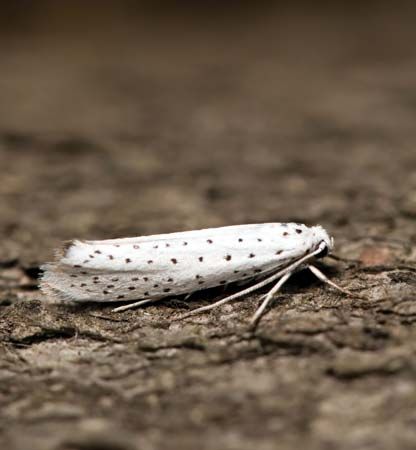
An ermine moth refers to any of several species of insects within the family Yponomeutidae, though the term is also applied to certain moths in the family Arctiidae. These insects are widely distributed throughout the Northern Hemisphere.12
Adult ermine moths typically feature brilliant white or cream-colored wings adorned with dark fleck marks. This distinctive appearance, combined with their fluffy thorax and abdomen, resembles the winter coat of the ermine—a weasel species known for its white fur—which is the origin of the moth’s common name.21
With a wingspan of approximately 3 cm (1.2 inches), these moths are often associated with the genus Yponomeuta. Their hairy caterpillars are known to feed on a variety of vegetation, including dandelions, weeds, cultivated shrubs, and fruit trees.213
What is the life cycle of a moth?
Moths, as members of the order Lepidoptera, undergo a process of complete metamorphosis consisting of four distinct stages: egg, larva, pupa, and adult.
- Larva: Commonly known as a caterpillar, this is the primary nutritive stage of the life cycle. Caterpillars feed on various plants, storing the energy required for their upcoming transformation.67
- Pupa: Following the larval stage, the insect enters a resting phase. Most moths build a protective cocoon made of silk—sometimes incorporating debris like leaves or wood pulp—around themselves. Inside this structure, the caterpillar undergoes a major biological reorganization, breaking down larval tissues to develop adult structures like wings.89
- Adult: Once the transformation is complete, the adult emerges from the cocoon. It typically pumps body fluids into its wing pads to expand them into their final shape. While the larva focuses on growth, the adult stage is primarily reproductive, facilitating mating and the dispersal of the species. Depending on the species, adults may feed on nectar for energy or rely entirely on reserves stored during the larval stage.7
How do caterpillars protect themselves from predators?
Caterpillars have evolved a diverse array of defense mechanisms to survive predation, primarily relying on concealment, chemical deterrents, and physical barriers.
Concealment and Camouflage
Many caterpillars avoid detection by blending into their environment. This cryptic coloration allows them to mimic leaves, twigs, or even bird droppings. Some species enhance this camouflage through behavior, such as remaining immobile or assuming rigid, deathlike positions. Others construct protective shelters, such as silk-lined tunnels, nests of webbed leaves, or portable cases made of debris, which help them hide from predators.101112
Chemical and Physical Defenses
When concealment fails, caterpillars often employ active defenses:
- Chemical Deterrents: Many species sequester toxins from the plants they consume, making them poisonous or distasteful to predators. Others produce foul-smelling secretions or spray irritants like formic acid to repel attackers.101112
- Physical Protection: Some caterpillars are covered in dense, barbed hairs that can break off and cause intense itching or swelling in predators. Others possess venomous, stinging spines.101112
- Startle Displays: To delay or deter an attack, some caterpillars use “startle effects,” such as displaying prominent, false eyespots or producing sudden, high-pitched chirps and vibrations.1112
What are some other insects that mimic animal fur?
While many insects possess hair or scales, the term “mimicry” in biology typically refers to an organism evolving to resemble another species to gain a survival advantage, rather than simply possessing a furry appearance.
In the context of mimicry, insects often evolve to resemble other animals to deter predators:
- Clearwing Moths: These moths are highly effective mimics of stinging wasps and bees. Their resemblance extends to the shape and coloration of their wings, abdomen, and legs, effectively using the “furry” or banded appearance of stinging insects to warn off potential predators.13
- Jumping Ant Spiders: While not an insect, the jumping ant spider (Myrmarachne formicaria) is a notable example of an arthropod that mimics an ant. It modifies its body shape to resemble the head, thorax, and abdomen of an ant and even disguises its extra pair of legs by holding them above its head to mimic antennae.14
It is important to note that many insects, such as tiger moths, naturally possess thick, furry bodies or hairy larvae (woolly bears) as a physical trait rather than as a form of mimicry. In these cases, the hair may serve other functions, such as protection or insulation, rather than mimicking the fur of another animal.11
Sources
- ermine moth — Encyclopædia Britannica
- ermine moth — Merriam-Webster
- yponomeutid — Merriam-Webster
- Yponomeutidae — Merriam-Webster
- ermine — Encyclopædia Britannica
- pupa — Encyclopædia Britannica
- What’s the difference between moths and butterflies? — Encyclopædia Britannica
- Lepidoptera - Pupa , or chrysalis — Encyclopædia Britannica
- Lepidoptera - The adult — Encyclopædia Britannica
- insect - Protection from enemies — Encyclopædia Britannica
- Lepidoptera - Protection against danger — Encyclopædia Britannica
- caterpillar — Encyclopædia Britannica
- mimicry - Batesian mimicry — Encyclopædia Britannica
- aggressive mimicry — Encyclopædia Britannica
- tiger moth — Encyclopædia Britannica
Published on · 3 min read