Diyālā River
The provided search results do not contain specific information regarding the role of the Diyālā River in ancient trade routes. While the Diyālā River is…
What role did the Diyālā River play in ancient trade routes?
The provided search results do not contain specific information regarding the role of the Diyālā River in ancient trade routes. While the Diyālā River is identified as an important tributary of the Tigris River that flows through regions historically associated with Assyria, the available documentation focuses on its modern geography, irrigation, and hydroelectric utility rather than its historical function in commerce.
More broadly, the history of Mesopotamia highlights that the region was a hub for trade due to a lack of local wood, stone, and metal, necessitating the import of these materials from mountainous areas. However, the specific contribution of the Diyālā to these ancient networks is not detailed in the provided sources.
How has modern dam construction affected the flow and usage of the Diyālā River?
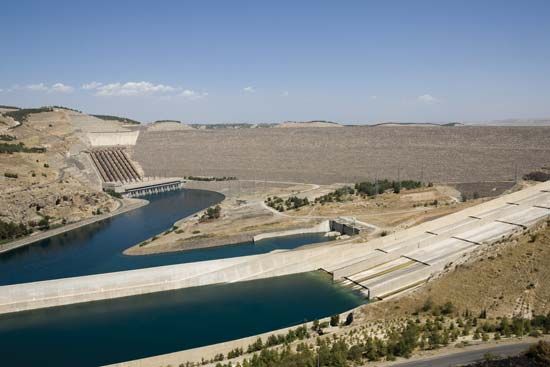
Modern dam construction on the Diyālā River has fundamentally altered its flow and utility, primarily through the implementation of infrastructure designed for flood control, hydroelectric power generation, and agricultural support.
Key developments include:
- Water Management: Dams such as the Khan Gorge divert water to regulate flow, which is essential for the irrigation of crops including wheat, rye, cotton, rice, and tobacco in the river’s lower valley.1
- Energy Production: The Darbandikhan Dam, located in eastern Kurdistan, serves as a major site for hydroelectric generation4.
- Operational Challenges: While these dams are critical to Iraq’s power grid, their output often remains below installed capacity. This is attributed to a combination of aging infrastructure, a lack of replacement parts, and environmental factors such as drought, which can significantly reduce the efficiency of hydroelectric generation.4
How does the Diyālā River contribute to Iraq’s water resources and agriculture?
The Diyālā River is a vital tributary of the Tigris River that plays a significant role in Iraq’s water management and agricultural productivity. By joining the Tigris just southeast of Baghdad, it serves as a critical water source for the region east of the capital.156
Agricultural Contribution
The river supports the cultivation of various essential crops in its lower valley, including wheat, rye, cotton, rice, and tobacco. To sustain these agricultural activities, the river’s flow is managed through a system of canals that rely on the Diyālā Weir and the Hamrin Dam. These infrastructure projects have effectively restored the river to its historical function as a primary source of irrigation for the surrounding plains.15
Water Resource Management
Beyond irrigation, the river is managed for broader water resource objectives:
- Flood Control: Dams, such as the Khan Gorge, are used to regulate the river’s flow, mitigating the risk of periodic flooding that historically threatened areas near Baghdad.16
- Energy: The river is utilized for hydroelectric power generation, contributing to the region’s energy infrastructure.1
How does the Diyālā River impact the local communities and economy along its banks?
The Diyālā River serves as a vital economic and social artery for the communities along its banks, particularly in the lower valley. Its impact is defined by its role in agriculture, energy, and regional development:
- Agricultural Support: The river is essential for the irrigation of crops such as wheat, rye, cotton, rice, and tobacco. Through a system of dams and water diversion, it sustains the agricultural productivity of the flat Tigris lowlands, supporting the livelihoods of local farmers.1
- Economic Centers: Ba‘qūbah stands as the primary riparian center along the river’s lower course, acting as a focal point for the communities that rely on the river’s resources.1
- Energy Infrastructure: The Darbandikhan Dam in eastern Kurdistan is a key site for hydroelectric power generation. While this infrastructure is critical for the regional power grid, its output is often limited by aging equipment and environmental factors like drought.4
- Flood Control: By regulating water flow, the river’s dams protect downstream communities from the threat of periodic flooding.1
Sources
- Diyālā River — Encyclopædia Britannica
- Tigris-Euphrates river system - Navigation — Encyclopædia Britannica
- history of Mesopotamia - The background — Encyclopædia Britannica
- Iraq - Other minerals and energy — Encyclopædia Britannica
- Tigris-Euphrates river system - Agriculture and irrigation — Encyclopædia Britannica
- Tigris-Euphrates river system - Physiography of the Tigris — Encyclopædia Britannica
- Baghdad - City site — Encyclopædia Britannica
Published on · 3 min read