Fish River
The name "Fish River" typically refers to one of two distinct rivers in southern Africa, which are often confused due to their similar names.
What is Fish River?
The name “Fish River” typically refers to one of two distinct rivers in southern Africa, which are often confused due to their similar names.
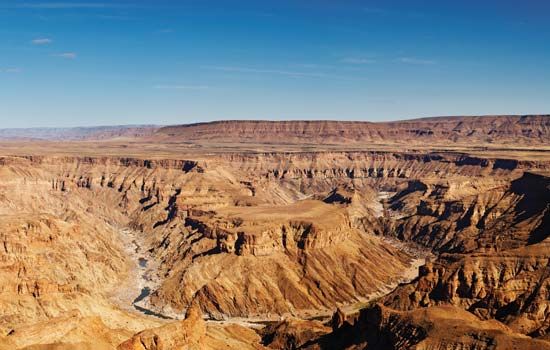
The Fish River is an intermittent stream located in southern Namibia. Stretching approximately 375 miles (600 km), it rises in Namaqualand and flows south across the Great Namaqualand plateau. It is notable for carving a spectacular gorge that reaches depths of 1,000 to 2,300 feet (300 to 700 m) before emptying into the Orange River.1
In contrast, the Great Fish River is a 430-mile-long (692 km) river in the Eastern Cape province of South Africa. Unlike the Namibian river, it flows primarily southward and eastward to empty into the Indian Ocean. Historically, this river served as a significant frontier and battle zone in the 19th century between British settlers and local tribal groups.2
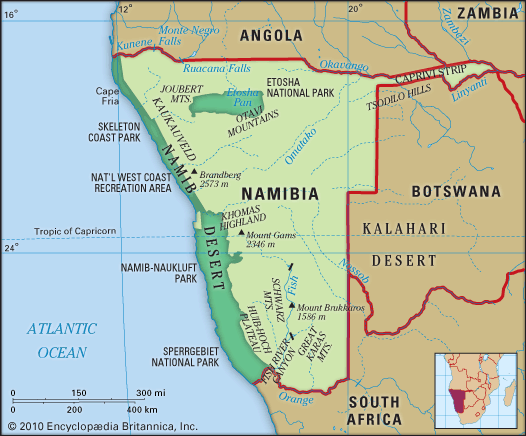
How was the Fish River Canyon formed?
The Fish River canyon was formed through the erosive power of the river as it flows south across the Great Namaqualand plateau in Namibia. Over vast geological time, the intermittent stream cut deep into the plateau’s rock layers, resulting in a spectacular gorge that reaches depths of 1,000 to 2,300 feet (300 to 700 m).1
What wildlife lives in the Fish River region?
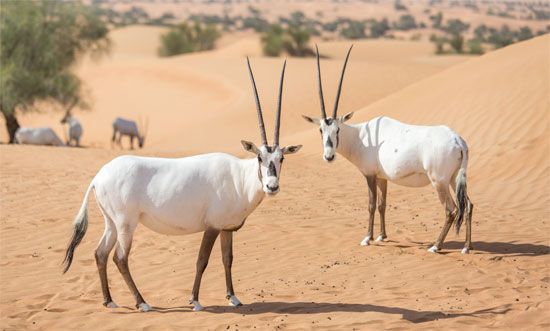
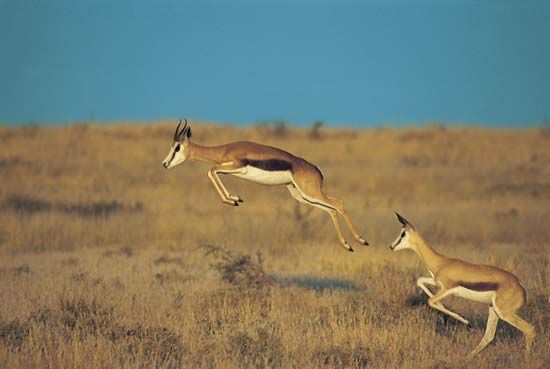
The Fish River region in southern Namibia, specifically within the |Ai-|Ais–Richtersveld Transfrontier Park, is part of a landscape known for its diverse game populations. While the provided search results do not list specific species exclusive to the canyon floor, the broader Namibian plateau and ranching zones are home to various antelope species, such as gemsbok and springbok, as well as giraffes.34
In the wider Namib region, rivers flowing from the interior highlands support larger mammals, including elephants, rhinoceroses, lions, hyenas, and jackals. Namibia has established several national parks, including the3|Ai-|Ais and Fish River Canyon Park, to protect this rich animal life from threats such as poaching.4
Why is the Orange River important to Namibia?
The Orange River is of significant importance to Namibia, primarily serving as the country’s southern boundary with South Africa. Its role in the region is defined by both its geographical position and its economic influence:5
- Economic and Industrial Hubs: The river is closely linked to the diamond industry in southwestern Namibia. The town of Oranjemund, located near the river’s mouth, was established as a company town to support the extraction of gem-quality diamonds. This area is part of the Sperrgebiet, a historically restricted region that has been vital to Namibia’s diamond production.67
- Infrastructure and Connectivity: The river serves as a transit point, with a modern highway bridge connecting Oranjemund to Alexander Bay in South Africa, facilitating regional movement and access.6
- Geographical Significance: As it flows toward the Atlantic Ocean, the river bisects the southern Namib desert, providing a critical water source in an otherwise extremely arid environment.56
Sources
- Fish River — Encyclopædia Britannica
- Great Fish River — Encyclopædia Britannica
- Namib - Animal life — Encyclopædia Britannica
- Namibia - Plant and animal life — Encyclopædia Britannica
- Orange River — Encyclopædia Britannica
- Oranjemund — Encyclopædia Britannica
- Orange River - Physiography — Encyclopædia Britannica
- Sperrgebiet — Encyclopædia Britannica
- Orange River - People and economy — Encyclopædia Britannica
Published on · 2 min read