Flathead River
The Flathead River is a 240-mile-long (385 km) river that originates in the MacDonald Range of southeastern British Columbia, Canada. It flows southward…
What is Flathead River?
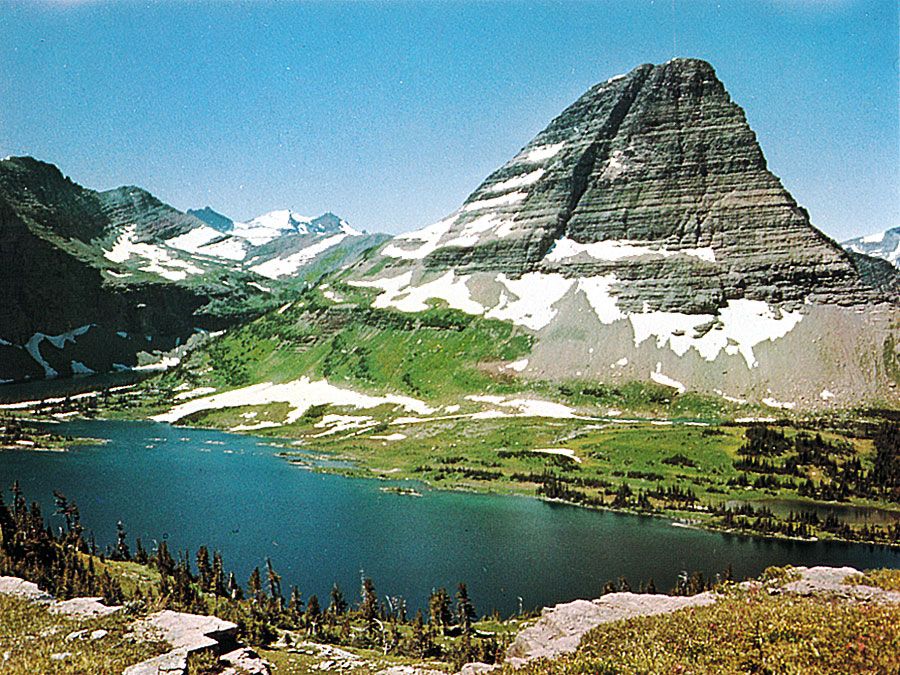
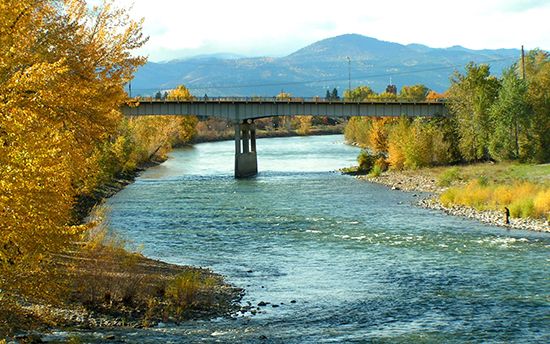
The Flathead River is a 240-mile-long (385 km) river that originates in the MacDonald Range of southeastern British Columbia, Canada. It flows southward across the international border into Montana, passing between the Whitefish Range and the Lewis Range near Glacier National Park.1
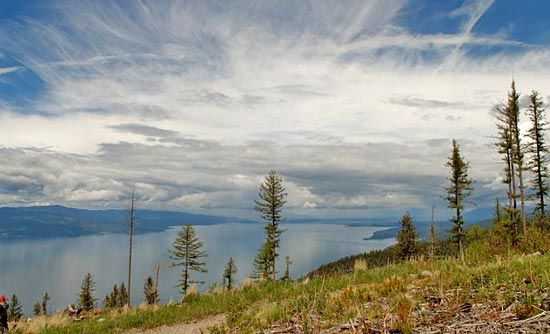
The river eventually flows into Flathead Lake, the largest freshwater lake in the United States west of the Mississippi River. After emerging from the lake, the river continues until it joins the Clark Fork near Paradise, Montana. Its primary tributaries include the Middle Fork and the South Fork, the latter of which passes through the Hungry Horse Dam and Reservoir. The surrounding Flathead Valley is a notable region for agriculture, lumbering, mining, and tourism.12
How was Flathead Lake formed by glaciers?
Flathead Lake was formed by the glacial damming of the Flathead River. During the period of continental glaciation, massive ice sheets moved across the landscape, carving out basins and depositing debris. As these glaciers retreated, they left behind terminal and end moraines—large ridges of sediment—that acted as natural barriers. These glacial deposits obstructed the flow of the river, causing water to pool and create the lake basin that exists today.21
What is the significance of the Continental Divide?
The Continental Divide is a significant geographical feature consisting of a fairly continuous ridge of mountain summits that serves as the primary water parting for North America. Its primary significance lies in its role as a drainage boundary: it separates the continent’s water flow into two distinct directions. Water on the eastern side of the divide flows toward the Mississippi River, the Rio Grande, or Hudson Bay, while water on the western side flows into the Pacific Ocean.4
Running primarily along the crest of the Rocky Mountains, the divide stretches from British Columbia through the United States and continues southward into Mexico and Central America. While often referred to as the Great Divide, the term “continental divide” is also used generally to describe the main water parting on any continent.45
What wildlife lives in Glacier National Park?
Glacier National Park, located in the northern Rocky Mountains of Montana, supports a diverse range of wildlife across its varied elevations and ecosystems.
Mammals
The park’s high elevations are home to mountain goats and bighorn sheep. The forested areas provide habitat for both grizzly bears and black bears, as well as moose, elk, and various species of deer. Additionally, gray wolves, which were previously eradicated from the region, began returning to the park in the mid-1980s.
Birds and Aquatic Life
The park serves as a habitat or migratory path for more than 250 species of birds, with bald eagles being particularly notable. The numerous lakes and streams within the park support populations of trout, turtles, and occasional salmon.
It is important to note that Glacier National Park is distinct from Glacier Bay National Park and Preserve in Alaska, which hosts different species such as humpback whales and Steller sea lions.
Sources
- Flathead River — Encyclopædia Britannica
- Flathead Lake — Encyclopædia Britannica
- glacial landform - Depositional landforms of continental glaciers — Encyclopædia Britannica
- Continental Divide — Encyclopædia Britannica
- Continental Divide — Merriam-Webster
- Montana - Plant and animal life — Encyclopædia Britannica
- Glacier Bay National Park and Preserve — Encyclopædia Britannica
- Glacier National Park — Encyclopædia Britannica
Published on · 2 min read