Fitzroy River
There are two major rivers in Australia named the Fitzroy, and their roles in water supply differ based on their geography:
What role does the Fitzroy River play in the water supply for nearby communities?
There are two major rivers in Australia named the Fitzroy, and their roles in water supply differ based on their geography:
- Fitzroy River (Queensland): This river flows through eastern Queensland, passing through towns such as Rockhampton, Emerald, Morgan, Clermont, and Springsure. While it supports experimental pasturing and rice farming on its lower floodplain, the provided information does not specify its direct role in municipal water supply for these communities.1
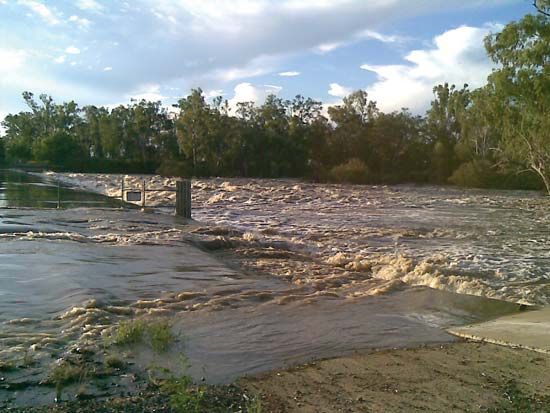
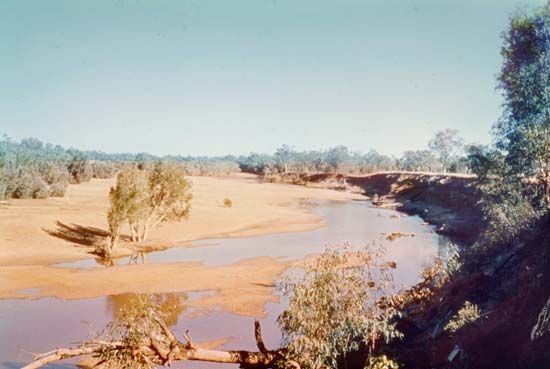
- Fitzroy River (Western Australia): Located in the Kimberley region, this river traverses cattle and sheep country. Its primary water management feature is a dam at Camballin, which is used to control water for irrigation. Additionally, the settlement of Fitzroy Crossing is situated near large, permanent waterholes that are essential for sustaining local wildlife.2
What are the main geographical features and characteristics of the Fitzroy River?
Australia features two distinct rivers named the Fitzroy, each with unique geographical characteristics.
Fitzroy River (Queensland)
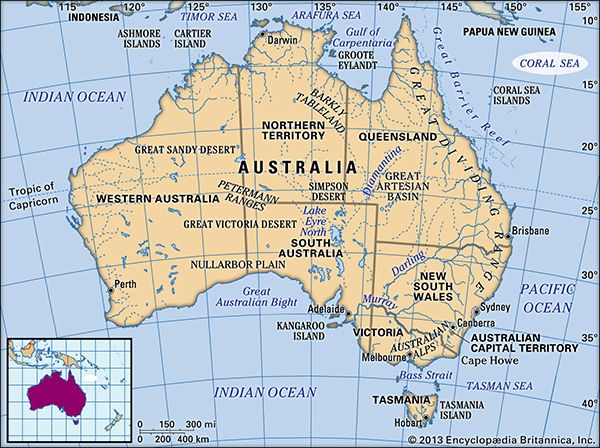
Located in eastern Australia, this river is formed by the confluence of the Dawson and Mackenzie rivers on the slopes of the Great Dividing Range.1
- Course: It flows 300 miles (480 km) northeast and then southeast, entering Keppel Bay in the Coral Sea.1
- Catchment: Its massive drainage basin covers 55,000 square miles (142,000 square km).1
- Navigation: The river is navigable for 35 miles (56 km) from its mouth at Port Alma to Rockhampton.1
Fitzroy River (Western Australia)
As the state’s largest river, it drains the northern Kimberley plateau.23
- Course: Rising in the Durack Range, it traces a 325-mile (525-km) path through the King Leopold Ranges and Geikie Gorge before emptying into the Indian Ocean at King Sound2.
- Features: The mouth is 6 miles (10 km) wide and experiences a 25-foot (8-meter) tidal rise. Navigation is limited by sandbars and snags.2
How does the Fitzroy River contribute to the local ecosystem and biodiversity?
The Fitzroy River in Western Australia plays a significant role in supporting regional biodiversity, particularly through its unique geological features. The river flows through the Geikie Gorge, which serves as a critical habitat for numerous freshwater crocodiles. Additionally, the upper reaches of the river near Fitzroy Crossing contain large, permanent waterholes that are essential for sustaining local wildlife, especially during drier periods.2
Regarding the Fitzroy River in Queensland, the provided information focuses primarily on its hydrological course, catchment area, and agricultural use, such as experimental pasturing and rice farming on its lower floodplain. The current data does not detail specific contributions of the Queensland river to local biodiversity or ecosystem health beyond these land-use activities.1
What are some of the unique plant and animal species found in and around the Fitzroy River?
The search results provide specific information regarding the wildlife of the Fitzroy River in Western Australia, but they do not list unique plant or animal species for the Fitzroy River in Queensland.
Western Australia: Fitzroy River
The Fitzroy River in the Kimberley region is home to a notable population of freshwater crocodiles, which are frequently found in the Geikie Gorge. Additionally, the area surrounding Fitzroy Crossing features large, permanent waterholes that serve as vital refuges for local wildlife, particularly during the drier seasons.2
Queensland: Fitzroy River
Regarding the Fitzroy River in Queensland, the available information focuses on its geography, catchment area, and agricultural land use, such as rice farming and pasturing on its floodplains. The provided data does not contain information regarding specific plant or animal species found in or around this river system.1
Sources
- Fitzroy River — Encyclopædia Britannica
- Fitzroy River — Encyclopædia Britannica
- Western Australia - Drainage — Encyclopædia Britannica
Published on · 3 min read