Do Porcupine Quills Grow Back?
Yes, porcupine quills do grow back. Because quills are modified hairs made of keratin, they are naturally shed and replaced over time, much like standard…
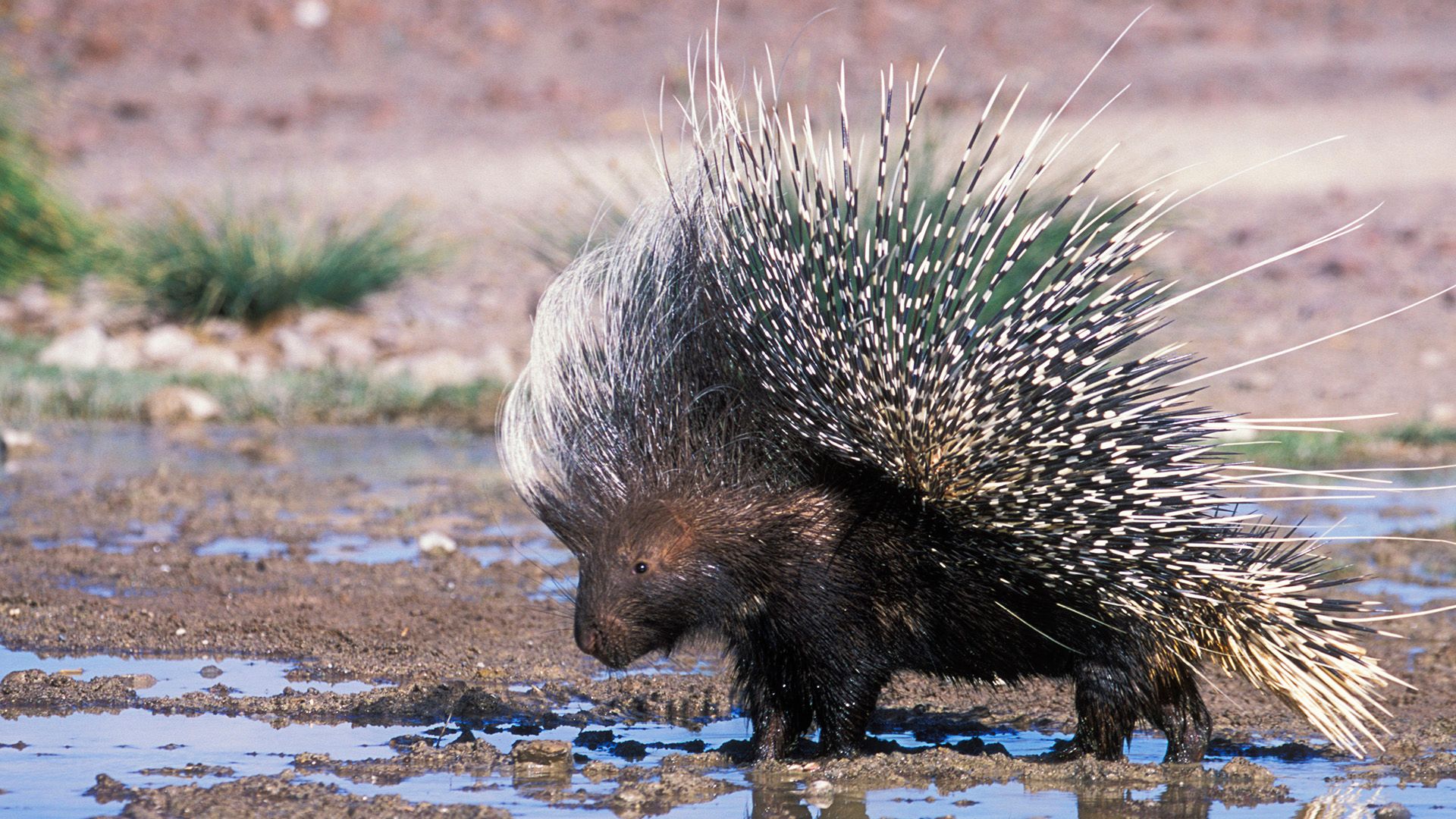
Do porcupine quills grow back?
Yes, porcupine quills do grow back. Because quills are modified hairs made of keratin, they are naturally shed and replaced over time, much like standard hair.1
When a porcupine loses its quills—often after they detach to deter a predator—new ones begin to grow within a few days. The rate of growth is approximately 1 mm every two days, and depending on the species and environmental factors like diet, a full replacement can take several months. Notably, during winter months when food sources are scarce, this regrowth process may be delayed or suspended.1
What is the difference between Old World and New World porcupines?
Old World and New World porcupines are distinct groups of rodents separated by geography, evolutionary history, and physical characteristics.
Classification and Geography
- Old World Porcupines (Family Hystricidae): Found in Asia, Africa, and Europe, this family consists of 11 species across three genera (Hystrix, Atherurus, and Trichys).23
- New World Porcupines (Family Erethizontidae): Native to North and South America, this family includes 16 species across five genera (Chaetomys, Coendou, Echinoprocta, Erethizon, and Sphiggurus).12
Physical and Behavioral Differences
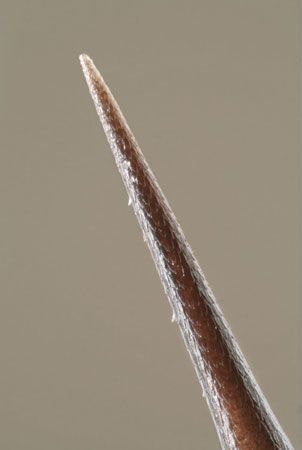
- Quill Structure: Old World porcupines have quills that grow in clumps. Some species, such as those in the genus Hystrix, possess specialized hollow “rattle quills” on their tails that produce sound to warn predators. In contrast, New World porcupines have individual quills interspersed with guard hairs, bristles, and underfur; these quills feature tiny, backward-pointing barbs that anchor them into a predator’s skin.34
- Habitat and Movement: Old World species are primarily terrestrial, though some can climb. New World porcupines are largely arboreal, with the exception of the North American porcupine, which is both terrestrial and arboreal.41
- Reproduction: Old World porcupines typically have a gestation period of about 100 days, while New World porcupines have a significantly longer gestation of approximately 200 days.14
How do the barbs on a quill help a porcupine defend itself?
The barbs on a porcupine quill serve as a highly effective defensive mechanism, particularly in New World species. These tiny, backward-pointing barbs function similarly to fishhooks when they penetrate the skin of an attacker.1
Once a quill pricks a predator, the barbs anchor it firmly in place, making it difficult to remove. Because the quills detach easily from the porcupine’s body at the base, they remain embedded in the assailant. As the predator moves, the surrounding muscles often contract, causing the barbed quills to penetrate even deeper into the tissue. Depending on the location of the injury, this can result in damage ranging from minor irritation to fatal complications for the predator.1
This defensive strategy is passive until the porcupine is threatened; when alarmed, the animal uses its musculature to make the quills stand erect, ready to lodge into any animal that makes contact.1
What other animals use modified hairs for protection?
Beyond porcupines, several other mammals have evolved modified hairs to serve as defensive armor. These structures, often referred to as spines, are typically erectile and allow the animals to protect themselves from predators.
- Hedgehogs: These insectivores possess thousands of short, smooth spines covering their upperparts. When threatened, they use a specialized muscle layer to curl into a tight ball, transforming into a formidable, spine-covered sphere that protects their vulnerable head and belly.56
- Echidnas: Also known as spiny anteaters, these egg-laying mammals have bodies covered in a combination of fur and spines. Like hedgehogs, they can use their subcutaneous muscles to alter their body shape, allowing them to wedge into tight spaces or dig quickly into the ground to hide their soft undersides, leaving only their sharp spines exposed to attackers.57
- Tenrecs: Certain species of these insect-eating mammals also possess defensive spines, which they use as a light form of armor similar to that found in hedgehogs and echidnas.5
These adaptations represent a form of light, spiny armor that has evolved independently across different mammalian lineages as a strategy for survival.5
Sources
- Do porcupine quills grow back? — Encyclopædia Britannica
- porcupine - New World porcupines (family Erethizontidae) — Encyclopædia Britannica
- porcupine - Evolution and classification — Encyclopædia Britannica
- porcupine - Old World porcupines (family Hystricidae) — Encyclopædia Britannica
- Avoidance behaviour - Protection reflexes, armour, and spines — Encyclopædia Britannica
- echidna — Encyclopædia Britannica
- hedgehog — Encyclopædia Britannica
Published on · 3 min read