Dogo Argentino
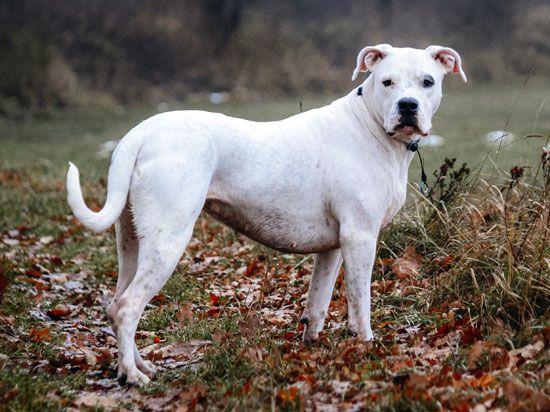
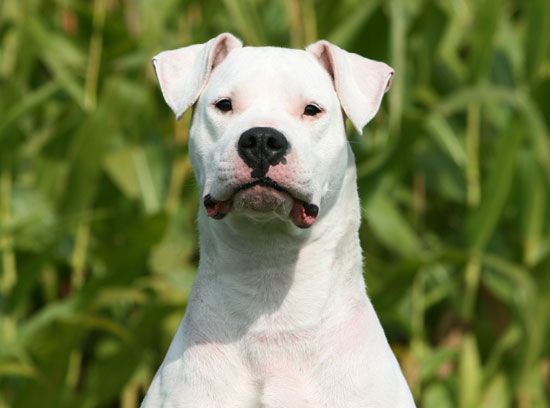
The Dogo Argentino was specifically developed in the 1920s as a pack-hunting, big-game hunter. Its primary purpose is to track and bring down large…
How is the Dogo Argentino used in hunting and what types of game is it typically used for?
The Dogo Argentino was specifically developed in the 1920s as a pack-hunting, big-game hunter. Its primary purpose is to track and bring down large, ferocious prey, a task for which it was engineered by combining the traits of several breeds to enhance strength, agility, scenting ability, and jaw power.1
In hunting, the Dogo is typically used for:
- Boar: The breed is well-known for its ability to confront and subdue wild boars.1
- Puma: Historically, the Dogo has been utilized to hunt pumas, demonstrating the tenacity and physical power required to engage such large animals.1
Due to its origins as a hunting and fighting dog, the breed is characterized by its immense strength and muscular build. While it gained popularity among hog hunters in the western United States, its potentially aggressive temperament means it requires an experienced, firm, and consistent owner. Because of these traits, the breed is subject to bans or restrictions in several countries.1
What is the average lifespan of a Dogo Argentino and how does it compare to other large breeds?
The Dogo Argentino has an average lifespan of 9–15 years.1
When compared to other breeds, the Dogo Argentino’s longevity is influenced by its size. In the canine world, there is an inverse relationship between size and lifespan, where larger dogs typically have shorter lives than smaller breeds. According to general estimates for dog longevity:2
- Large breeds (51–90 lbs): Typically live 8–12 years.2
- Huge breeds (91 lbs or more): Typically live 6–10 years.2
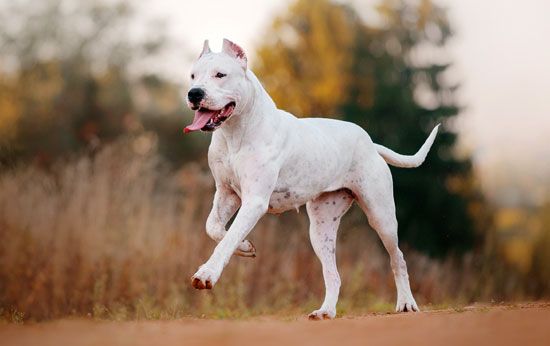
With a weight range of 80–100 pounds, the Dogo Argentino falls into the large-to-huge category. While its average lifespan is consistent with or slightly exceeds the typical range for its size class, it is important to note that larger breeds often reach their senior years earlier—around age 5 or 6—and are at a higher risk for age-related health issues such as joint problems and cancer compared to smaller dogs. Additionally, factors like genetic makeup and breeding practices can significantly impact an individual dog’s life expectancy.12
What role did Antonio Nores Martínez play in developing the Dogo Argentino?
Antonio Nores Martínez, an Argentinian physician, played a pivotal role in the creation and promotion of the Dogo Argentino. Working alongside his brother, Agustín Nores Martínez, he sought to refine the aggressive and difficult-to-manage Old Córdoba Fighting Dog into a more capable and balanced big-game hunter.1
To achieve this, Antonio helped crossbreed the Córdoba dog with several other breeds to introduce specific desirable traits:
- Pointer: To improve scenting ability.
- Great Dane: To increase height.
- Pyrenean Mastiff: To foster a calmer temperament.
- Bull Terrier: To introduce the white coat color.
- Boxer: To enhance agility and personality.
- Bulldog: To increase jaw strength.
Antonio Nores Martínez was instrumental in demonstrating the breed’s effectiveness in the field, gaining significant public attention after he successfully pitted his Dogo against a boar and a puma. Following his death in 1956, his brother Agustín continued the work of establishing the breed globally.1
What are the training and exercise requirements for a Dogo Argentino?
The Dogo Argentino is a powerful working dog that requires an experienced, firm, and consistent owner. Because of its potential for aggression toward other dogs and people, it is not recommended for inexperienced or casual owners, nor is it suitable for households with children or seniors.1
Training Requirements
Early socialization and a structured obedience regime are essential. Breeders recommend acquiring a Dogo as a puppy to establish a respectful relationship and initiate training early. Due to its strength and temperament, the breed requires a confident handler who can provide clear guidance.1
Exercise Requirements
The Dogo is a fairly active breed that needs frequent exercise to stay healthy and occupied. Recommended activities include:
- A secure, fenced yard for running.
- Leash walks.
- Engaging activities such as agility, obedience training, and scent work to stimulate both the mind and body.
- Playtime with balls or discs, though the breed may not always retrieve them.1
Because of its potentially aggressive nature, the Dogo is generally not suitable for dog parks.1
Sources
- Dogo Argentino — Encyclopædia Britannica
- Calculating dog years — Encyclopædia Britannica
Published on · 3 min read