Dolores River
The Dolores River is located in the southwestern region of Colorado, United States. It originates in the La Plata Mountains and flows for approximately 250…
Where is the Dolores River located, and what are its major tributaries?
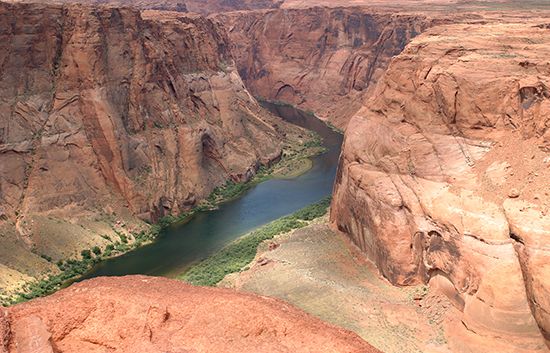
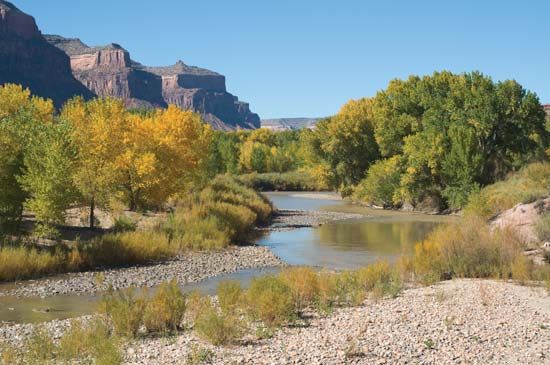
The Dolores River is located in the southwestern region of Colorado, United States. It originates in the La Plata Mountains and flows for approximately 250 miles (400 km) through deep canyons and the Paradox Valley before crossing into Utah to join the Colorado River near Moab.1
Regarding its tributaries, the San Miguel River is identified as the chief tributary of the Dolores River, meeting it at the northern end of the Paradox Valley.1
What is the historical significance of the Dolores River to Native American tribes in the region?
The Dolores River region holds significant historical importance as part of the ancestral lands of the Ancestral Pueblo people, who inhabited the area from approximately 100 to 1600 CE. During their expansion between 750 and 1150 CE, these populations moved into northwestern Colorado, utilizing the river’s environment to support their agricultural society.12
The Ancestral Pueblo were skilled farmers who relied on sophisticated water management to thrive in the arid Southwest. They constructed check dams—low stone walls designed to slow and divert the flow of seasonal rivulets and streams—to increase soil moisture and reduce erosion for their cultivated fields. These practices were essential for sustaining their growing communities, which eventually included complex masonry structures and cliff dwellings.12
By 1300 CE, environmental challenges, including the Great Drought, led these populations to migrate southward and eastward toward the Rio Grande valley and other river systems. Today, the descendants of these peoples, including the Hopi, Zuni, and other Pueblo tribes, maintain cultural traditions that reflect this long history of adaptation and resilience.12
What role does the Dolores River play in agriculture and irrigation in the region?
The Dolores River serves as a vital water source for agriculture in southwestern Colorado, though its utility is dictated by the region’s seasonal hydrology. Because the river is fed primarily by snowmelt, it experiences high water levels during the spring and early summer, while its flow often diminishes to a mere trickle by midsummer.1
To manage these fluctuations and ensure a reliable water supply for farming, the McPhee Dam was constructed near the town of Dolores. This facility impounds a significant portion of the upper river, creating a reservoir that allows for consistent irrigation throughout the growing season. By capturing the spring runoff, the dam supports the agricultural needs of the surrounding communities that would otherwise struggle with the river’s natural midsummer decline.1
We could dive deeper into the environmental impact of damming the river or explore how other regional water projects manage similar seasonal variations.
How does the Dolores River contribute to the ecosystem and wildlife in the surrounding area?
The Dolores River plays a critical role in the regional ecosystem by carving deep canyons and providing a vital water corridor through the arid landscapes of southwest Colorado and Utah. As the river flows from the La Plata Mountains toward its confluence with the Colorado River, it creates diverse riparian habitats that support various species adapted to the dramatic fluctuations in water levels.1
The river’s hydrology, characterized by high spring runoff from melting snow followed by significantly lower flows in midsummer, dictates the life cycles of local flora and fauna. These seasonal changes are essential for maintaining the health of the surrounding canyons and valleys, which serve as important corridors for wildlife movement. While the McPhee Dam helps manage water for human use, the river remains a fundamental lifeline for the biodiversity found within its 250-mile course.1
Sources
- Dolores River — Encyclopædia Britannica
- Native American - Southwestern cultures: the Ancestral Pueblo , Mogollon , and Hohokam — Encyclopædia Britannica
- Ancestral Pueblo culture — Encyclopædia Britannica
Published on · 3 min read