Water Supply
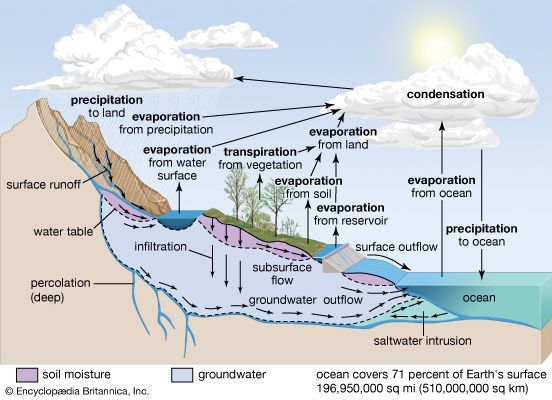
The primary sources of water for human consumption are surface water and groundwater.
What are the main sources of water supply for human consumption?
The primary sources of water for human consumption are surface water and groundwater.1
- Surface Water: This includes rivers and lakes, which serve as the typical sources for large cities. When natural flow is insufficient, conservation reservoirs created by dams are used to store water for periods of low streamflow or drought.12
- Groundwater: Found in aquifers beneath the Earth’s surface, this is a common source for single homes and small towns. It is accessed via wells or infiltration galleries. While often free of pathogens, it remains vulnerable to chemical pollution.134
- Desalination: In arid regions where fresh water is scarce, desalination processes remove salts from seawater or brackish water to make it potable.5
- Rainwater Harvesting: Systems that collect and store rainwater can provide a supplemental source for households, though it often requires purification before it is safe for drinking.6
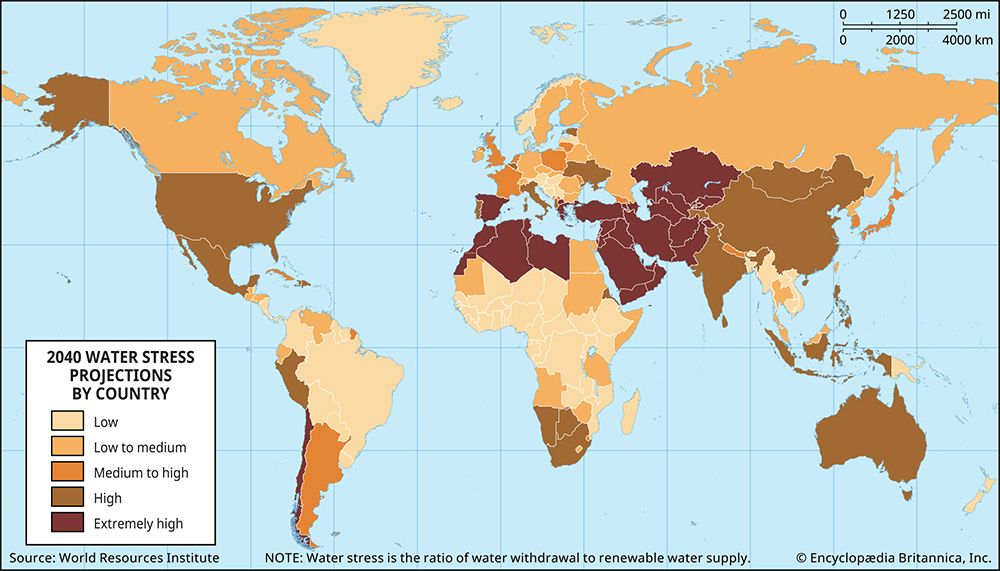
What are some major challenges facing global water supply today?
The global water supply faces significant challenges driven by human activity, environmental shifts, and systemic management issues. These challenges are categorized by the following key factors:
Primary Drivers of Water Scarcity
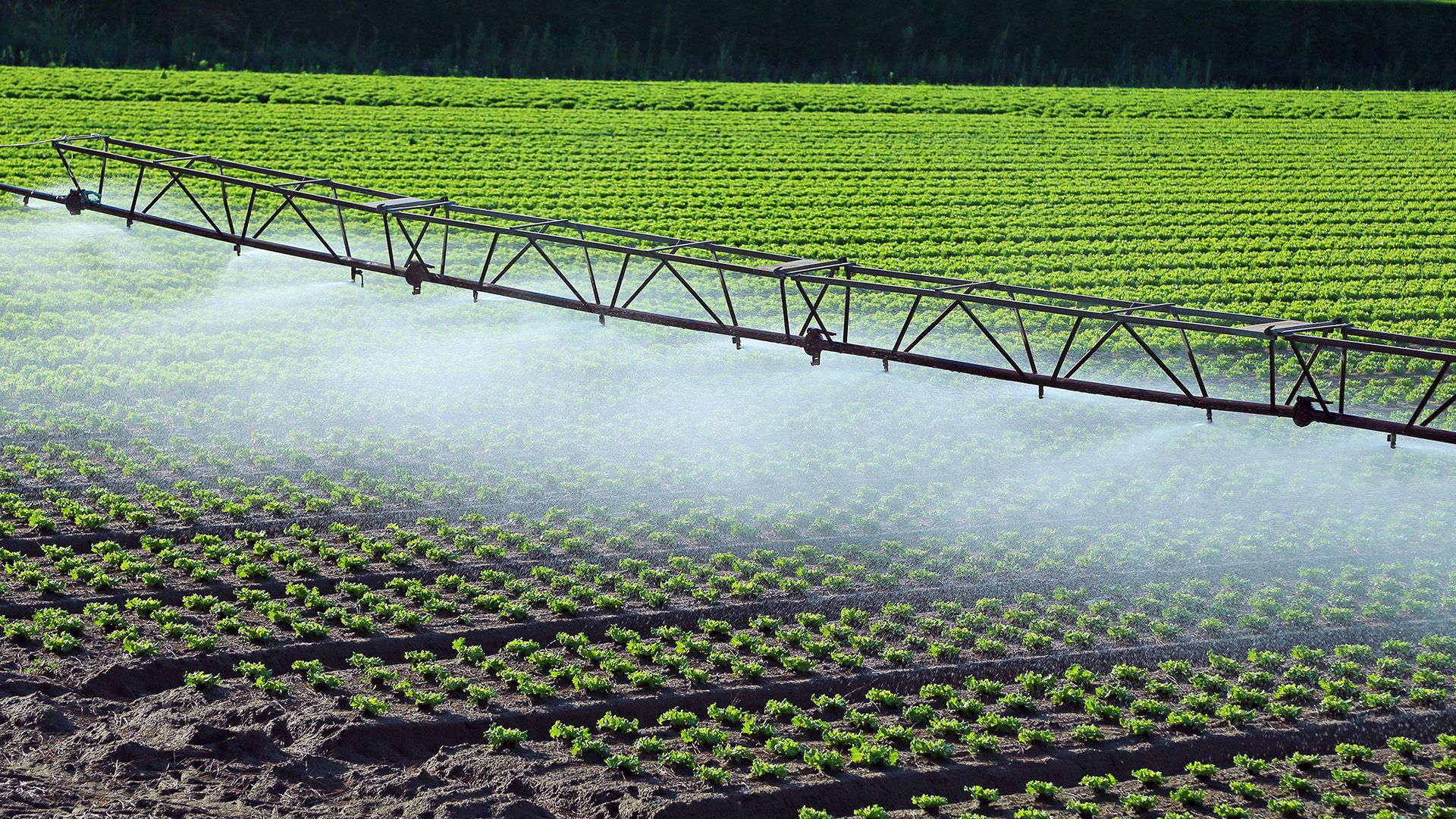
- Profligate Use: Agriculture accounts for approximately 70 percent of global freshwater withdrawals, while industrial and municipal sectors consume 19 percent and 11 percent, respectively.8
- Population Growth: As the global population has surged, water withdrawal rates have increased dramatically, placing immense pressure on finite resources.8
- Economic and Physical Scarcity: Physical scarcity occurs when demand outpaces supply, affecting 1.2 billion people. Economic scarcity, which impacts 1.6 billion people, results from poor resource management or a lack of necessary infrastructure.8
Environmental and Quality Challenges
- Pollution: Water bodies are frequently contaminated by industrial heavy metals, solvents, and toxic sludge, as well as agricultural runoff containing pesticides, fertilizers, and livestock waste. Notably, over 80 percent of global wastewater is released into the environment without treatment.89
- Climate Change: Global warming is altering weather patterns, leading to more frequent and extreme heat events and droughts. Rising temperatures also threaten water quality by promoting harmful algal blooms in lakes and rivers.810
- Groundwater Depletion: Excessive withdrawal for urbanization and industry can lead to the lowering of the water table and saltwater intrusion in coastal areas. Additionally, the melting of mountain glaciers and snowpack—vital sources of fresh water—threatens the supply for over 15 percent of the world’s population.1110
What are some common methods used to treat water for safe drinking?
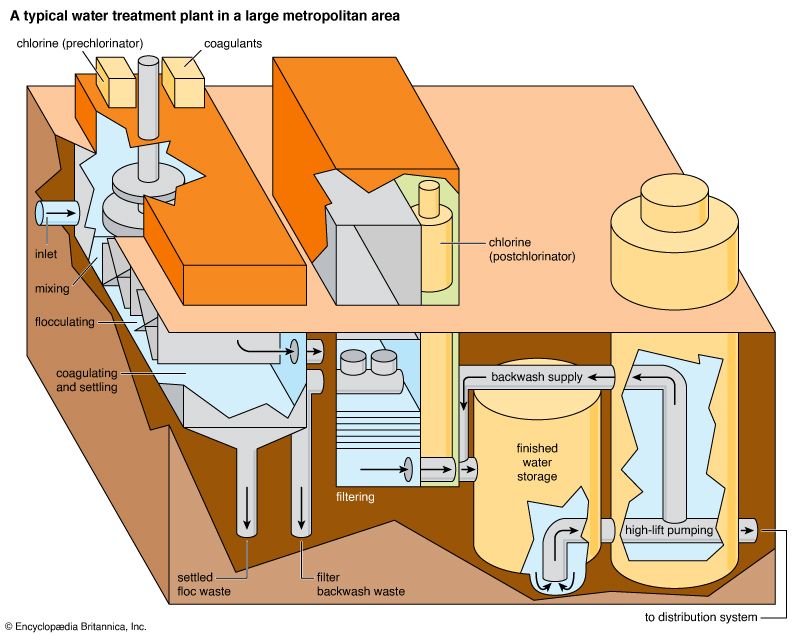
To ensure water is safe for human consumption, treatment processes are tailored to the quality of the source water. While groundwater often requires less treatment than surface water, both typically undergo rigorous purification to protect public health.12
Conventional Treatment Processes
Most municipal water treatment plants utilize a combination of clarification and disinfection:
- Clarification: This process removes suspended particles to make water clear. It often begins with coagulation and flocculation, where chemicals are added to clump small particles into larger “floc” that can be settled out in a sedimentation basin. Remaining impurities are removed through filtration, typically using rapid filters composed of sand and anthracite coal.131214
- Disinfection: As the final step, disinfection destroys pathogenic microorganisms like bacteria, viruses, and protozoa. This is commonly achieved using chlorine, though ozone and ultraviolet radiation are increasingly used to avoid chemical risks.1312
Advanced and Alternative Methods
Depending on water quality and specific needs, other techniques may be employed:
- Membrane Filtration: Technologies such as ultrafiltration and reverse osmosis use semipermeable membranes to physically block contaminants, including dissolved inorganic compounds.15
- Specialized Treatments: Processes like fluoridation are used to prevent tooth decay, while ion exchange can remove specific metal ions.13
- Household Methods: In areas without centralized treatment, individuals may use boiling, distillation, or granular activated-carbon filtering to purify water.13
How does climate change impact water availability and distribution?
Climate change significantly alters the global hydrologic cycle, impacting both the availability and distribution of water resources through several mechanisms:
Shifts in Precipitation and Drought
Global warming accelerates the hydrologic cycle, leading to more intense evaporation and precipitation rates. This results in a regional redistribution of water:1819
- Increased Precipitation: Higher rainfall is projected for polar and subpolar regions, as well as near the Equator, due to shifts in atmospheric circulation patterns like the Hadley cell and jet streams.1920
- Increased Drought: Conversely, many middle-latitude regions—including parts of North America, Africa, and Europe—are expected to experience decreased summer precipitation and higher evaporation, leading to reduced soil moisture and more frequent, severe droughts.181920
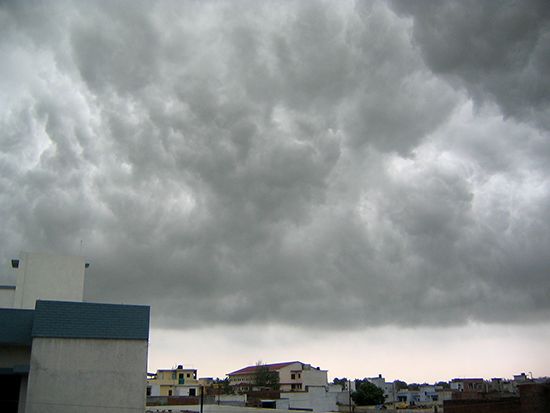
- Unpredictability: Reliable water sources, such as the South Asian monsoon, are becoming less predictable, with rain events becoming more violent and damaging.20
Impact on Storage and Supply
Climate change threatens the natural reservoirs that store fresh water:
- Glacial Melt: The melting of mountain glaciers and ice caps transfers water to the oceans, contributing to sea-level rise. While this may temporarily increase runoff, it threatens the long-term water supply for populations that depend on these frozen reservoirs.182120
- Snowpack Changes: In regions like the western United States, earlier snowmelt and reduced snow accumulation can lead to severe water shortages, particularly during irrigation-heavy summer months.18
- Water Quality: Higher temperatures can promote harmful algal blooms in lakes and rivers, while rising sea levels increase the risk of saltwater intrusion into coastal freshwater supplies.1822
These changes pose severe risks to ecosystems and human populations, necessitating proactive planning to manage shifting water availability.18
Sources
- water supply system - Surface water and groundwater — Encyclopædia Britannica
- desalination — Encyclopædia Britannica
- groundwater — Encyclopædia Britannica
- rainwater harvesting system — Encyclopædia Britannica
- water supply system - Surface water sources — Encyclopædia Britannica
- water supply system - Groundwater sources — Encyclopædia Britannica
- water supply system - Global distribution — Encyclopædia Britannica
- Water Scarcity Facts and Statistics — Encyclopædia Britannica
- water pollution - Effects of water pollution on groundwater and oceans — Encyclopædia Britannica
- Global warming - Socioeconomic consequences of global warming — Encyclopædia Britannica
- Sustainable agriculture — Encyclopædia Britannica
- water purification - Other purification steps — Encyclopædia Britannica
- water supply system - Filtration — Encyclopædia Britannica
- water supply system - Water treatment — Encyclopædia Britannica
- water supply system - Additional treatment — Encyclopædia Britannica
- water purification - System configurations and improvements — Encyclopædia Britannica
- water supply system - Membrane filtration — Encyclopædia Britannica
- hydrosphere - Buildup of greenhouse gases — Encyclopædia Britannica
- Global warming - Precipitation patterns — Encyclopædia Britannica
- natural disaster - Frequency and disaster patterns — Encyclopædia Britannica
- lake - Problems and effects — Encyclopædia Britannica
- hydrosphere - Lake waters — Encyclopædia Britannica
- glacier - Glaciers and sea level — Encyclopædia Britannica
- iceberg - Impacts on ice sheets and sea level — Encyclopædia Britannica
Published on · 4 min read