Spring
Spring is a season of renewal and growth, and many cultures celebrate this transition with festivals tied to agriculture, religious history, and the natural…
What cultural and religious celebrations are associated with the spring season?
Spring is a season of renewal and growth, and many cultures celebrate this transition with festivals tied to agriculture, religious history, and the natural cycle of life.12
- Nowruz: Meaning “new day” in Persian, this festival marks the start of the new year on the Persian calendar. It occurs on the spring equinox and originated in the ancient Zoroastrian religion.3
- Holi: A vibrant Hindu festival that celebrates various mythological events, including the playful games of Krishna and the triumph of devotion over evil.4
- Passover: A Jewish holiday commemorating the Exodus from Egypt. It is deeply connected to spring, featuring the seder meal where karpaș (greens) symbolizes flourishing and springtime growth.5
- Easter: Commemorating the Resurrection of Christ, this Christian holiday often incorporates ancient spring fertility symbols, such as eggs and hares, alongside the Passover-derived tradition of the Paschal lamb.67
- Vasant Panchami: A Hindu festival of seasonal renewal that celebrates the mustard crop and Saraswati, the goddess of learning.2
How do plants and animals respond to the arrival of spring?
The arrival of spring triggers a complex series of biological responses in plants and animals, primarily governed by temperature and day-length cues. As the season shifts, these organisms undergo significant physiological and behavioral changes to align their life cycles with the return of favorable conditions.91011
Plant Responses
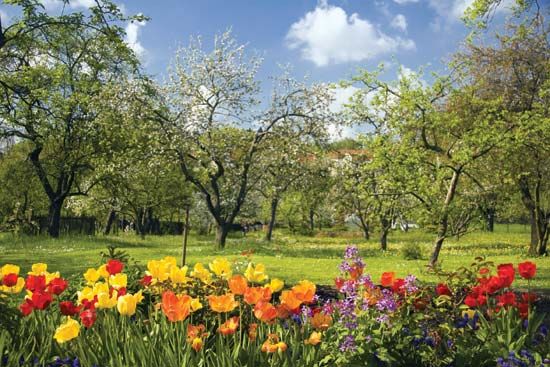
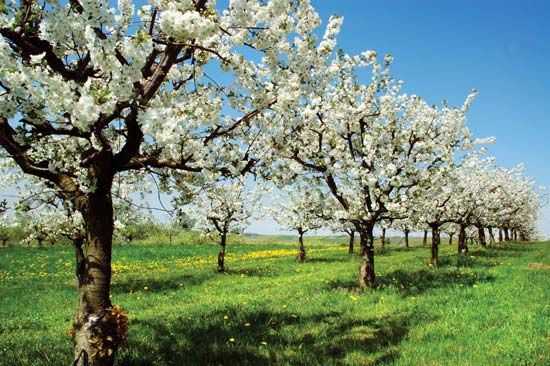
Plants typically respond to sustained periods of warmth, which act as a signal to end winter dormancy. This temperature-driven cue prompts them to:9
- Develop buds: Plants begin forming buds on their branches.9
- Growth: They produce new leaves, flowers, and eventually fruit.9
- Phenological shifts: Many species, such as Yoshino cherries, lilacs, and honeysuckles, are blooming or leafing earlier than in previous decades due to rising global temperatures.9
Animal Responses
Animals rely on a combination of internal rhythms, day-length changes, and temperature to time their spring activities.911
- Emergence from Hibernation: Animals like the spring peeper and Arctic ground squirrel wake from their winter slumber. This process involves rapid physiological recovery, such as the warming of the head and heart regions in ground squirrels.912
- Migration: Many birds return to their breeding grounds9. Their physiological preparation, including gonadal development and metabolic changes, is stimulated by increasing day length, while the actual timing of their departure is often fine-tuned by local weather and food availability.11
- Reproduction: Increased day length triggers hormonal changes via the pituitary gland, accelerating reproductive development.11
The Challenge of Phenological Mismatch
A critical concern for ecologists is “phenological mismatch,” which occurs when interacting species respond to different cues. For example, if plants bloom based on temperature but their pollinators (like bees or migratory birds) rely on day length, they may become “out of sync”. This can lead to reduced food availability for animals and failed pollination for plants, potentially threatening population stability and ecosystem health.9
How does the concept of spring vary in different climate zones around the world?
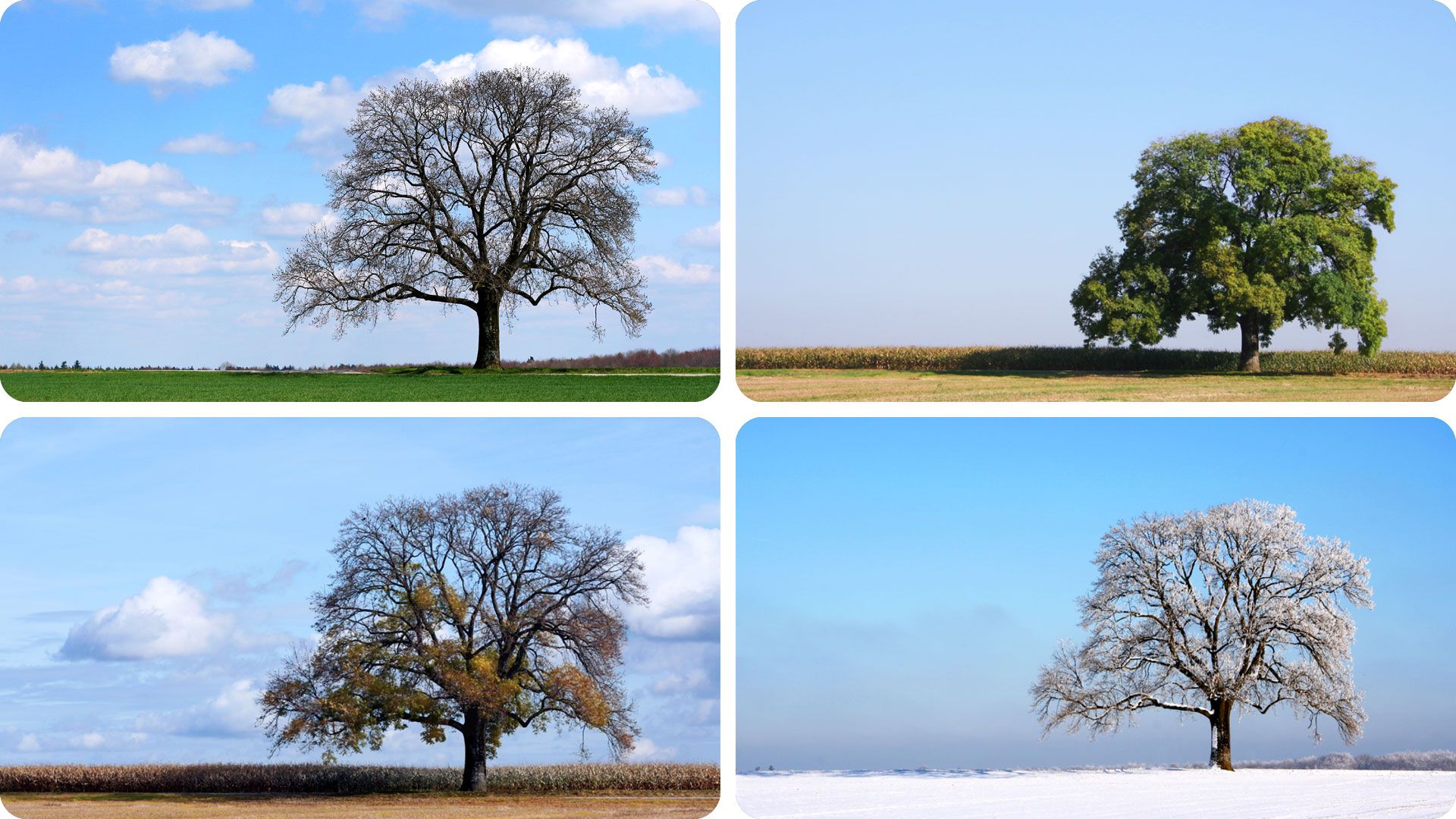
The concept of spring varies significantly across the globe, primarily defined by how temperature and daylight interact with local geography and climate zones.
Temperate and High Latitudes
In middle and high latitudes, spring is a distinct climatological season characterized by a gradual rise in temperatures as the region transitions from winter cold to summer heat. It is formally defined by the vernal equinox, occurring around March 20–21 in the Northern Hemisphere and September 22–23 in the Southern Hemisphere. During this time, plants emerge from dormancy, and animals begin reproductive and migratory activities.3
Polar Regions
In polar regions, spring is exceptionally short. Ecosystems here are defined by extreme simplicity and low species diversity. Because these areas operate close to biological limits, the arrival of spring is dictated by the melting of snow cover, which acts as a critical moisture source for plant growth. In the High Arctic, the timing of snowmelt determines which plants can complete their life cycle within the very brief summer window.314
Tropical and Equatorial Zones
Near the Equator, the concept of a “spring” season is largely absent because temperatures remain consistently high throughout the year. Instead of temperature-based seasons, these regions often experience distinct wet and dry periods driven by the movement of the intertropical convergence zone. In arid zones like the Arabian Desert, spring is often marked by specific weather phenomena, such as “brown rollers”—frontal storms that bring dust, sand, and sudden temperature drops—rather than a gentle transition to warmth.31516
What are the typical dates for spring in the Northern and Southern Hemispheres?
According to the astronomical definition of the seasons, spring begins at the moment of the vernal equinox, when the Sun is positioned directly above the Equator.2021
The typical dates for the start and end of spring in each hemisphere are as follows:
Hemisphere
Start Date
End Date
Northern
March 20 or 21
June 20 or 21
Southern
September 22 or 23
December 21 or 22
In the Northern Hemisphere, spring begins when the Sun crosses the celestial equator moving north, and it concludes at the summer solstice. In the Southern Hemisphere, the cycle is reversed; spring begins when the Sun moves south across the celestial equator and lasts until the Southern Hemisphere’s summer solstice.2022
Sources
- Nowruz: Top Questions — Encyclopædia Britannica
- Holi: Top Questions — Encyclopædia Britannica
- Spring — Encyclopædia Britannica
- Passover - Ritual observations — Encyclopædia Britannica
- Church year - Easter — Encyclopædia Britannica
- Easter - Liturgical observances — Encyclopædia Britannica
- Feast - The significance of seasonal renewal in areas of other religions — Encyclopædia Britannica
- equinox and the Seasons — Merriam-Webster
- The Perils of an Early Spring — Encyclopædia Britannica
- Phenology — Encyclopædia Britannica
- Migration - Physiological stimulus of migration — Encyclopædia Britannica
- Why Do Some Animals Hibernate? — Encyclopædia Britannica
- Dormancy - Awakening from hibernation — Encyclopædia Britannica
- Polar ecosystem - Development and structure of populations and communities — Encyclopædia Britannica
- Tundra - Arctic mammals — Encyclopædia Britannica
- North American Desert - Climate — Encyclopædia Britannica
- Arabian Desert - Climate of the Arabian Desert — Encyclopædia Britannica
- Growing season — Encyclopædia Britannica
- Tropical wet-dry climate — Encyclopædia Britannica
- Vernal equinox — Encyclopædia Britannica
- 22 Questions About Time and Timekeeping Answered - When do the seasons officially start? — Encyclopædia Britannica
- Season — Encyclopædia Britannica
Published on · 4 min read