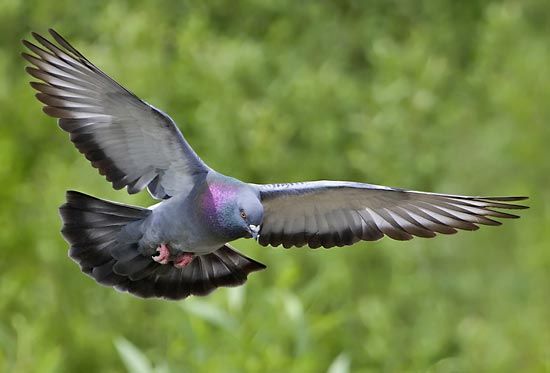
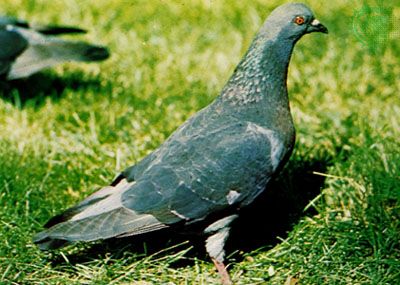
Domestic Pigeon
Domestic pigeons (Columba livia) serve a variety of roles in modern human society, ranging from scientific research to recreational activities and food…
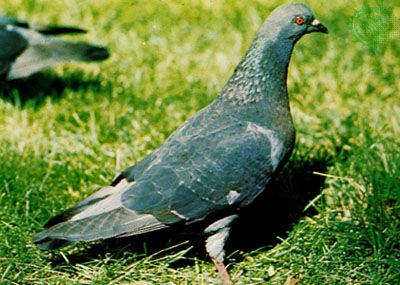
How are domestic pigeons used by humans today?
Domestic pigeons (Columba livia) serve a variety of roles in modern human society, ranging from scientific research to recreational activities and food production.1
- Scientific Research: Pigeons are utilized as important laboratory animals, particularly in the fields of genetics and endocrinology.1
- Sport and Hobby: Pigeon racing is a popular global sport where specialized homing pigeons are trained to return to their lofts at high speeds. Additionally, many people keep “fancy breeds” for exhibition and show, valuing them for their standardized appearance and unique physical traits.123
- Food Production: Certain “utility breeds” are raised specifically to produce squabs for meat.1
- Pest Status: While not a direct “use,” it is important to note that many domestic pigeons have become feral “city pigeons.” These populations are often viewed as nuisances due to their droppings, potential for disease transmission, and impact on stored grains, leading to ongoing efforts to manage them through humane proofing and control methods.13
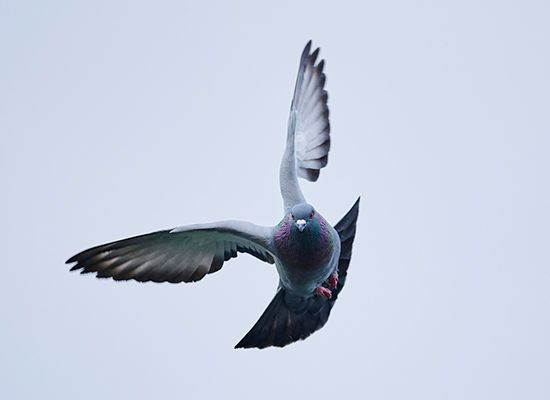
What are some common breeds of domestic pigeons?
Domestic pigeons (Columba livia) have been selectively bred for thousands of years, resulting in approximately 200 named strains categorized primarily as fliers, fancy breeds, or utility types.16
Common Categories and Breeds
- Fliers: These include homing pigeons, which are trained for their ability to navigate home over long distances, and tumblers, known for their unique habit of tumbling backward during flight.16
- Fancy Breeds: Raised for exhibition and show, these birds are bred for standardized appearances and unusual physical traits. Notable examples include:
- Pouter pigeons: Characterized by a large, inflatable gullet.6
- Fantails: May possess up to 42 tail feathers.6
- Jacobins: Distinguished by hoodlike neck feathers.6
- Barbs: Known for having a short bill.6
- Owl pigeons: Feature diverging throat feathers.6
- Frillbacks: Notable for having reversed feather growth.6
- Utility Breeds: These are raised primarily for meat production, specifically for squabs. Some utility breeds, such as the runt (which has a massive bill and body), are also bred to exhibition standards as dual-purpose birds.16
What is the history of domestication for pigeons?
The domestic pigeon (Columba livia) is widely considered the first bird to be tamed by humans. Its domestication originated from the rock dove, a species naturally adapted to rocky cliffs and ravines, which humans began farming in Neolithic times.17
Early History and Cultural Significance
Evidence of pigeon domestication dates back to at least 4500 BCE in Mesopotamia (modern-day Iraq), where the birds were kept in dovecote populations as a reliable food source. Beyond their utility, pigeons held significant religious status in early Middle Eastern and Mediterranean cultures, being associated with deities such as Astarte, Aphrodite, and Venus.17
Evolution of Use
- Food Source: For centuries, pigeons were a staple of the human diet. By the Middle Ages, keeping dovecotes was a standard practice on manorial estates across Europe.7
- Communication: Pigeons have a long history as messengers. They were used to relay news of the conquest of Gaul to Rome, reported the outcome of the Battle of Waterloo, and served extensively during both World Wars.7
- Diversification: Over time, selective breeding led to the development of specialized strains, including racing pigeons, utility breeds for meat, and various “fancy” breeds valued for their unique physical traits.17
The popularity of the dovecote pigeon declined in the late 19th century as agricultural efficiency improved, leading to the establishment of the feral “city pigeon” populations seen globally today.7
How long do domestic pigeons typically live, and what factors affect their lifespan?
Domestic pigeons (Columba livia) are hardy birds that can live up to 35 years. However, their actual lifespan in the wild or in managed environments is often influenced by several critical factors.1
Factors Affecting Lifespan
- Food Availability: For many pigeon populations, the primary factor influencing survival is the availability of food. During autumn and winter, when food stocks reach critical lows, juveniles face high mortality rates as they compete unsuccessfully with adults for limited resources.10
- Predation: Pigeons are vulnerable to predators, particularly when feeding on the ground. Species that nest in open areas or have white eggs are at a higher risk of predation. While some pigeons have adapted to nesting in crevices to reduce egg predation, this can sometimes leave the adult vulnerable to being cornered on the nest.11
- Social Hierarchy: Within flocks, a strong social hierarchy (peck order) exists. Submissive individuals are often supplanted by more dominant birds during competitive situations. Consequently, these submissive birds receive less food and are frequently the first to die during periods of shortage.11
- Environmental Stress: Factors such as disease transmission and the physical demands of breeding and molting also play roles in the overall health and longevity of pigeon populations.111
Sources
- Domestic pigeon — Encyclopædia Britannica
- pigeon racing — Encyclopædia Britannica
- Columbiform - Importance to humans — Encyclopædia Britannica
- pigeon flying — Merriam-Webster
- Columbiform - General features — Encyclopædia Britannica
- Pigeon — Encyclopædia Britannica
- rock dove — Merriam-Webster
- Columbiform - General habits — Encyclopædia Britannica
- Origins of agriculture - The Nile valley — Encyclopædia Britannica
- Columbiform - Ecology — Encyclopædia Britannica
- Columbiform - Behaviour — Encyclopædia Britannica
Published on · 4 min read