Pochard
Pochards (tribe Aythyini) exhibit specific breeding and nesting behaviors that distinguish them from many other waterfowl. While most waterfowl species…
How do pochards’ breeding and nesting behaviors differ from other waterfowl?
Pochards (tribe Aythyini) exhibit specific breeding and nesting behaviors that distinguish them from many other waterfowl. While most waterfowl species maintain nests that are either scattered or defended as a “home range,” pochards frequently engage in nest parasitism—the practice of laying eggs in the nests of other birds—to such a degree that it significantly influences their breeding biology.12
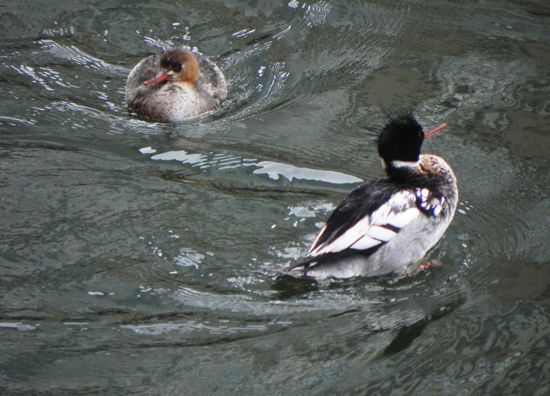
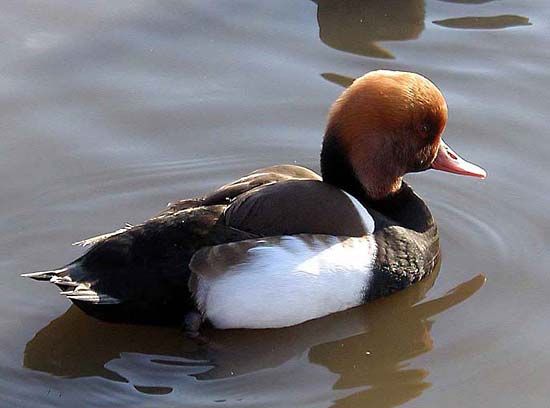
Regarding nest construction, pochards typically build their nests as scraped hollows or mounds of reeds, often situated near water. Like other waterfowl, they are generally behaviorally incapable of carrying nesting material in their bills; instead, they pull materials from the immediate site and drop them over their shoulders while rotating. A notable exception in behavioral interaction is the red-crested pochard, which is one of the few waterfowl species to exhibit courtship feeding, though the female must still swim to the male to receive the “gift”.12
Where are pochards typically found in the wild, and what are their preferred habitats?
Pochards are diving ducks that are primarily found in deep-water environments across various regions of the world, including North America, South America, Africa, and Eurasia. They are highly adapted to aquatic life, often spending their winters in large “rafts” on seacoasts and bigger lakes.1
Their preferred habitats generally include:
- Deep Water: As specialized divers, they favor deeper bodies of water where they can submerge to feed on aquatic plants or shellfish.13
- Reedy Lakes: Many species, such as the common pochard, breed along northern reedy lakes.1
- Inland Waters: Certain species, like the red-crested pochard, are more commonly associated with inland water systems.1
- Offshore Areas: During the winter, species like scaups often gather in large flocks in offshore waters.1
Because their legs are positioned far back on their bodies, pochards are poorly adapted for walking on land and typically land only on water.3
How do pochards’ diving abilities compare to other duck species?
Pochards (tribe Aythyini) are specialized diving ducks that differ significantly from dabbling ducks, such as mallards, in their foraging methods and physical adaptations.145
Diving Mechanics
While dabbling ducks feed by “tipping up” in shallow water to reach vegetation, pochards are adapted for underwater foraging in deeper environments. When diving, they submerge by arching their bodies and propelling themselves forward with both feet in a smooth arc. Once underwater, they scull their legs together for propulsion, sometimes using their wings for steering.4531
Physical Adaptations
Pochards possess streamlined bodies and legs positioned far back, which make them excellent swimmers but poor walkers on land. Their respiratory physiology is also uniquely adapted for diving:43
- Oxygen Storage: They draw oxygen from hemoglobin and myoglobin in their blood and muscles rather than relying on the respiratory system while submerged.6
- Buoyancy Control: They compress their air sacs to reduce buoyancy.6
- Nervous System Priority: Blood flow is modified during dives to ensure the central nervous system receives the primary oxygen supply.6
Most pochards typically dive to depths of less than 6 meters (20 feet) and remain submerged for under 30 seconds, though they are physiologically capable of longer durations.3
What are the distinguishing physical characteristics of pochards?
Pochards, which belong to the tribe Aythyini, are characterized by several distinct physical traits adapted for their life in deep water.1
Physical Appearance
- Body Shape: They are generally round-bodied and big-headed birds.1
- Leg Placement: Their legs are positioned far back on their bodies, which makes them excellent swimmers but results in a waddling gait on land. When out of the water, they typically carry their bodies in an almost upright position.3
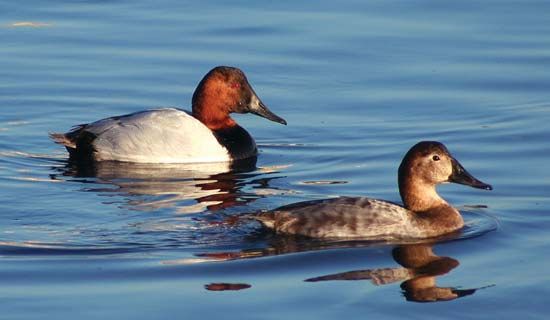
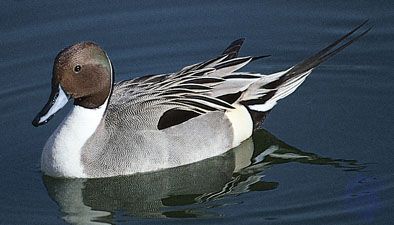
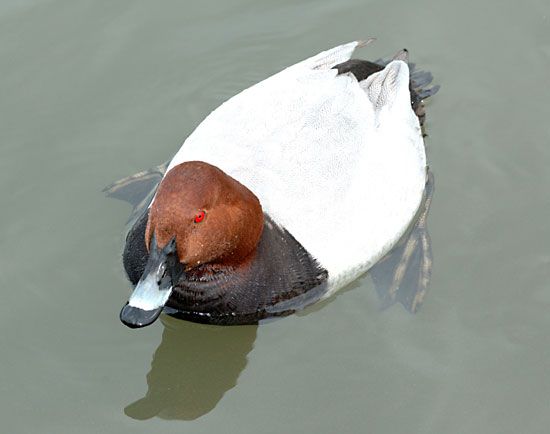
- Plumage: Unlike many other ducks, pochards lack a metallic wing mark, though most species display some white in their wings. There is often a clear sexual dimorphism: drakes (males) are commonly black or gray with red heads, while hens (females) are typically plain brown.1
- Profile: Specific species can be identified by their profiles; for example, the redhead is distinguished by its round-headed, short-billed appearance.1
Locomotion and Behavior
Because of their specialized anatomy, pochards are poorly adapted for walking and land only on water, often skittering along the surface to gain enough speed for takeoff. They are also noted for being relatively silent birds.31
Sources
- Pochard — Encyclopædia Britannica
- Anseriform - Reproductive behaviour — Encyclopædia Britannica
- Anseriform - Locomotion — Encyclopædia Britannica
- What do ducks eat? — Encyclopædia Britannica
- Anseriform - Physiology — Encyclopædia Britannica
- Diving duck — Encyclopædia Britannica
- Bird - Swimming and diving — Encyclopædia Britannica
- Duck — Encyclopædia Britannica
- Plumage — Encyclopædia Britannica
Published on · 3 min read