Plantcutter
A plantcutter is any of three species of South American birds belonging to the family Phytotomidae. These birds are characterized by their stout, finely…
What is Plantcutter?
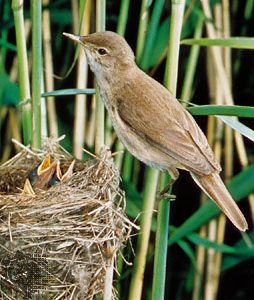
A plantcutter is any of three species of South American birds belonging to the family Phytotomidae. These birds are characterized by their stout, finely serrated bills, which they use to snip off tender plant shoots, buds, and fruit. Physically, they resemble streak-backed finches and possess broad, squared tails. Males of the species, particularly the red-breasted (or white-tipped) plantcutter (Phytotoma rutila), are often strongly tinged with reddish brown. These birds are found in various regions across South America, including the Patagonian prairies, the uplands of Bolivia, as well as Peru, Argentina, and Chile. In some areas, they are considered pests because they can cause significant damage to gardens and orchards.12
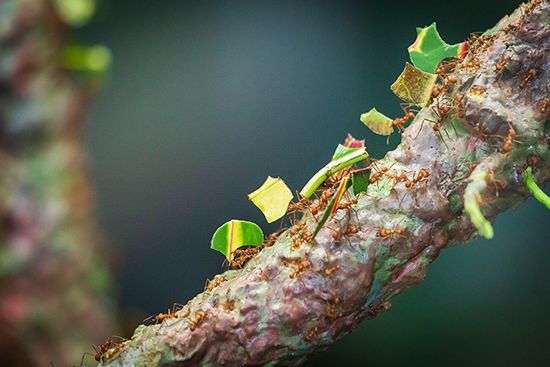
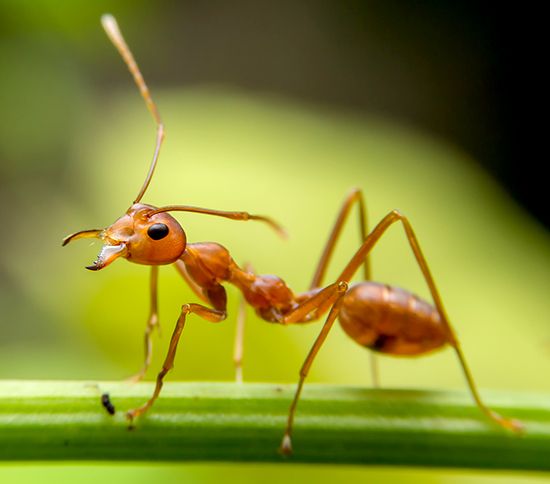
It is important to distinguish these birds from leafcutter ants, which are insects that forage for foliage to cultivate underground fungal gardens.3
How do plantcutter birds differ from leafcutter ants?
Plantcutter birds and leafcutter ants are both herbivores found in South America, but they differ significantly in their biological classification, feeding behaviors, and social structures.
Biological Classification
- Plantcutter birds: These are vertebrates belonging to the family Phytotomidae within the order Passeriformes. They are physically characterized by stout, finely serrated bills and broad, squared tails, resembling streak-backed finches.2
- Leafcutter ants: These are insects belonging to the family Formicidae and the tribe Attini. They are members of the genera Atta and Acromyrmex and are part of the phylum Arthropoda.1
Feeding and Social Behavior
- Plantcutter birds: They use their serrated bills to directly snip off and consume tender plant shoots, buds, and fruit. They are often considered pests in gardens and orchards due to the damage they cause to these plants.2
- Leafcutter ants: These ants do not consume the leaves they cut directly. Instead, they transport leaf fragments to complex underground nests to cultivate subterranean “gardens” of fungus. This fungus serves as their primary food source. Their foraging involves highly organized columns of hundreds or thousands of ants, and their colonies can house millions of individuals with specialized castes, such as soldiers and guards.1
What specific physical features help plantcutters eat tough vegetation?
Plantcutters (family Phytotomidae) possess specific physical adaptations that enable them to consume tough vegetation. Their primary tool is a stout, finely serrated bill.17
These serrations function as a specialized cutting edge, allowing the birds to effectively snip off tender plant shoots, buds, and fruit. In the broader context of passerine bill morphology, this serrated structure is distinct from other types, such as those adapted for seed-cracking or insect-probing, and is specifically evolved for a diet consisting of leaves and other plant material.1738
In what ways do plantcutters impact local agriculture?
Plantcutters (family Phytotomidae) impact local agriculture primarily by acting as pests in gardens and orchards. Because their stout, serrated bills are specifically adapted for snipping off tender plant material, they frequently consume buds, shoots, and fruit from cultivated plants, which can result in significant damage to crops in the regions where they reside, such as Argentina, Chile, Bolivia, and Peru.1
While some other bird groups, such as certain piciforms, may also damage fruit crops or trees, plantcutters are specifically noted for the harm they cause to these agricultural settings due to their specialized herbivorous diet.15
Sources
- Plantcutter — Encyclopædia Britannica
- leafcutter ant — Encyclopædia Britannica
- Phytotomidae — Merriam-Webster
- Piciform - Form and function — Encyclopædia Britannica
- Piciform - Importance to humans — Encyclopædia Britannica
- Eating the rainforest — Encyclopædia Britannica
- Passeriform - Bill — Encyclopædia Britannica
- Falconiform - Feet and beak — Encyclopædia Britannica
- Passeriform - Size range and structural diversity — Encyclopædia Britannica
Published on · 2 min read