Pigeon
Pigeons are generally characterized by a compact, plump body shape, which is largely due to their well-developed pectoral muscles. They possess a relatively…
What are the distinctive physical characteristics of pigeons?
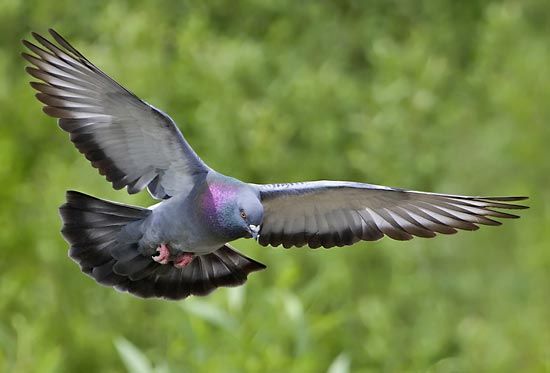
Pigeons are generally characterized by a compact, plump body shape, which is largely due to their well-developed pectoral muscles. They possess a relatively small head and a small, soft bill that is often overhung by a fleshy, swollen skin saddle known as a cere (or operculum).123
Key physical features include:
- Wings and Flight: Most species have long, often pointed wings and powerful flight muscles, making them strong, swift fliers. Species that are less migratory or inhabit dense woodlands may have shorter, rounded wings.132
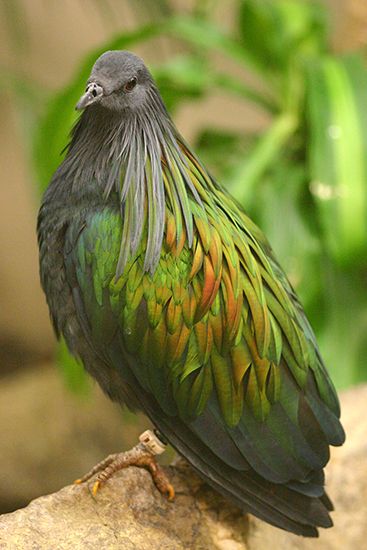
- Plumage: Their feathers are dense and soft, typically colored in shades of gray, brown, or black, though some species exhibit striking iridescent patches or vibrant colors like orange, green, or purple.132
- Legs and Feet: While generally short-legged, some ground-dwelling species have longer legs for effective terrestrial locomotion. They typically have three toes pointing forward and one backward.2
- Size: They vary significantly in size, ranging from small birds like the diamond dove to large species like the crowned pigeon, which can reach the size of a turkey.4
What are the different species of pigeons found around the world?
Pigeons belong to the family Columbidae, which encompasses several hundred species worldwide. Taxonomies vary, but these birds are generally categorized into several subfamilies based on their physical and behavioral traits.3
Major Subfamilies and Groups
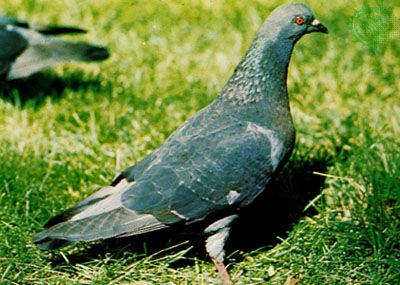
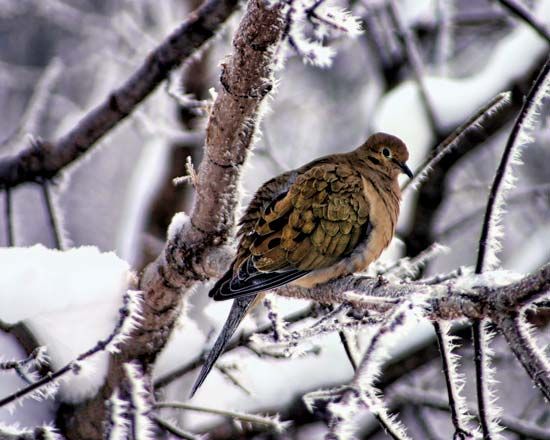
- Columbinae: The largest group, containing more than 120 species of “true” pigeons. This includes the cosmopolitan genus Columba (such as the rock dove and wood pigeons) and Streptopelia (turtledoves and ringdoves). These are often gregarious seed and fruit eaters found in both temperate and tropical regions.3
- Treroninae (Fruit Pigeons): Primarily found in Africa, southern Asia, Australia, and the Pacific islands, these birds are typically arboreal and fruit-eating. They are known for their vibrant plumage, often featuring green, yellow, or red markings. Notable genera include Treron (green pigeons), Ducula (imperial pigeons), and Ptilinopus (fruit doves).35
- Gourinae (Crowned Pigeons): Found in New Guinea, these are the largest of all pigeons, reaching the size of a turkey. They are distinguished by their blue-gray coloration and fanlike head crests.37
- Didunculinae: This subfamily consists of a single species, the tooth-billed pigeon, native to Samoa. It is a terrestrial, fruit-eating bird that has adapted to arboreal life to avoid predators.3
Other Notable Species
- Ground-dwelling species: Many pigeons have adapted to terrestrial life, such as the pheasant pigeon of New Guinea and various quail doves (Geotrygon) and ground doves (Metriopelia) found in the Americas.35
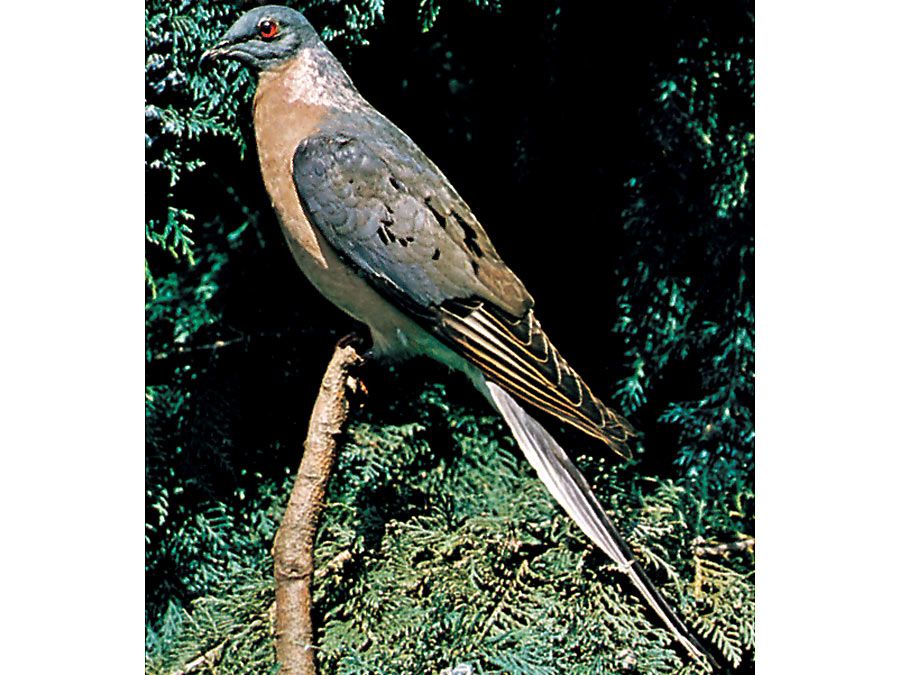
- Extinct species: The passenger pigeon of North America is a well-known example of a species that was once incredibly numerous but was driven to extinction by the early 20th century.37

How have pigeons been portrayed in art, literature, and popular culture?
Pigeons and their close relatives, the doves, have held significant roles in human culture, art, and history for millennia. While the terms are often used interchangeably, the domestic pigeon is frequently identified as the “dove of peace” in artistic and symbolic contexts.9
Historical and Symbolic Significance
- Sacred Symbolism: Since at least 4500 BCE in Mesopotamia, pigeons have been depicted in figurines, mosaics, and coins. In early Middle Eastern cultures, they were sacred to the goddess Astarte, and later, they became associated with Aphrodite in Greece and Venus in Rome, representing love and fertility.1011
- Messenger Roles: Beyond symbolism, pigeons have been portrayed as vital conduits of information. They were used to carry news of the conquest of Gaul to Rome and the outcome of the Battle of Waterloo to England. Their role as “war heroes” was cemented during the World Wars, where birds like Cher Ami and G.I. Joe were celebrated for their bravery and navigational success in delivering critical messages under fire.1112
Cultural Perception
In modern popular culture, the pigeon’s image is multifaceted. While they are often viewed with affection by hobbyists and fanciers, they are frequently characterized in urban settings as “city pigeons” or even as pests due to concerns regarding public health. Additionally, the term “pigeon” has entered the lexicon with metaphorical meanings, such as referring to an “easy mark” or a dupe.111013
How have pigeons been used by humans throughout history?
Humans have maintained a multifaceted relationship with pigeons for thousands of years, utilizing them for food, communication, sport, and companionship.
Historical Utility and Domestication
The domestic pigeon is believed to be one of the first birds tamed by humans, with evidence of their presence in art and artifacts dating back to 4500 BCE in Mesopotamia. Historically, they were kept as a reliable food source, with dovecotes appearing on manorial estates across Europe during the Middle Ages. Today, they remain a source of meat through specific utility breeds.1113
Messenger Service
Pigeons have a long history as vital messengers due to their exceptional navigational abilities. They were used by ancient civilizations and later by military forces to transmit critical information during conflicts, including the Spanish-American War, World War I, and World War II. Famous birds like Cher Ami were celebrated as war heroes for delivering messages under fire. Their military service officially ended in the mid-20th century as communication technology advanced.11141513
Sport and Science
- Pigeon Racing: Developed through selective breeding, pigeon racing became a prominent sport in the 19th century, particularly in Belgium, and remains a popular global hobby.1115
- Scientific Research: Pigeons are significant in modern science, serving as important laboratory animals for studies in genetics and endocrinology.11
Modern Challenges
While some species are valued, others are considered pests due to their impact on agriculture and potential for disease transmission in urban areas. Efforts to manage these populations focus on localized, humane deterrents rather than large-scale extermination, reflecting a modern desire to balance human interests with the natural environment.1310
Sources
- Pigeon: Top Questions — Encyclopædia Britannica
- Columbiform - Annotated classification — Encyclopædia Britannica
- Pigeon — Encyclopædia Britannica
- Columbiform - Distinguishing characteristics — Encyclopædia Britannica
- Columbiform - General features — Encyclopædia Britannica
- Columbiform - Physiology and biochemistry — Encyclopædia Britannica
- Columbiform - General habits — Encyclopædia Britannica
- Columbiform - Behaviour — Encyclopædia Britannica
- Dove — Encyclopædia Britannica
- Columbiform - Importance to humans — Encyclopædia Britannica
- Domestic pigeon — Encyclopædia Britannica
- pigeon — Merriam-Webster
- Today in History—March 23: The U.S. Military’s Pigeon Service Ends — Encyclopædia Britannica
- military communication - Early development — Encyclopædia Britannica
- pigeon racing — Encyclopædia Britannica
- pigeon flying — Merriam-Webster
Published on · 5 min read