Draco
The term Draco refers to several distinct subjects across history, science, and mythology:
What is Draco?
The term Draco refers to several distinct subjects across history, science, and mythology:
- Historical Figure: Draco was an Athenian lawgiver in the 7th century BCE. He is famous for his exceptionally harsh legal code, which prescribed the death penalty for even minor offenses. This legacy survives in the modern adjective “draconian,” used to describe excessively severe measures.12
- Astronomy: Draco is a constellation in the northern sky. Its name is Latin for “serpent” or “dragon,” and it has been associated with various mythological creatures, including the dragon that guarded the golden apples of the Hesperides.32
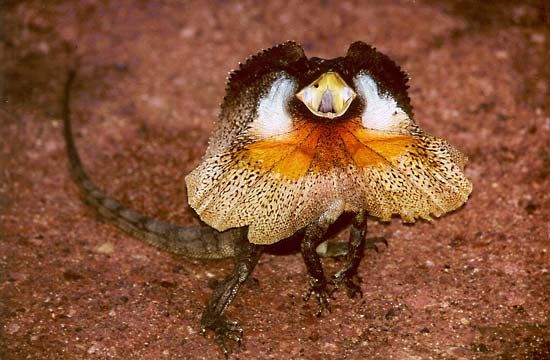
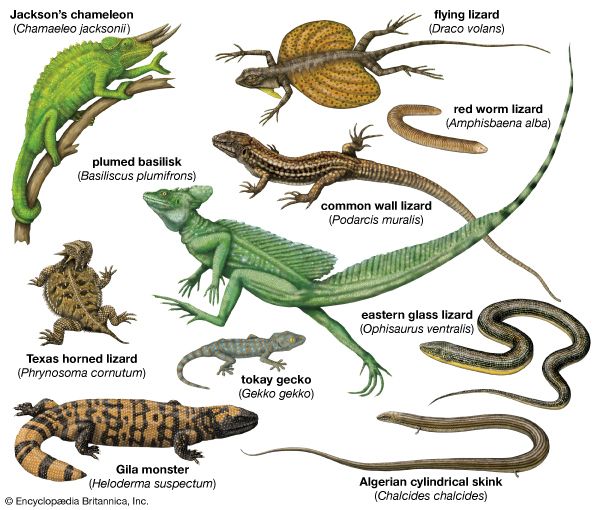
- Biology: Draco is a genus of lizards commonly known as “flying lizards.” These animals possess scaly membranes supported by elongated ribs, allowing them to glide between trees in the forests of Southeast Asia.4
Who was Solon and how did he change Athenian law?
Solon (c. 630–560 BCE) was a prominent Athenian statesman, poet, and one of the Seven Wise Men of Greece. Serving as archon in 594 BCE, he was tasked with mediating deep-seated conflicts between the landed aristocracy and the peasantry.56
Solon transformed Athenian law by replacing the notoriously severe code of laws established by Draco around 621 BCE. While Draco’s laws were famously “written in blood” and prescribed death for most offenses, Solon introduced a more humane system, retaining only the statutes concerning homicide, retaining only the statutes concerning homicide.578
His judicial reforms included:
- Right of Appeal: Citizens gained the right to appeal magistrate verdicts to a court of the people.5
- Public Suits: Any citizen, not just the victim, could initiate a legal suit.5
- Economic Relief: He enacted the “shaking off of burdens,” which cancelled debts, freed enslaved debtors, and prohibited borrowing against one’s person.57
Solon also restructured the government by replacing birth-based privilege with a system based on wealth, laying the foundation for Athenian statute law for centuries.567
How does the Earth’s precession affect which star is the polestar?
The Earth’s precession of the equinoxes is a slow, cyclic “wobble” in the orientation of the planet’s axis of rotation, which completes a full cycle approximately every 26,000 years. Because the celestial poles—the points in space where Earth’s axis points—are projections of this shifting axis, they trace large circles across the night sky over time.910
As these poles move, they pass near different stars, causing a succession of stars to serve as the polestar at different epochs.911
- Past: Around 2700 BCE, Thuban in the constellation Draco was the star closest to the north celestial pole.11
- Present: Polaris is currently the polestar, reaching its closest point to the north celestial pole around 2100 CE.910
- Future: In approximately 12,000 to 14,000 years, the bright star Vega will be the star nearest to the north celestial pole.911
What other animals have evolved the ability to glide?
Gliding is a form of gravitational locomotion that has evolved independently across several animal groups to increase surface area and manage wind resistance. While true, powered flight is restricted to birds, bats, and insects, many other animals have adapted to glide between trees or across distances.151617
These adaptations include:
- Mammals: Various species, such as the flying squirrel and the colugo, possess a patagium—a fold of skin extending between their limbs that unfolds to create a lifting surface.1516
- Reptiles: The genus Draco, or flying lizards, features elongated ribs that open laterally like a fan to support skin membranes. Certain snakes also glide by flattening their bodies and drawing in ventral scales to create a trough.151816
- Amphibians: Some frogs, such as those in the genus Rhacophorus, glide by flattening their bodies and spreading their limbs, often utilizing webs between their digits.1516
- Fish: Several groups of fish have evolved winglike modifications of their fins to enhance their glide ratio.16
Sources
- Draco — Encyclopædia Britannica
- Draco — Encyclopædia Britannica
- Draco — Encyclopædia Britannica
- 'Dumbledore', 'Hippogriff', and 11 More Real Words from Harry Potter | Bellatrix and Draco — Merriam-Webster
- Solon’s laws — Encyclopædia Britannica
- Solon — Encyclopædia Britannica
- Solon - Code of laws of Solon — Encyclopædia Britannica
- Draconian laws — Encyclopædia Britannica
- Astronomical map - The celestial sphere — Encyclopædia Britannica
- Precession of the equinoxes — Encyclopædia Britannica
- polar motion — Encyclopædia Britannica
- polestar — Merriam-Webster
- polestar — Merriam-Webster
- Polestar — Encyclopædia Britannica
- Locomotion - Gliding — Encyclopædia Britannica
- mammal - Locomotion — Encyclopædia Britannica
- reptile - Flying — Encyclopædia Britannica
- Flight — Encyclopædia Britannica
Published on · 3 min read