Eagle
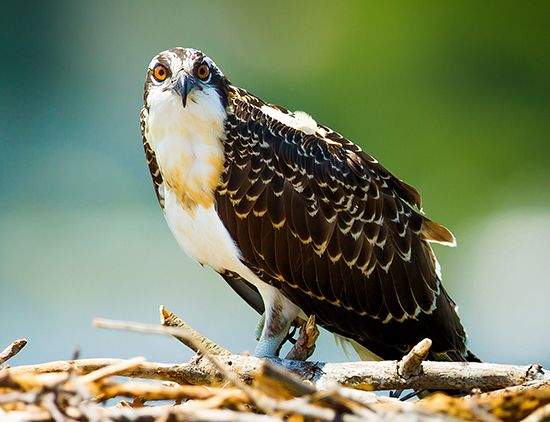
Eagles are powerful birds of prey belonging to the family Accipitridae, characterized by their heavy beaks, strong feet, and curved talons. They are…
What are some of the different species of eagles found around the world?
Eagles are powerful birds of prey belonging to the family Accipitridae, characterized by their heavy beaks, strong feet, and curved talons. They are categorized into several groups based on their physical traits and habitats:1
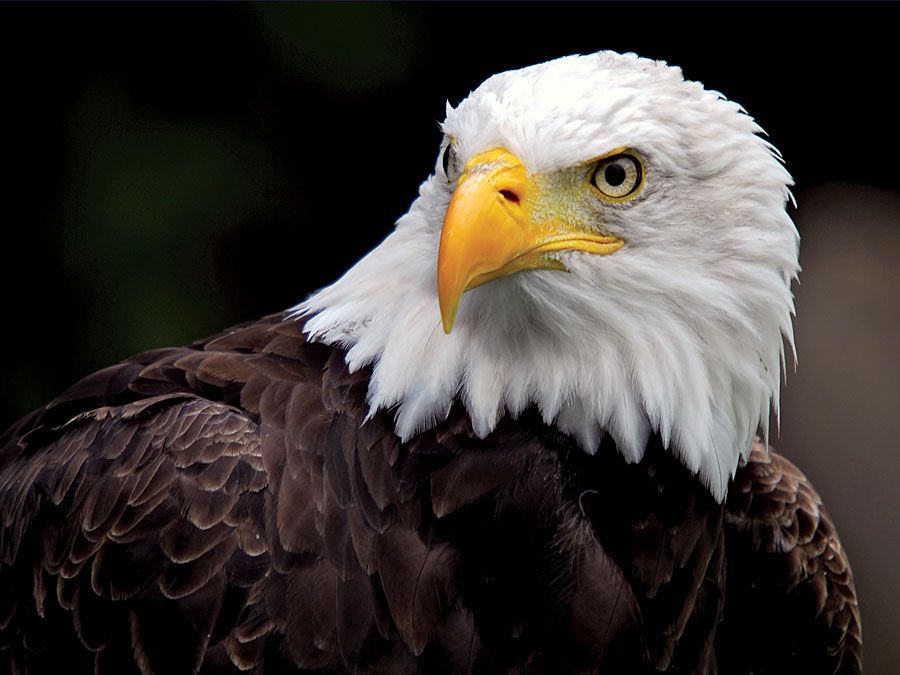
- Sea Eagles (Haliaeetus): Large, fish-eating birds found globally except in South America. Notable species include the bald eagle of North America, the white-bellied sea eagle of the Indo-Pacific, and Steller’s sea eagle, which is considered the world’s largest eagle by weight and wingspan.123
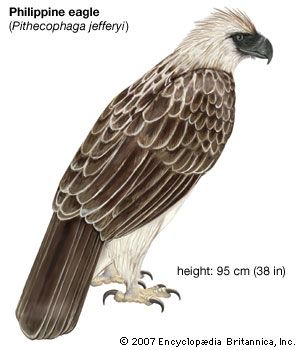
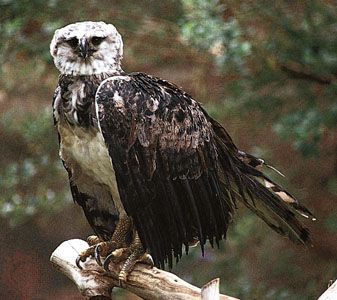
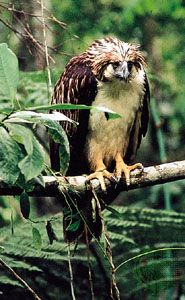
- Harpy Eagles: Large, crested birds of tropical forests, such as the great harpy eagle of the Americas and the Philippine eagle.1
- Hawk Eagles: Lightly built eagles with fully feathered legs, such as the ornate hawk eagle.1
- Serpent/Harrier Eagles: Specialized hunters of snakes and other small animals, found primarily in Africa, Asia, and Europe.1
- Other Notable Species: The golden eagle is a widely distributed, powerful hunter, while the martial eagle is a formidable African species capable of taking down small antelopes.134
How do eagles build their nests and care for their young?
Eagles are known for their elaborate nesting habits and dedicated parental care. Most species in the family Accipitridae construct large nests made of sticks, typically situated in tall trees or on cliff ledges. While smaller species may build new nests annually, many large eagles return to the same site for years, continuously repairing and augmenting their structures with fresh green material.5
The reproductive process involves a sequence of nuptial displays, such as soaring, calling, and even “cartwheeling,” where pairs lock feet in mid-air. Once a pair bond is established, the female usually lays one to four eggs, which are incubated for several weeks. For example, the Philippine eagle typically lays one or two eggs, with both parents sharing incubation duties.56
After hatching, the young are covered in down and require significant parental attention. Parents provide food, and as the nestlings grow, they learn to tear up prey brought to the nest. Parental care continues through the fledging period and into the postfledging phase, where the young remain near the nest while developing their flight skills and independence.578
How are eagle populations affected by human activities and conservation efforts?
Eagle populations are significantly impacted by human activities, which can lead to both catastrophic declines and, through dedicated intervention, remarkable recoveries.
Negative Human Impacts
Human activities are the primary drivers of population decline for many eagle species. Key threats include:
- Habitat Destruction: Deforestation and environmental degradation from mining and pollution destroy critical nesting and hunting grounds9.96
- Direct Persecution: Eagles are frequently hunted, trapped, or poisoned by farmers seeking to protect livestock and poultry.96
- Chemical Contamination: The historical use of pesticides like DDT caused eggshell thinning, leading to reproductive failure.1011
- Infrastructure Hazards: Species that nest on electrical towers, such as the martial eagle, face high mortality rates due to electrocution.6
Conservation Successes
Conservation efforts have proven that targeted legal and environmental protections can reverse these trends. The bald eagle serves as a prime example; after its population plummeted due to habitat loss and DDT, the 1972 ban on the pesticide and protections under the Endangered Species Act facilitated a dramatic recovery. Similarly, government-enacted prohibitions against direct persecution and the development of captive breeding programs are vital tools currently used to support the critically endangered Philippine eagle.119
What are the defining physical characteristics of eagles?
Eagles are large, powerful birds of prey belonging to the family Accipitridae. While they vary in size and coloration depending on the species, they share several defining physical characteristics that facilitate their role as apex predators:
- Beak and Feet: Eagles possess a heavy, hooked beak designed for tearing flesh. Their feet are equipped with strong, curved talons used for piercing, grasping, and killing prey. In some species, such as sea eagles, the undersurfaces of the toes are roughened to help them grip slippery prey like fish.12113
- Vision: Like other raptors, eagles are characterized by large eyes that provide exceptionally acute vision, allowing them to spot prey from great distances.1314
- Wings and Flight: They are adapted for soaring flight, typically featuring long, broad wings. The outer primary flight feathers are often emarginated, creating slots at the wing tips that reduce turbulence and increase lift, which allows them to glide and circle in thermals efficiently.15
- Plumage: Eagles have a fully feathered head, which often includes a crest of feathers in certain species. Their strong feather quills are built to withstand the aerodynamic forces encountered during rapid flight.1213
Sources
- Eagle — Encyclopædia Britannica
- What is the wingspan of an eagle? — Encyclopædia Britannica
- Golden eagle — Encyclopædia Britannica
- Sea eagle — Encyclopædia Britannica
- Falconiform - Reproduction — Encyclopædia Britannica
- Philippine eagle — Encyclopædia Britannica
- Falconiform - The fledging period — Encyclopædia Britannica
- Falconiform - The postfledging period — Encyclopædia Britannica
- Philippine eagle: Top Questions — Encyclopædia Britannica
- Today in History—June 28: A Milestone Moment for Bald Eagles — Encyclopædia Britannica
- Martial eagle — Encyclopædia Britannica
- Harpy eagle: Top Questions — Encyclopædia Britannica
- Falconiform - Feet and beak — Encyclopædia Britannica
- Falconiform - Form and function — Encyclopædia Britannica
- Falconiform - Evolution and paleontology — Encyclopædia Britannica
- Falconiform - Flapping, soaring , and diving — Encyclopædia Britannica
- Sexual dimorphism — Encyclopædia Britannica
- Plumage — Encyclopædia Britannica
- eagle-eyed — Merriam-Webster
Published on · 4 min read