Deforestation
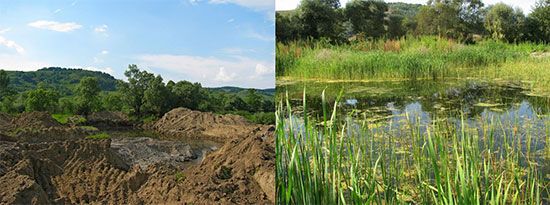
Reforestation projects vary significantly in their approach and effectiveness, ranging from large-scale government initiatives to passive natural recovery.
What are some successful reforestation projects, and how effective have they been?
Reforestation projects vary significantly in their approach and effectiveness, ranging from large-scale government initiatives to passive natural recovery.
Notable Reforestation Efforts
- New Zealand: Beginning in 2017, the government launched an ambitious program aiming to plant over 100 million trees annually.12
- India: In a massive single-day effort in 2017, citizens planted approximately 66 million trees.12
- China: The government has established a 15-year plan for ecological protection, targeting 26 percent forest coverage through a combination of reforestation and afforestation.1
- North American Eastern Deciduous Forest: This serves as a prime example of passive restoration. After agricultural land was abandoned in the 19th century, the forest recovered naturally without human intervention, eventually covering millions of acres.3
Effectiveness and Challenges
The success of these projects depends on planning and scientific oversight. While reforestation is a vital tool for carbon sequestration and ecological restoration, it faces several hurdles:
- Mortality Rates: Mass plantings often suffer high tree mortality if species are not native or suited to local conditions.1
- Quality Concerns: Projects that prioritize monotypic plantations for timber or paper production often lack the biodiversity and habitat value of natural forests.12
- Environmental Tokenism: Some efforts are criticized as “greenwashing” when they focus on initial planting numbers rather than long-term ecosystem health.1
What role do forests play in carbon sequestration and how does deforestation affect this process?
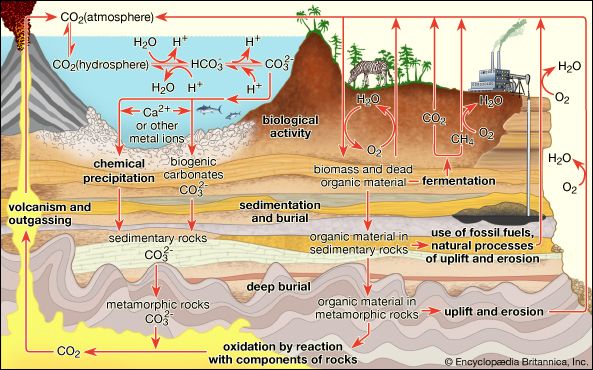
Forests serve as vital carbon sinks, playing a critical role in regulating Earth’s climate by sequestering carbon through photosynthesis. As trees grow, they absorb carbon dioxide from the atmosphere, storing the carbon in their wood, biomass, and the underlying soil wood, biomass, and the underlying soil. Globally, terrestrial ecosystems, with forests as the primary contributors, sequester approximately 2.6 gigatons of carbon annually.567
The Impact of Deforestation
Deforestation disrupts this process in two primary ways:
- Loss of Sequestration Capacity: By removing trees, the planet loses the ability to continue pulling carbon dioxide out of the atmosphere, thereby weakening a key natural defense against global warming weakening a key natural defense against global warming.7
- Carbon Release: When forests are cleared—often through burning or decomposition—the carbon stored in plant tissues and soil is released back into the atmosphere as carbon dioxide. This transformation turns a carbon sink into a significant source of greenhouse gas emissions source of greenhouse gas emissions.687
The loss of forestland is a major contributor to climate change, with current estimates suggesting that land-use changes account for roughly 1.7 billion metric tons of carbon loss annually. Protecting existing forests and encouraging reforestation are essential strategies for maintaining these terrestrial sinks and mitigating the impacts of human-induced climate change.567
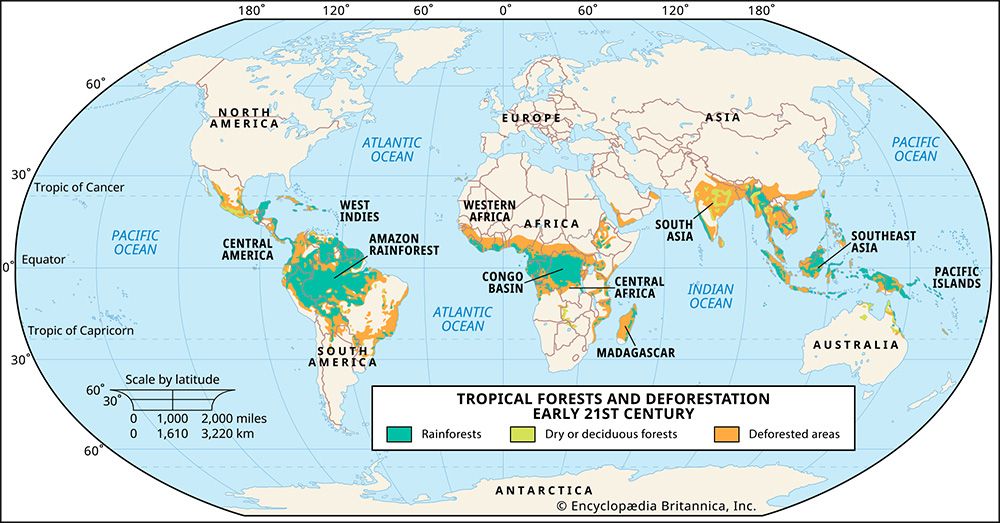
What is deforestation and what are its primary causes?
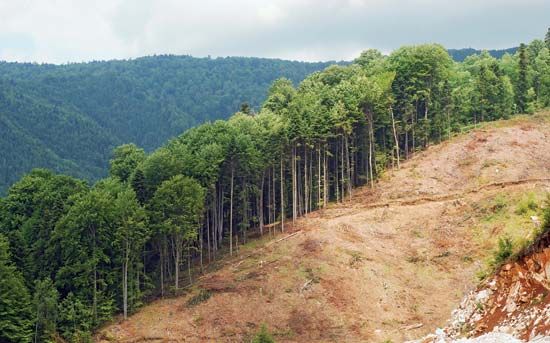
Deforestation is the human-driven process of clearing or thinning forests, which represents a major global land-use issue. It occurs when trees are removed for wood products, croplands, or grazing lands, often through practices like clear-cutting, where all trees in an area are removed.910
Primary Causes of Deforestation
The drivers of deforestation are complex and often linked to economic, population, and industrial pressures:
- Subsistence Agriculture: In many tropical regions, rural populations rely on slash-and-burn agriculture to produce food. Forests are cleared and burned to fertilize the soil, but because tropical soils are often nutrient-poor, the land is frequently abandoned after a few years, forcing further clearing.2118
- Commercial Expansion: Large-scale clearing is driven by the demand for cattle ranches and plantations for commodities such as oil palm, rubber trees, and other economically valuable crops.11
- Logging and Resource Extraction: Commercial logging operations, along with mining activities and oil exploration, contribute significantly to forest loss and habitat fragmentation.118
- Fuelwood Demand: For approximately 40 percent of the global population, wood remains a primary energy source, creating persistent pressure on forest resources.2
How does deforestation impact local and global ecosystems?
Deforestation triggers significant local and global ecological consequences by disrupting essential ecosystem services.
Global Impacts
- Climate Regulation: Forests are critical carbon sinks. When trees are cleared or burned, they stop sequestering carbon dioxide and release stored carbon back into the atmosphere, accelerating global warming.813
- Biodiversity Loss: Tropical forests house approximately two-thirds of Earth’s species. Deforestation leads to habitat destruction and extinction, while habitat fragmentation isolates populations, hindering reproduction and genetic diversity.812
- Atmospheric Exchange: Forests regulate the exchange of gases like methane and nitrous oxide. Their removal alters the global energy balance and disrupts the carbon cycle.87
Local Impacts
- Water Cycles: Forests facilitate evapotranspiration, which provides significant local rainfall. In regions like the Amazon Rainforest, deforestation can lead to severe drought.713
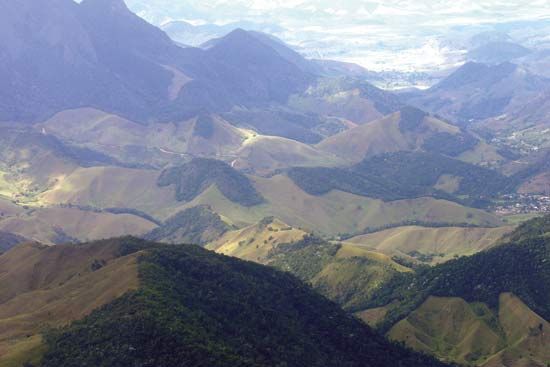
- Soil and Terrain: Without tree roots to bind the earth, steep slopes become prone to disastrous landslides. Furthermore, cleared soils often lose nutrients rapidly, rendering the land unsuitable for long-term agriculture.8
- Microclimate and Air Quality: Clearing forests creates drier, more flammable landscapes, increasing the risk of wildfires. Burning vegetation also causes severe air pollution, as seen in Southeast Asia.812
Sources
- reforestation — Encyclopædia Britannica
- Deforestation - Modern deforestation — Encyclopædia Britannica
- ecological restoration - North American eastern deciduous forest — Encyclopædia Britannica
- ecological restoration - Implementation — Encyclopædia Britannica
- soil - Soils and global warming — Encyclopædia Britannica
- Carbon sequestration — Encyclopædia Britannica
- Global warming - Land-use change — Encyclopædia Britannica
- Deforestation - Effects — Encyclopædia Britannica
- Deforestation — Encyclopædia Britannica
- Status of the world’s tropical forests - The effects of population growth — Encyclopædia Britannica
- clear-cutting — Encyclopædia Britannica
- Status of the world’s tropical forests - Global implications of deforestation — Encyclopædia Britannica
- Slash-and-burn agriculture — Encyclopædia Britannica
Published on · 4 min read