East African Lakes
The levels of the East African lakes are highly sensitive to climatic fluctuations, which significantly impact the communities that rely on them for…
How have water level changes in East African lakes affected local communities?
The levels of the East African lakes are highly sensitive to climatic fluctuations, which significantly impact the communities that rely on them for resources and livelihoods.1
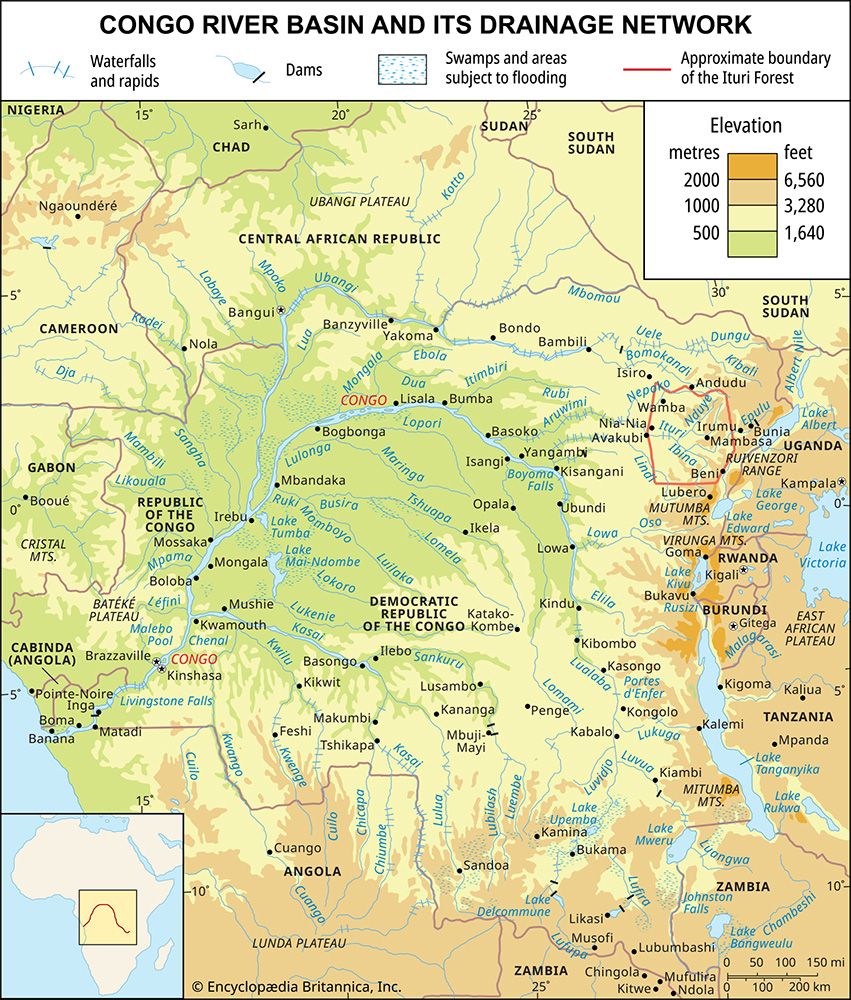
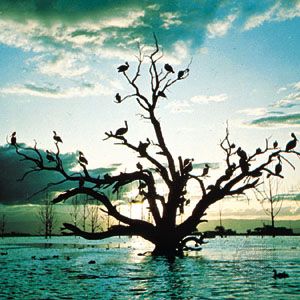
Long-term changes in water levels have historically caused dramatic shifts in lake environments. For instance, smaller, shallower lakes are particularly vulnerable to drought; Lake Nakuru dried up completely in 1939–40, and Lake Chilwa experienced a drastic reduction in area in 1967–68. These fluctuations directly affect local economies, as many communities depend on these waters for commercial and subsistence fishing, which serve as vital sources of protein and income.12
Furthermore, water levels influence infrastructure and regional development. The construction of the Nalubaale Dam on Lake Victoria was designed to manage water levels and enhance the lake’s capacity as a reservoir for hydroelectric power, supporting economic growth in the region. Conversely, when water levels drop or outlets become blocked by silt and vegetation—as seen with the Lukuga River and Shire River—it can disrupt regional connectivity and the sustainability of local fisheries.231
How do the depths and sizes of East African lakes compare to other major lakes around the world?
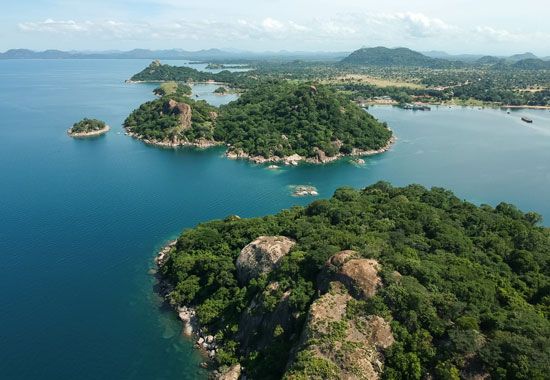
East African lakes are among the most significant bodies of water on Earth, characterized by their formation within the East African Rift System and their diverse physical profiles.1
Surface Area
In terms of surface area, East Africa hosts some of the world’s largest lakes. Lake Victoria is the largest lake in Africa and the second-largest freshwater lake in the world, surpassed only by Lake Superior in North America. Other major lakes in the region, such as Lake Tanganyika and Lake Nyasa, also rank among the top 10 largest lakes globally by area.315
Depth
The depths of these lakes vary significantly based on their geological origins:
- Deep Rift Lakes: Lakes like Tanganyika and Nyasa are exceptionally deep. Lake Tanganyika is the second-deepest lake in the world (4,710 feet [1,436 meters]), trailing only Lake Baikal in Russia.67
- Shallow Lakes: Conversely, lakes such as Lake Albert and Lake Edward are relatively shallow, often due to thick layers of sediment. Lake Victoria itself is also considered shallow for its size, with a maximum depth of approximately 270 feet (82 meters).83
While many global lakes are formed by glacial activity, the East African lakes are primarily tectonic in origin, resulting in unique, elongated basins that contribute to their extreme depth and high levels of biodiversity.817
What role do the East African lakes play in the Great Rift Valley system?
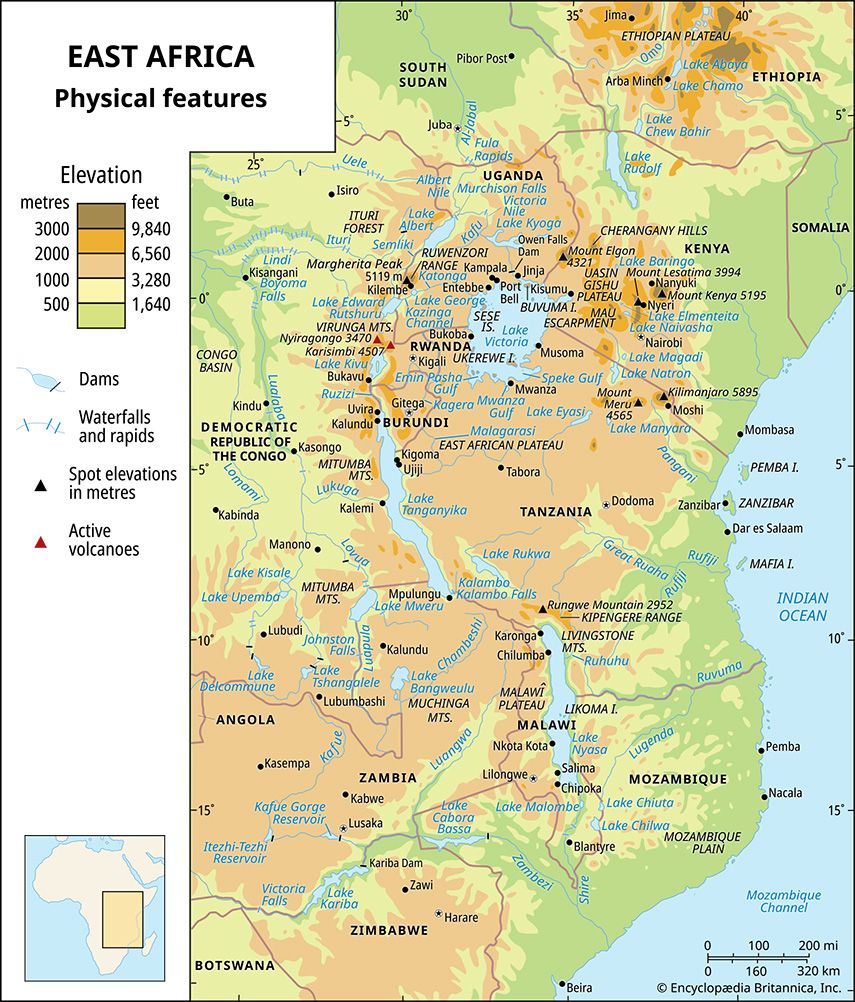
The East African lakes are integral to the East African Rift System, a massive series of crustal fissures extending thousands of miles. These lakes serve as primary features of the system’s two main branches:15
- Western Rift Valley: This branch contains deep, fjordlike lakes—including Tanganyika, Kivu, Edward, and Albert—which are essential components of the Congo River and Nile River drainage systems.15
- Eastern (Great) Rift Valley: This branch features lakes such as Lake Turkana, Naivasha, and Magadi. These generally form independent inland drainage basins.15
Beyond their structural role, these lakes act as critical hydrological regulators. They influence regional climates, particularly Lake Victoria, which sits in a downwarp between the rift highlands and moderates temperatures and precipitation for surrounding areas. Geologically, the lakes have evolved alongside the rift, with their current forms shaped by volcanic activity, tectonic movements, and climatic shifts during the Pleistocene Epoch.101
How were the East African lakes formed, and what is their geological significance?
The East African lakes were primarily formed by tectonic processes associated with the East African Rift System, a massive 4,000-mile-long zone where the Earth’s crust is pulling apart.110
Formation Processes
- Tectonic Subsidence: The lakes occupy elongated troughs created when blocks of the Earth’s crust subsided between normal faults. This process, occurring over the last 30 million years, created deep, fjordlike basins.1110
- Pleistocene Activity: Most lakes attained their current form during the Pleistocene Epoch. For example, Lake Victoria was formed approximately 100,000 years ago when tectonic movements caused the reversal of regional river drainage, diverting water into the basin.1
- Volcanism and Sedimentation: Volcanic activity has played a significant role by blocking natural drainage paths and shaping shorelines. Additionally, the depth of many lakes is influenced by thick layers of accumulated sediment, which accounts for the relative shallowness of lakes like Lake Albert and Lake Edward.1
Geological Significance
These lakes are critical indicators of the Earth’s dynamic crustal evolution. They serve as markers of incipient plate spreading, where the lithosphere is thinning and diverging. The lakes also act as sensitive hydrological records; their fluctuating levels and strandlines provide evidence of past climatic shifts and long-term environmental changes in the region. Furthermore, the rift’s unique geology—characterized by deep, deoxygenated waters in lakes like Lake Tanganyika—creates distinct biological environments that are essential for studying evolutionary adaptation.12111
Sources
- East African lakes - Geology, climate, and hydrology — Encyclopædia Britannica
- East African lakes - Resource exploitation — Encyclopædia Britannica
- Lake Victoria — Encyclopædia Britannica
- lake - Water level fluctuations — Encyclopædia Britannica
- East African lakes — Encyclopædia Britannica
- Lake Tanganyika — Encyclopædia Britannica
- 9 of the World’s Deepest Lakes — Encyclopædia Britannica
- lake - Occurrence — Encyclopædia Britannica
- world’s largest lakes — Encyclopædia Britannica
- East African Rift System — Encyclopædia Britannica
- tectonic basins and rift valleys - Rift valleys — Encyclopædia Britannica
- rift valley — Encyclopædia Britannica
Published on · 4 min read