Elephanta Island
The Elephanta Island cave temples, located in Mumbai Harbour, are renowned for their intricate 8th- and 9th-century rock-cut architecture. Designated as a…
Can you describe the famous cave temples on Elephanta Island and their importance?
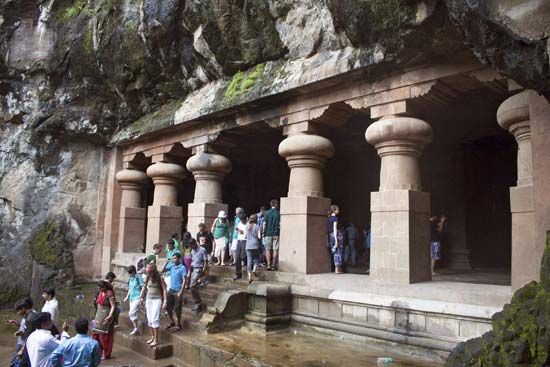
The Elephanta Island cave temples, located in Mumbai Harbour, are renowned for their intricate 8th- and 9th-century rock-cut architecture. Designated as a UNESCO World Heritage site in 1987, these temples occupy approximately 54,800 square feet atop a hill. The main temple features a 90-foot-long hall designed in the form of a mandala, with walls and ceilings adorned by rows of columns and crossbeams.1
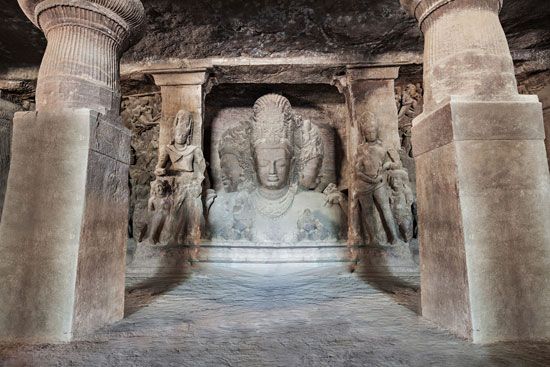
The site is culturally significant for its profound Hindu iconography, most notably the 20-foot-high trimurti Sadashiva—a three-headed bust representing Shiva as the creator, preserver, and destroyer. Other panels depict mythological scenes, including the marriage of Shiva and Parvati and Shiva’s cosmic dance. A linga is housed in the western sanctuary.1
Although the site suffered damage under Portuguese rule in the 16th century, restoration efforts in the 1970s successfully preserved these masterpieces, ensuring their legacy as a vital link to India’s artistic and religious history.1
What role did Elephanta Island play in the maritime trade routes of ancient India?
The provided search results do not contain specific information regarding the role Elephanta Island itself played in ancient maritime trade routes.
While the broader Konkan coastal region was integral to ancient trade—with its ports known to Greeks, Egyptians, and Arab traders, and its prosperity fueled by the spice trade—the available documentation focuses on the island primarily as a site of 8th- and 9th-century Hindu cave temples. These temples are noted as evidence of the prosperous culture of that era, but the sources do not detail the island’s direct participation in maritime commerce.12
How does the architecture of the Elephanta Caves reflect Hindu and Buddhist influences?
The architecture of the Elephanta Caves is primarily a manifestation of Hindu tradition, reflecting a period when rock-cut techniques—originally popularized by Buddhist and Jain practitioners—were adapted for Hindu worship.
Hindu Architectural Influence
The Elephanta Caves, dating to the 8th and 9th centuries, utilize a rock-cut style that evolved from earlier traditions. Unlike the multi-storied monasteries often found in Buddhist sites, the main temple at Elephanta is a large, single-story hall spanning 90 feet. Its layout is structured as a mandala, a sacred geometric diagram central to Hindu cosmology. The interior features rows of columns and crossbeams carved directly into the rock, creating a space dedicated to the deity Shiva. The presence of a linga in a dedicated western sanctuary further underscores its function as a site for Hindu ritual and devotion.
Buddhist and Historical Context
While the Elephanta Caves are distinctly Hindu, their architectural lineage is deeply connected to the broader history of Indian rock-cut structures. Early Buddhist and Jain cave temples established the practice of using artificial caves for religious purposes, which were later adopted by Hindus. For instance, the practice of placing an object of worship in a central shrine surrounded by an ambulatory path—a feature seen in Hindu temples—is believed to have borrowed from the Buddhist stupa precedent.
Although the Elephanta Caves do not contain Buddhist iconography, they represent the culmination of a long-standing architectural evolution in India where rock-cut methods were refined to serve diverse religious needs.
Where is Elephanta Island located, and what is its geographical significance?
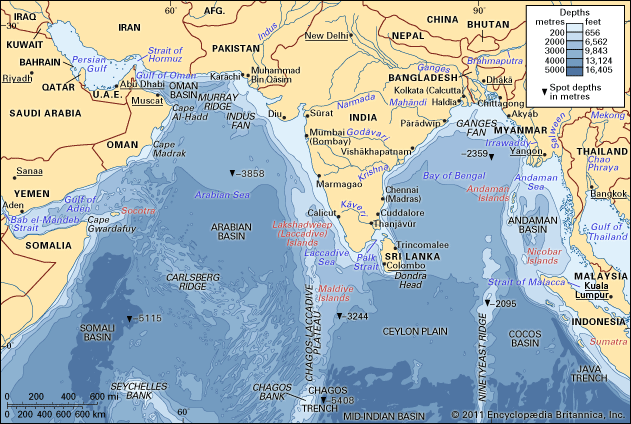
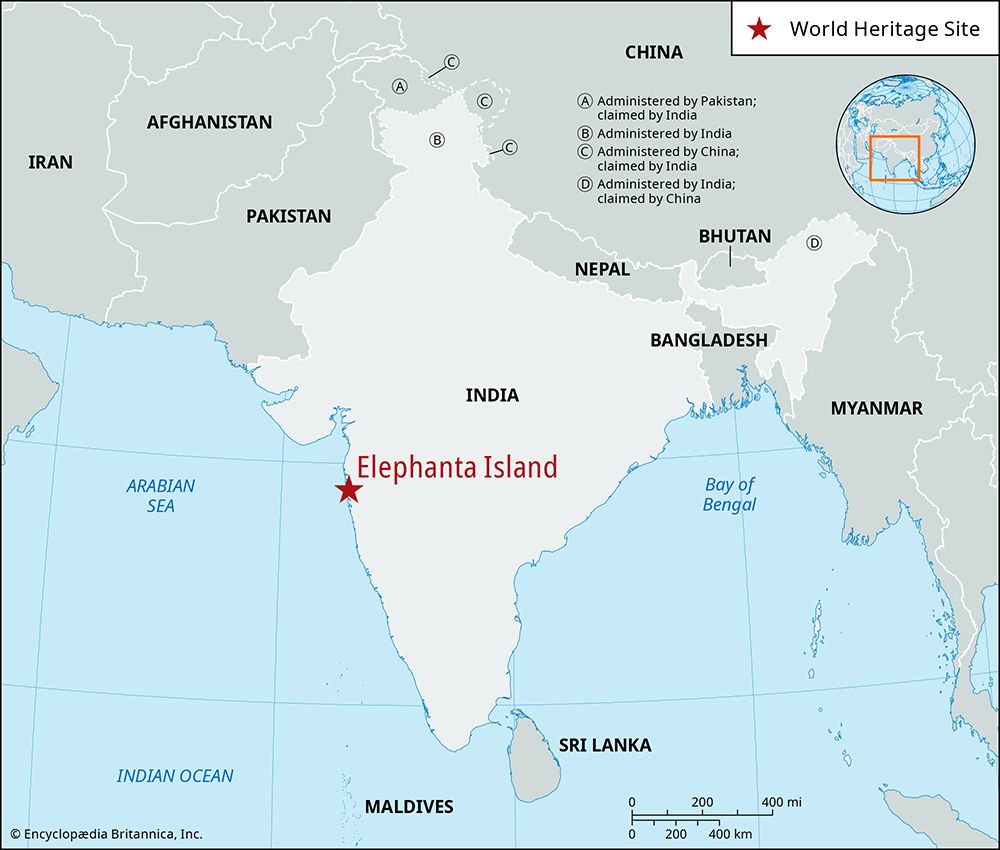
Elephanta Island is located in the Mumbai (Bombay) Harbour of the Arabian Sea, situated approximately 6 miles (10 km) east of Mumbai and 2 miles (3 km) west of the mainland coast of Maharashtra, India.1
Geographically, the island covers an area of 4 to 6 square miles (10 to 16 square km), a size that fluctuates with the tides. It is the largest island within the expansive and sheltered Mumbai Harbour, which is framed by the Western Ghats mountain range on the mainland. This harbor provides a secure, natural anchorage that has historically protected ships from coastal storms.13
Beyond its strategic maritime position, the island is renowned for its 8th- and 9th-century Hindu cave temples, which are designated UNESCO World Heritage sites. These temples, carved into the rock atop a large hill, serve as significant cultural landmarks that reflect the prosperous history of the Konkan coastal region.12
Sources
- Elephanta Island — Encyclopædia Britannica
- Konkan — Encyclopædia Britannica
- Mumbai - City site — Encyclopædia Britannica
- 11 Caves That Made History - Ellora Caves — Encyclopædia Britannica
- South Asian arts - Early Indian architecture (2nd century bc –3rd century ad ) — Encyclopædia Britannica
- South Asian arts - The Gupta period (4th–6th centuries ad ) — Encyclopædia Britannica
- Hinduism - The development of temples — Encyclopædia Britannica
Published on · 3 min read