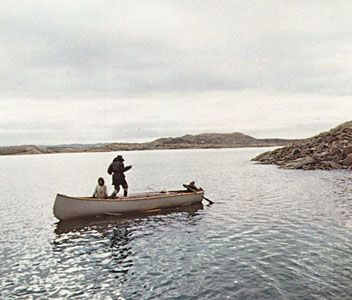
Ellesmere Island
Ellesmere Island played a significant role in the history of Arctic exploration, serving as a focal point for scientific study and geographic discovery.…
What role did Ellesmere Island play in early Arctic exploration?
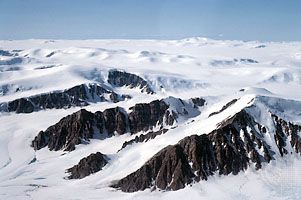
Ellesmere Island played a significant role in the history of Arctic exploration, serving as a focal point for scientific study and geographic discovery. While it is believed that Vikings visited the island around 1000 CE, it was first sighted by European explorer William Baffin in 1616.12
Key milestones in its exploration include:
- 19th Century Scientific Expeditions: In 1881, the U.S. Polar Year station at Fort Conger was established by Adolphus Washington Greely. The expedition explored significant portions of the island and achieved a record northing at the time.3
- Norwegian Contributions: Between 1898 and 1902, a scientific expedition led by Otto Sverdrup in the Fram conducted extensive work on the south and west coasts of the island, leading to the discovery of Axel Heiberg and the Ringnes Islands.3
- Mapping Completion: The final geographic gaps regarding the island’s outline were filled by Walter Elmer Ekblaw during the Crocker Land Expedition (1913–1917).3
How does Ellesmere Island compare to other islands in the Canadian Arctic Archipelago?
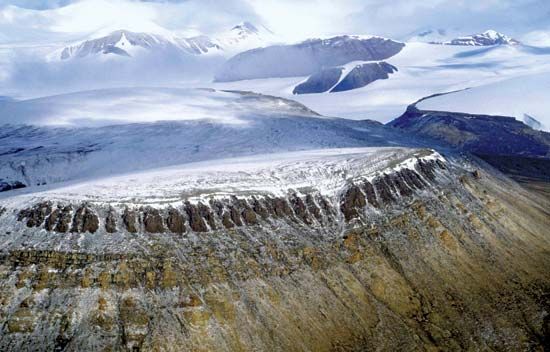
Ellesmere Island holds a distinct position within the Canadian Arctic Archipelago due to its unique geography and northernmost location. As the largest island of the Queen Elizabeth Islands, it is characterized as the most rugged island in the entire archipelago, featuring a deeply indented coastline, vast ice fields, and towering mountains.14
Compared to other major islands in the region, such as Baffin, Victoria, or Banks, Ellesmere Island is notable for its extreme northern latitude. It contains Cape Columbia, the northernmost point of Canada, and hosts Alert, which serves as the northernmost community in North America. Additionally, it is home to Barbeau Peak, the highest point in the territory of Nunavut. While other islands in the archipelago are often defined by the Arctic lowlands or extensions of the Canadian Shield, Ellesmere is significantly shaped by the Innuitian Mountains.15
What is the significance of Ellesmere Island in Canada’s Arctic sovereignty claims?
Ellesmere Island is a cornerstone of Canada’s Arctic sovereignty, serving as a vital geographic and strategic anchor in the Canadian Arctic Archipelago. As the northernmost island in the Queen Elizabeth Islands, it establishes the extent of Canada’s northern reach, with Cape Columbia marking the country’s most northerly point.15
The island’s significance to sovereignty is reinforced by a permanent human and administrative presence. Settlements such as Alert—the northernmost community in North America—function as both a weather station and a military outpost. These outposts, alongside the broader network of Canadian Coast Guard operations, allow Canada to maintain a visible presence, monitor shipping, and enforce environmental and safety regulations in the surrounding Arctic waters.14
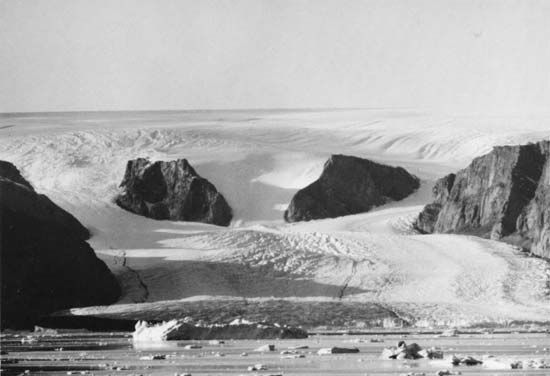
Furthermore, the island’s rugged terrain and vast ice fields underscore the strategic importance of the region, which has historically been a focus for radar surveillance and defense infrastructure to protect North American airspace. While international cooperation in scientific research remains a priority, Ellesmere Island remains essential to Canada’s ability to assert jurisdiction over its northern territories.17
How does the presence of Quttinirpaaq National Park impact Ellesmere Island?
Quttinirpaaq National Park plays a significant role in the preservation of the remote wilderness on the northeastern portion of Ellesmere Island. By designating this vast area as a protected space, the park ensures the conservation of the island’s unique and rugged Arctic environment, which is characterized by towering mountains and extensive ice fields.11112
Beyond its role in environmental protection, the park serves as a destination for outdoor activities such as hiking and exploration, contributing to the broader recreational landscape of Nunavut. It stands alongside other protected areas in the territory as a commitment to maintaining the ecological integrity of the region while providing opportunities for visitors to engage with the Arctic wilderness.11
Sources
- Ellesmere Island — Encyclopædia Britannica
- Arctic - The North American Arctic — Encyclopædia Britannica
- Ellesmere Island — Merriam-Webster
- Queen Elizabeth Islands — Encyclopædia Britannica
- Arctic Archipelago — Encyclopædia Britannica
- Baffin — Encyclopædia Britannica
- Arctic - Administration — Encyclopædia Britannica
- list of islands - Canada — Encyclopædia Britannica
- Arctic - The Arctic in international affairs — Encyclopædia Britannica
- Canada - Waterways — Encyclopædia Britannica
- Nunavut - Sports and recreation — Encyclopædia Britannica
- Quttinirpaaq National Park — Merriam-Webster
Published on · 3 min read