Endosymbiosis
Endosymbiosis is a biological phenomenon in which one organism lives within the body of another, unrelated organism. While these relationships can be…
What is Endosymbiosis?
Endosymbiosis is a biological phenomenon in which one organism lives within the body of another, unrelated organism. While these relationships can be parasitic, they are most commonly mutually beneficial. The organism residing inside is known as the endosymbiont, while the partner harboring it is the host.12
This process has been a fundamental driver of evolution, most notably in the development of the eukaryotic cell. According to the endosymbiotic theory, complex organelles such as mitochondria and chloroplasts originated when primitive host cells engulfed free-living prokaryotic organisms. Instead of being digested, these prokaryotes became permanently integrated, providing the host with essential functions like energy production in exchange for protection and nutrients.134
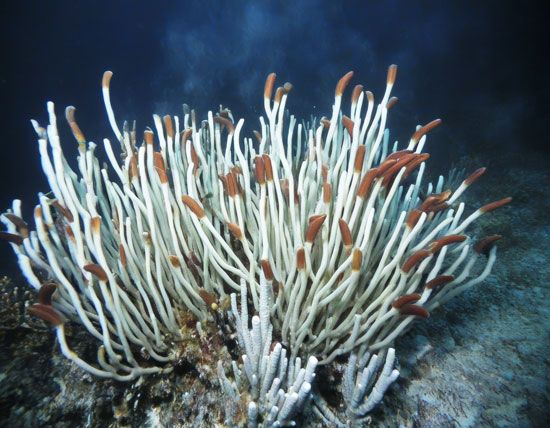
Evidence for this origin includes the fact that these organelles possess their own circular DNA and replicate independently, much like bacteria. Beyond cellular evolution, endosymbiosis continues to support the survival of many modern species, such as insects that rely on internal microbes for essential nutrients.14
What evidence shows that mitochondria were once independent bacteria?
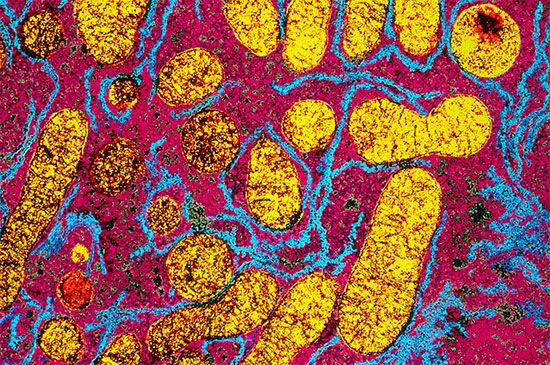
The endosymbiotic theory posits that mitochondria originated as free-living prokaryotic organisms that were engulfed by ancestral eukaryotic cells. Several key pieces of evidence support this evolutionary origin:
- Genetic Material: Mitochondria contain their own circular DNA, which is structurally similar to the circular chromosomes found in bacteria.116
- Reproduction: These organelles replicate independently of the host cell through binary fission, a process identical to how bacteria divide.216
- Membrane Structure: Mitochondria possess two distinct membranes. The inner membrane structure resembles that of prokaryotes, supporting the idea that they were once independent entities.216
- Protein Synthesis: Mitochondria contain their own protein-synthesizing machinery, including bacteria-like ribosomes, which are distinct from those found in the rest of the eukaryotic cell.54
Because they cannot be formed anew if absent, these organelles are considered permanent, integrated descendants of those ancient symbiotic associations.16
How do mitochondria and chloroplasts differ in their evolutionary origins?
Mitochondria and chloroplasts share a common evolutionary origin as free-living prokaryotic organisms that were incorporated into ancestral eukaryotic cells through endosymbiosis, but they differ in their specific ancestral lineages and the timing of their integration.869
- Ancestral Lineage: Mitochondria are believed to have evolved from aerobic bacteria, likely [alphaproteobacteria], which provided the host cell with an efficient system for oxidative energy production. In contrast, chloroplasts evolved from photosynthetic prokaryotes, specifically ancestors of blue-green algae (cyanobacteria), which enabled the host to harness light energy.869
- Timing of Integration: Most scientists conclude that mitochondria were acquired first, as they are present in nearly all eukaryotic cells. The acquisition of chloroplasts occurred later in specific evolutionary lineages, such as those leading to plants and algae, after the initial establishment of the aerobic eukaryotic cell.68
While both organelles became permanently integrated and lost their ability to survive independently, they retain distinct metabolic roles—mitochondria focus on ATP production via aerobic respiration, while chloroplasts specialize in photosynthesis.862
What is the difference between primary and secondary endosymbiosis?
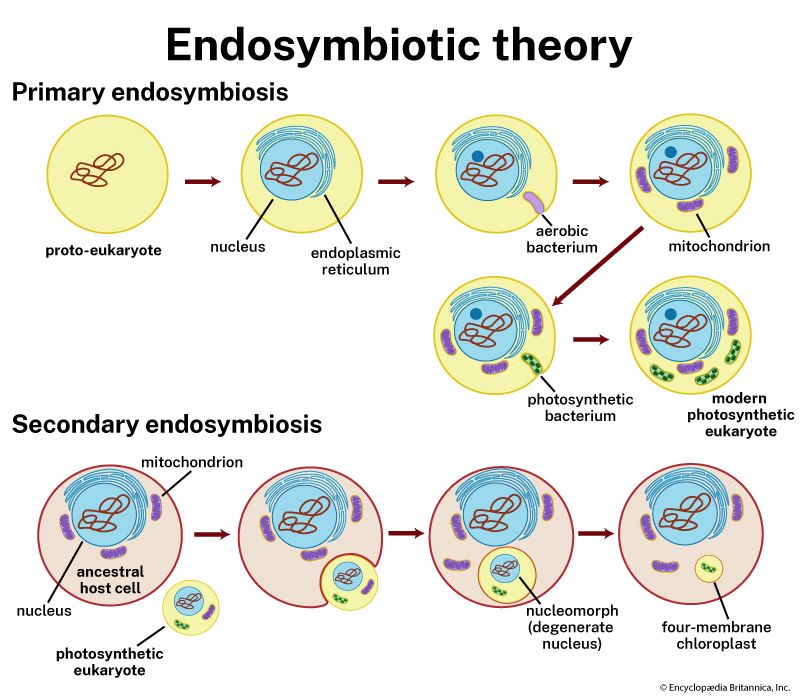
The distinction between primary and secondary endosymbiosis lies in the nature of the organism being engulfed and the resulting cellular complexity.
- Primary Endosymbiosis: This process involves the internalization of a free-living prokaryotic organism by a host cell. This event was fundamental to the evolution of the eukaryotic cell, leading to the formation of mitochondria and chloroplasts from ancestors such as alphaproteobacteria and cyanobacteria.5
- Secondary Endosymbiosis: This occurs when a eukaryotic cell engulfs a unicellular organism that already contains organelles formed through primary endosymbiosis. This process has contributed to the emergence of diverse life-forms, such as various algae and dinoflagellates.55
Evidence for secondary endosymbiosis includes the presence of three- or four-membraned plastids and, in some cases, a nucleomorph—a highly reduced remnant of the engulfed algal nucleus—found between the plastid membranes.25
Sources
- cell - The endosymbiont hypothesis — Encyclopædia Britannica
- Endosymbiosis — Encyclopædia Britannica
- protist - Fossil protists and eukaryotic evolution — Encyclopædia Britannica
- eukaryote: Top Questions — Encyclopædia Britannica
- Endosymbiosis: Top Questions — Encyclopædia Britannica
- mitochondrion — Encyclopædia Britannica
- Bacteria - Bacteria as prokaryotes — Encyclopædia Britannica
- cell - The mitochondrion and chloroplast as independent entities — Encyclopædia Britannica
- cell - The development of metabolism — Encyclopædia Britannica
Published on · 3 min read