Environmental Science
Environmental science is an interdisciplinary field that analyzes human impacts on the environment to develop solutions for pressing global challenges. Some…
What are some of the most pressing environmental issues studied in environmental science?
Environmental science is an interdisciplinary field that analyzes human impacts on the environment to develop solutions for pressing global challenges. Some of the most significant issues studied include:1
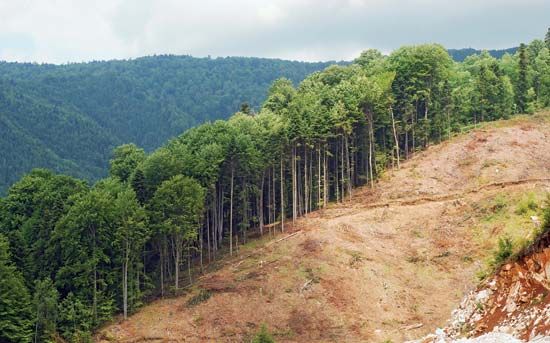
- Global Warming and Climate Change: Scientists use models to quantify the effects of greenhouse gas emissions—such as carbon dioxide, methane, and nitrous oxide—on Earth’s climate. This includes studying how land-use changes, like deforestation, disrupt carbon cycles and exacerbate the greenhouse effect.123
- Water Scarcity: This involves the lack of sufficient freshwater to meet human and environmental demands, driven by population growth, pollution, and changing weather patterns.4
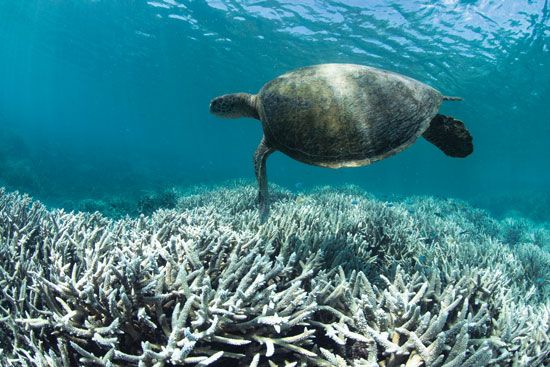
- Biodiversity Loss: Researchers study how the decline of species and the fragmentation of habitats destabilize ecosystems, reducing their resilience and ability to provide essential services like soil stabilization and water purification.53
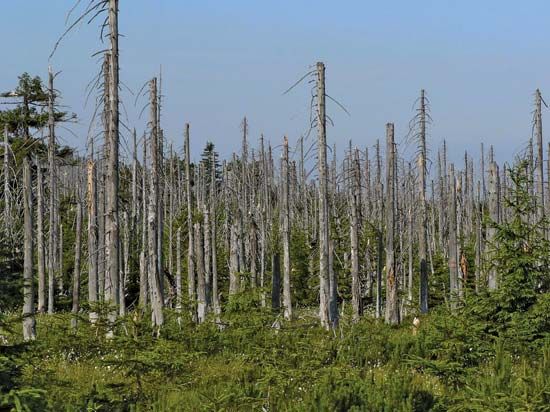
- Pollution: This encompasses the accumulation of plastic pollution in oceans and terrestrial environments, as well as the release of toxic chemicals and acid rain that degrade air and water quality.461
What career opportunities are available for someone studying environmental science?
Studying environmental science opens diverse career paths across the public, private, and academic sectors. Professionals in this field apply their knowledge of ecology, chemistry, and physics to address complex challenges like pollution control, natural resource management, and the development of alternative energy systems.8
Many graduates find roles in:
- Government: Working for national or regional environmental agencies and local health departments to enforce regulations and inform policy.38
- Industry: Serving in consulting firms, manufacturing, or utility companies to manage hazardous waste, oversee wastewater treatment, and conduct environmental impact assessments.3
- Academia and Research: Engaging in applied research, teaching, and mathematical modeling to evaluate environmental systems.38
- Nonprofit Organizations: Contributing to advocacy and scientific analysis regarding human impacts on the environment.8
Additionally, those interested in the technical design of infrastructure—such as water supply systems or air pollution control—often pursue environmental engineering, which requires specialized training to protect public health and preserve natural resources.3
How does environmental science relate to other scientific disciplines?
Environmental science is a highly interdisciplinary field that functions as a bridge between various scientific and technical disciplines to analyze environmental problems and human impacts on the environment.3
It draws upon a wide range of foundational sciences, including:
- Natural Sciences: It integrates ecology, geology, meteorology, biology, chemistry, and physics to quantify environmental processes and the effects of human actions.3
- Physical Geography: The methods used by physical geographers are largely those of environmental scientists. Both fields rely on mathematics and collaborative modeling to understand systems like the carbon cycle and climate change.9
- Engineering: Environmental science works closely with engineering to develop practical solutions, such as pollution control systems and alternative energy technologies.310
- Economics: While environmental science focuses on quantifying physical impacts, it often intersects with environmental economics, which applies economic principles to manage resources efficiently and inform policy.38
By synthesizing these diverse fields, environmental scientists can create models to predict environmental futures and provide a scientific basis for public policy.39
How does environmental science address the challenges of climate change?
Environmental science addresses the challenges of climate change by employing a quantitative, interdisciplinary approach to understand, quantify, and mitigate the impacts of human activities on the environment.3
Scientific Analysis and Modeling
Environmental scientists utilize complex theoretical climate models to simulate Earth’s climate system. These models solve for radiative balance and the laws of motion governing the atmosphere, oceans, and ice. By integrating data from empirical observations and proxy sources—such as ice cores and tree rings—scientists perform “detection and attribution” studies to confirm that observed warming patterns are consistent with anthropogenic influences.1213
Mitigation and Adaptation
Environmental science informs policy by evaluating strategies to address the climate crisis through two primary lenses:314
- Mitigation: Scientists analyze and develop technologies to stabilize greenhouse gas concentrations, including alternative energy systems, carbon capture, and reforestation efforts.314
- Adaptation: Research supports infrastructure adjustments to reduce vulnerability to climate impacts, such as flood defenses for rising sea levels and the development of drought-resistant agricultural practices.14
Ultimately, environmental science provides the essential data and predictive modeling required for governments and organizations to formulate effective global warming policy.315
Sources
- Water Scarcity Facts and Statistics — Encyclopædia Britannica
- plastic pollution - Plastic pollution in oceans and on land — Encyclopædia Britannica
- environmental science — Encyclopædia Britannica
- biodiversity loss - Ecological effects — Encyclopædia Britannica
- Deforestation - Effects — Encyclopædia Britannica
- soil - Soils and global warming — Encyclopædia Britannica
- environmental economics - Future directions — Encyclopædia Britannica
- environmental engineering — Encyclopædia Britannica
- geography - Physical geography — Encyclopædia Britannica
- environmental engineering: Top Questions — Encyclopædia Britannica
- environmental economics — Encyclopædia Britannica
- Global warming policy - The UN Framework Convention and the Kyoto Protocol — Encyclopædia Britannica
- Global warming - Theoretical climate models — Encyclopædia Britannica
- Global warming - Climate research — Encyclopædia Britannica
- Global warming — Encyclopædia Britannica
- Climate change - Climate change mitigation and adaptation — Encyclopædia Britannica
Published on · 3 min read