Faunal Region
Faunal regions are defined by their distinctive animal life, often shaped by geographic isolation. Here are examples of unique animals found in specific…
What are some examples of unique animals found in specific faunal regions?
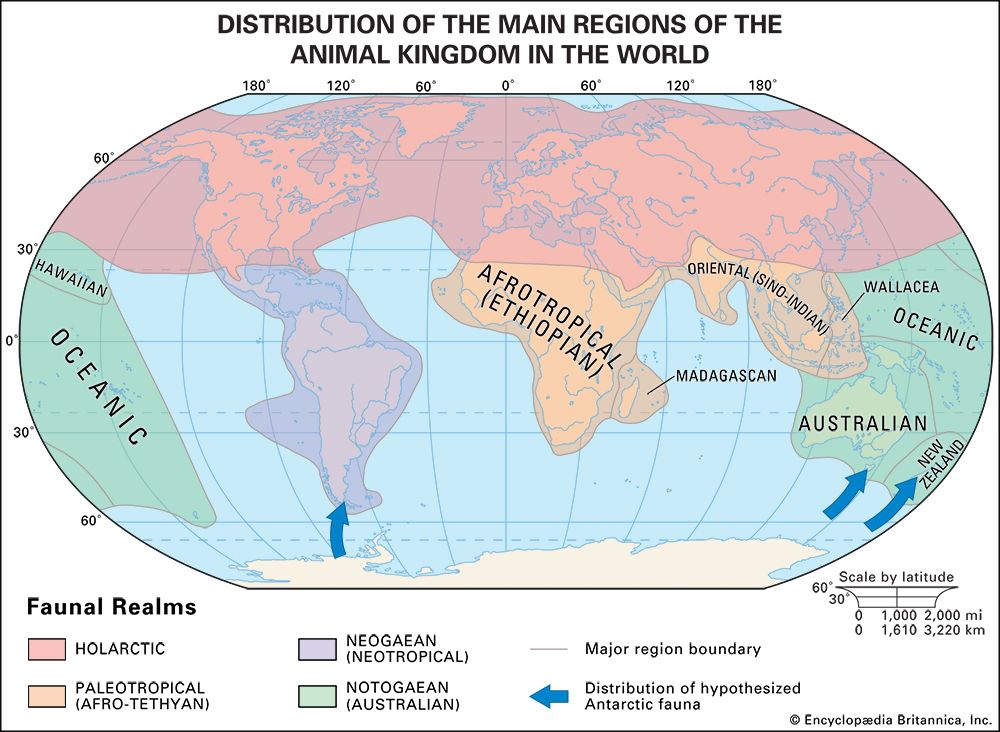
Faunal regions are defined by their distinctive animal life, often shaped by geographic isolation. Here are examples of unique animals found in specific regions:
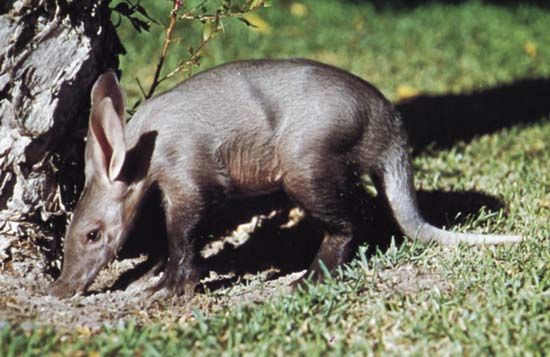
- Afrotropical (Ethiopian) Region: This region is home to endemic mammalian orders such as hyraxes, aardvarks, and elephant shrews. Other unique fauna include giraffes, okapi, ostriches, and electric catfish.1
- Australian Region: Due to long isolation, this region features unique marsupials like kangaroos, wallabies, koalas, and marsupial moles. It is also the only region with egg-laying mammals, the platypus and echidna.2
- Neotropical Region: This area includes animals such as the llama, tapir, jaguar, and puma, alongside a vast diversity of insects and birds.3
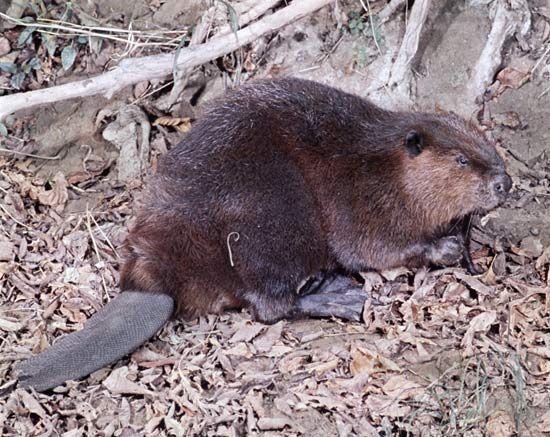
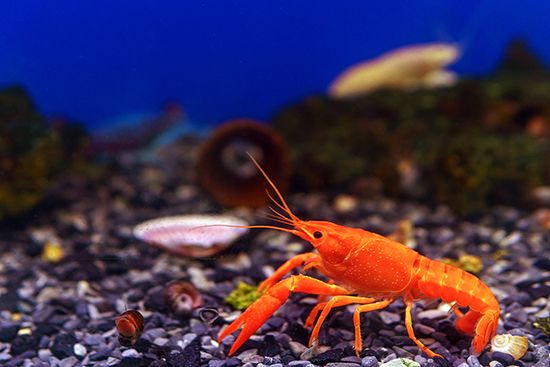
- Holarctic Realm: Characterized by families such as moles, beavers, pikas, and the freshwater crayfish family Astacidae.4
What is a faunal region in biogeography, and how is it defined?
A faunal region is one of six or seven major areas of the world defined by animal geographers based on the presence of distinctive animal life. These regions generally correspond to major continental landmasses and are separated from one another by significant physical barriers, such as oceans, mountain ranges, or deserts, which historically restricted the dispersal of species.1
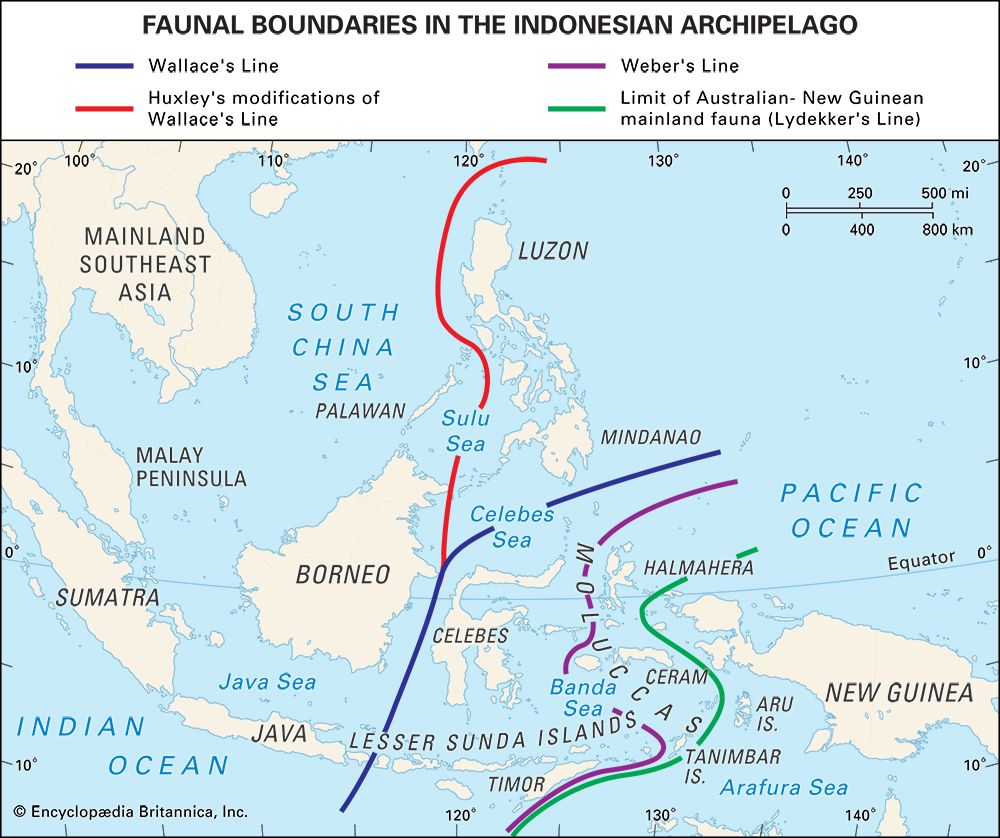
The classification of these regions is rooted in the field of biogeography, which studies the distribution of plants and animals. Modern definitions were heavily influenced by the 19th-century work of Alfred Russel Wallace, who observed that islands with similar faunas were once connected by land, while those with dissimilar faunas were separated by deep, permanent seaways.7
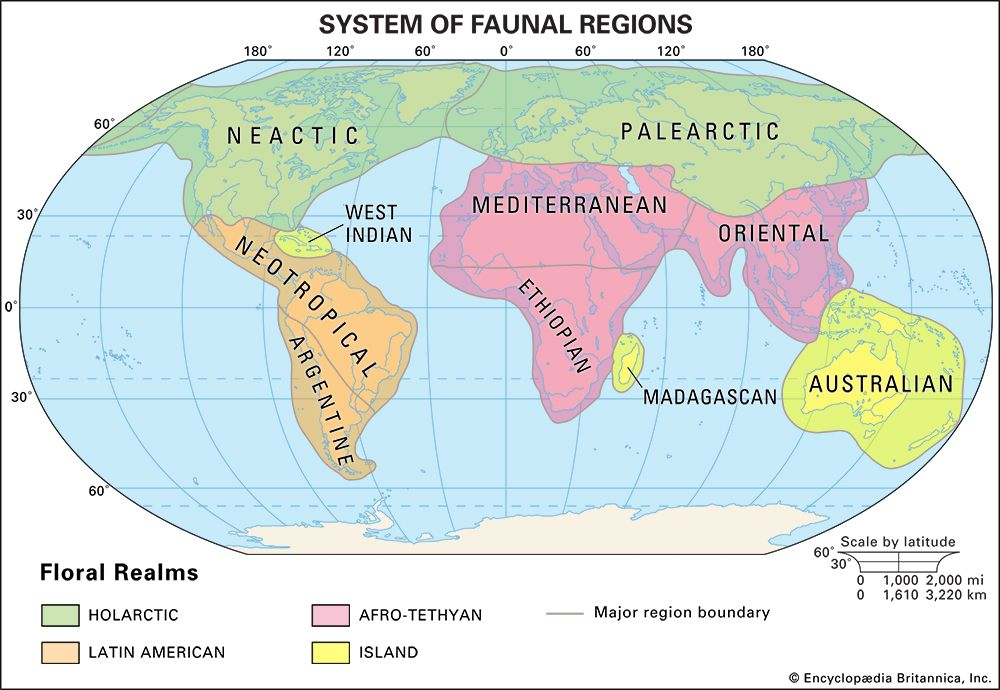
The primary regions recognized today include the Palaearctic, Ethiopian (Afrotropical), Oriental, Australian, Nearctic, Neotropical, and Antarctic. Because of historical faunal interchange, the Palaearctic and Nearctic are often grouped together as the Holarctic region. Some zoogeographers further categorize these into broader realms to reflect deeper evolutionary and geographic distinctions.18
Can you explain the concept of ‘endemic species’ and how it relates to faunal regions?
An endemic species is a taxon whose geographic distribution is confined to a single, specific area, meaning it is found nowhere else in the world. While these species can range from a small lake to an entire continent, they are frequently found in isolated environments where they have developed specialized adaptations.1112
Endemism is fundamental to the study of biogeographic regions. Historically, these regions were defined by mapping the boundaries of endemic taxa; areas that share the fewest taxa with other regions are classified as distinct realms or kingdoms. Essentially, the more unique, endemic species a region contains, the more distinct it is considered to be in a biogeographic context.12
There are two primary categories of endemism:
- Neoendemics: Newly evolved species that have not yet had sufficient time to spread beyond their region of origin.1112
- Paleoendemics: Ancient, often high-ranking taxa (such as families or classes) that were once widespread but are now restricted to a small, relict area.1112
How many major faunal regions are typically recognized, and what are they called?
Animal geographers typically recognize six or seven major faunal regions based on their distinctive animal life. These regions generally align with major continental landmasses, separated by significant physical barriers like oceans, deserts, or mountain ranges.1
The seven recognized regions are:
- Palaearctic: Includes Europe, northern Africa, and northern Asia.1
- Ethiopian: Encompasses Africa south of the Sahara.1
- Oriental: Covers much of South and Southeast Asia.1
- Australian: Comprises Australia and surrounding islands.1
- Nearctic: Includes North America and Greenland.1
- Neotropical: Covers South America and Central America up to central Mexico.1
- Antarctic: The region encompassing the Antarctic continent.1
Because of historical faunal interchange via a former land bridge between Siberia and Alaska, the Palaearctic and Nearctic are frequently grouped together as the Holarctic region. Additionally, some zoogeographers categorize these areas into higher-level realms—Neogea, Notogea, Metagea, and Antarctica—to reflect deeper evolutionary distinctions.1
Sources
- faunal region — Encyclopædia Britannica
- biogeographic region - Afrotropical region — Encyclopædia Britannica
- Neotropical region — Encyclopædia Britannica
- Australia - Animal life — Encyclopædia Britannica
- biogeographic region - Holarctic realm — Encyclopædia Britannica
- Holarctic region — Encyclopædia Britannica
- biogeographic region - History — Encyclopædia Britannica
- biogeographic region - Oriental region — Encyclopædia Britannica
- artiodactyl - Areas of distribution — Encyclopædia Britannica
- biogeographic region - Fauna — Encyclopædia Britannica
- endemic species — Encyclopædia Britannica
- biogeographic region - Endemism — Encyclopædia Britannica
- biogeographic region - Neogaean realm — Encyclopædia Britannica
Published on · 3 min read