English Channel
The English Channel has played a dual role throughout European history, serving as both a vital maritime route and a formidable defensive barrier.
What historical significance does the English Channel have in European history?
The English Channel has played a dual role throughout European history, serving as both a vital maritime route and a formidable defensive barrier.12
A Route for Migration and Trade
Since the Early Stone Age, the channel has facilitated the movement of people and goods between the Continent and Britain. Early settlers, as well as Bronze and Iron Age groups, utilized the channel to trade resources like tin, copper, and lead. This maritime corridor was essential to the peopling of Britain and the eventual development of modern European nation-states.12
A Strategic Defensive Barrier
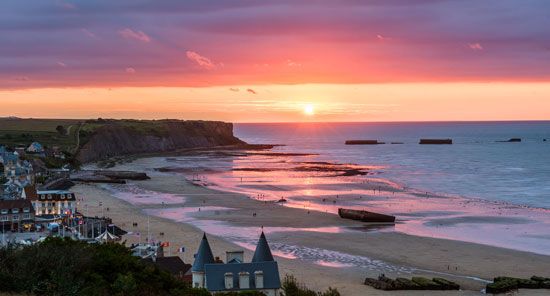
When not serving as a path for invasion—such as during Julius Caesar’s arrival in 55 BCE or William the Conqueror’s 1066 crossing to Hastings—the channel functioned as a critical defensive line. Following Britain’s loss of Normandy, the channel became a natural buffer that protected the island from continental conflicts. Its strategic importance persisted into the 20th century, where it remained a focal point of military operations during both world wars, most notably during the Allied invasion of France in 1944.1
How deep and wide is the English Channel, and what are its main geographical features?
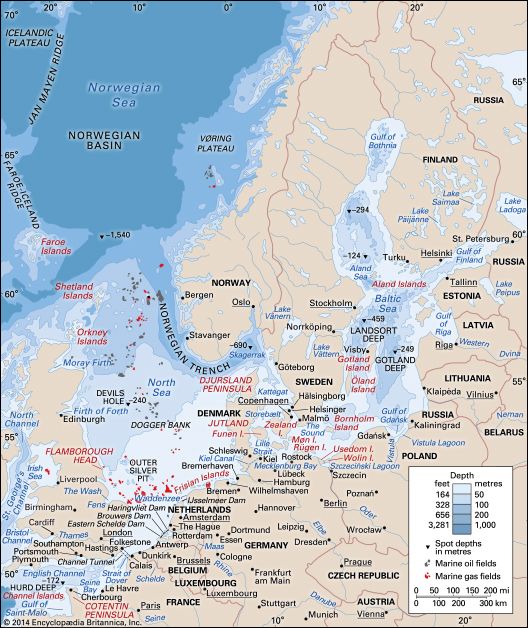
The English Channel is a narrow arm of the Atlantic Ocean covering approximately 29,000 square miles (75,000 square km) of the European continental shelf.
Dimensions
- Width: The channel tapers eastward from 112 miles (180 km) at its mouth to a minimum width of 21 miles at the Strait of Dover.2
- Depth: The average depth decreases from 400 feet (120 metres) in the west to 150 feet (45 metres) in the east.2
Geographical and Physical Features
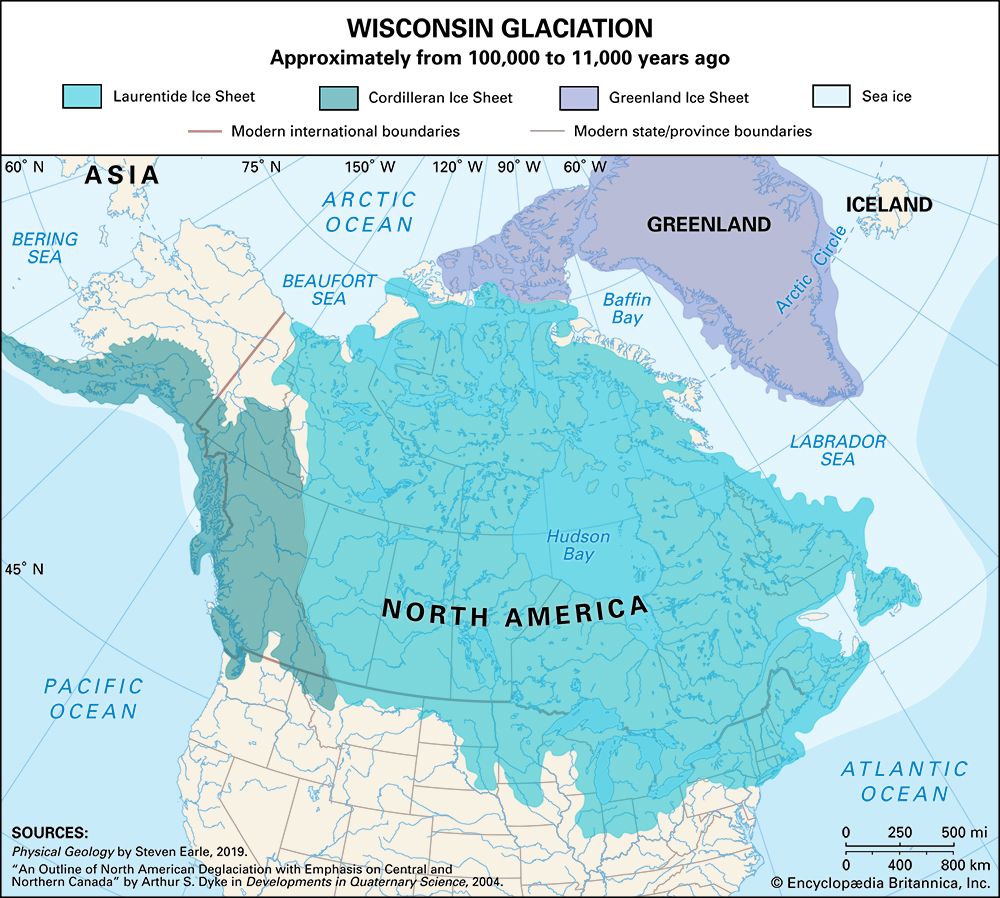
- Geology: The channel formed through complex structural downfolding that began roughly 40 million years ago. Its current form was finalized after the Pleistocene Epoch, when rising sea levels submerged the land bridge across the Strait of Dover about 8,000 years ago.5
- Hydrology: The channel is characterized by strong tides, with the Gulf of Saint-Malo experiencing the greatest tidal range of 28 feet or more.6
- Water Characteristics: There is a consistent water flow toward the North Sea. Surface salinities are slightly below Atlantic levels, and water temperatures vary seasonally, ranging from 45 °F (7 °C) in winter to 61 °F (16 °C) in late summer.26
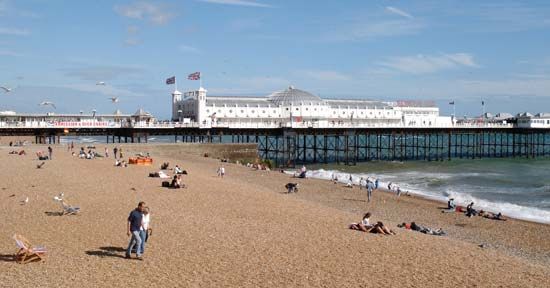
What is the English Channel and where is it located?
The English Channel is a narrow arm of the Atlantic Ocean that separates the southern coast of England from the northern coast of France.2
Located on the European continental shelf, it serves as a vital maritime connection, tapering eastward until it joins the North Sea at the Strait of Dover. Spanning approximately 29,000 square miles (75,000 square km), the channel has historically functioned as both a significant trade route and a defensive barrier for Great Britain. Its width varies from 112 miles (180 km) at its western mouth—defined by a line between the Isles of Scilly and the Isle of Ushant—to a minimum of 21 miles at the Strait of Dover.2
What major engineering projects have been undertaken to connect the UK and France across the English Channel?
The most significant engineering project connecting the United Kingdom and France is the Channel Tunnel, a 50-km (31-mile) rail link running beneath the English Channel. Opened in 1994, the tunnel connects Folkestone, England, with Sangatte, near Calais, and features the longest undersea portion of any tunnel in the world at 37.8 km (23.5 miles).89
The structure consists of three parallel tunnels: two for rail traffic and a central tunnel dedicated to services, security, and emergency evacuation. The project was privately financed and chosen over other proposed designs, such as a long suspension bridge or a combined rail-and-road link.89
In 2007, the connection was further enhanced by the opening of the Channel Tunnel Rail Link, also known as High Speed 1. This 108-km (67-mile) high-speed railway connects the tunnel directly to London, allowing trains to reach speeds of up to 300 km (186 miles) per hour.8
Sources
- English Channel - Study and exploration — Encyclopædia Britannica
- English Channel — Encyclopædia Britannica
- Norman Conquest — Encyclopædia Britannica
- William I - The Battle of Hastings — Encyclopædia Britannica
- English Channel - Geology — Encyclopædia Britannica
- English Channel - Hydrology — Encyclopædia Britannica
- England - Land — Encyclopædia Britannica
- Channel Tunnel — Encyclopædia Britannica
- English Channel - Transportation — Encyclopædia Britannica
- tunnels and underground excavations - Modern practice — Encyclopædia Britannica
Published on · 3 min read