English Oak
The English oak (Quercus robur) is a prominent tree native to Eurasia that is also cultivated in regions such as North America and Australia. Belonging to…
What is English oak?
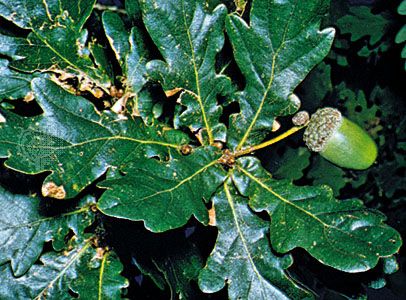
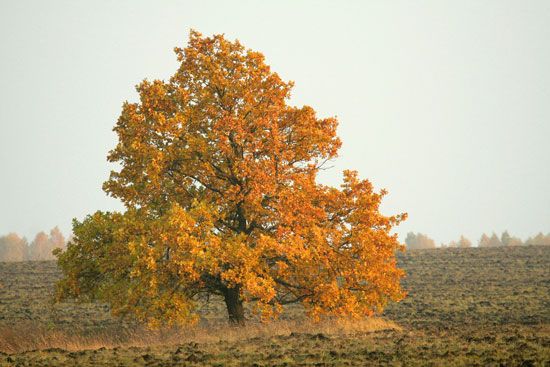
The English oak (Quercus robur) is a prominent tree native to Eurasia that is also cultivated in regions such as North America and Australia. Belonging to the genus Quercus, it is characterized by a short, stout trunk and wide-spreading branches, reaching heights of up to 25 meters (82 feet).1
The tree features dark green, short-stalked leaves with rounded lobes and produces acorns as its fruit. Beyond its role as an ornamental plant, the English oak is highly valued for its strong, durable heartwood1. Historically, this timber was essential for shipbuilding and carving in Great Britain, and it remains a popular choice for structural work and fine cabinetwork today.12
How do acorns help the English oak reproduce?
The English oak (Quercus robur) reproduces through the production of acorns, which are the tree’s fruit and contain the seeds necessary for the next generation.31
These acorns serve as a vital mechanism for seed dispersal, the process by which seeds are moved away from the parent plant to increase their chances of survival. By spreading seeds to new locations, the tree reduces competition between the parent and its offspring for essential resources like sunlight and nutrients.4
While the provided search results do not detail the specific biological mechanics of how acorns germinate, they note that acorns are often dispersed via zoochory, or animal-assisted movement, as they serve as a food source for various wildlife. This movement facilitates the colonization of new areas and helps the species reestablish itself following environmental disturbances.34
What animals rely on English oak trees for food and shelter?
English oak trees and their acorns provide essential resources for a variety of animals. Acorns serve as a significant food source for small game animals and are also used to fatten swine and poultry. Additionally, the wood duck is known to consume acorns, which has historically led to it being referred to as an “acorn duck”.135
While the provided search results focus primarily on the nutritional role of acorns for wildlife and livestock, they do not explicitly detail the specific animals that utilize the tree for shelter. However, the broad structure of the English oak, with its wide-spreading branches, naturally provides habitat and cover for various species.6
Why was English oak wood so important for historical shipbuilding?
English oak (Quercus robur) was historically prized for shipbuilding in Great Britain primarily due to the exceptional durability and strength of its heavy heartwood.7
The wood’s structural integrity made it an ideal material for constructing robust ship hulls capable of withstanding significant impact. In similar historical contexts, such as the construction of the USS Constitution, the toughness of oak was so renowned that it could deflect cannonballs. Furthermore, the natural growth patterns of the tree provided unique advantages; the long, arching branches of the oak tree were specifically utilized as structural braces to connect a ship’s hull to its deck floors, providing essential support before the development of techniques to steam or bend timber into shape.1
Beyond its use in naval architecture, the wood’s density and resistance to decay ensured that vessels remained seaworthy for extended periods, cementing its status as a vital resource for maritime power.17
Sources
- English oak — Encyclopædia Britannica
- English oak — Merriam-Webster
- acorn — Encyclopædia Britannica
- seed dispersal — Encyclopædia Britannica
- oak — Encyclopædia Britannica
- acorn duck — Merriam-Webster
- 11 Questions About Useful Plants Answered - Which tree was used in the early American shipbuilding industry? — Encyclopædia Britannica
Published on · 2 min read