Elaeagnaceae
Plants in the Elaeagnaceae family, which includes the oleaster, buffalo berry, and sea buckthorn, reproduce through flowers that are radially symmetrical.…
How do Elaeagnaceae plants reproduce and disperse their seeds?
Plants in the Elaeagnaceae family, which includes the oleaster, buffalo berry, and sea buckthorn, reproduce through flowers that are radially symmetrical. These flowers are either bisexual or separately male and female, and they lack petals, possessing instead a tubular structure of four sepals. The female reproductive structure, or pistil, consists of a single carpel containing one ovule.1
Regarding seed dispersal, the family is characterized by the production of fleshy fruits. While specific dispersal mechanisms for every species in this family are not detailed in the provided search results, fleshy fruits are generally adapted for dispersal by animals, particularly birds, which consume the fruit and subsequently disperse the seeds.1234
Which genera are included in the Elaeagnaceae family, and how many species are there?
The Elaeagnaceae family, also known as the oleaster family, comprises 45–60 species distributed across three distinct genera.
The three genera included in this family are:
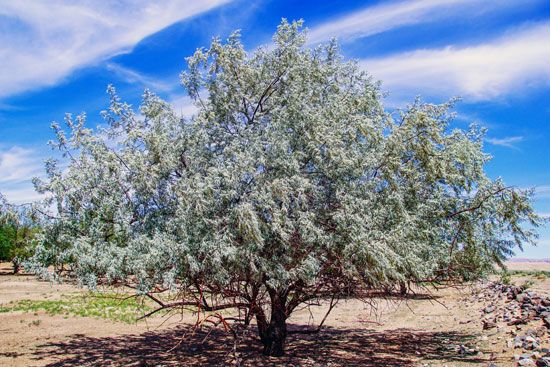
- Elaeagnus: This is the largest genus, containing 20–45 species, including the oleaster (Elaeagnus angustifolia).1
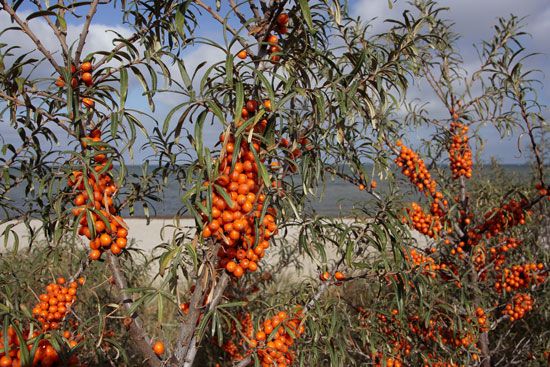
- Hippophae: This genus consists of 7 species, most notably the sea buckthorn (Hippophae rhamnoides).17
- Shepherdia: This genus includes 3 species, such as the buffalo berry (Shepherdia argentea).1
These plants are primarily found in the Northern Hemisphere, often inhabiting coastal regions and steppe environments.1
What economic or ecological importance do Elaeagnaceae plants have?
Plants in the Elaeagnaceae family provide significant ecological and economic benefits:
Ecological Importance
A primary ecological feature of this family is the presence of root nodules containing nitrogen-fixing bacteria. This symbiotic relationship allows these plants to thrive in nutrient-poor soils, such as those found in steppe and coastal regions, by enriching the soil with nitrogen.1
Economic and Ornamental Uses
Many species are valued for their utility and aesthetic appeal:
- Ornamental Cultivation: Several shrubs are grown for their attractive appearance, such as the oleaster (Elaeagnus angustifolia), which is prized as an ornamental tree.1
- Edible Fruits: Certain species are cultivated for their fruit. The buffalo berry (Shepherdia argentea) produces edible berries and is frequently used as a hedge plant. Similarly, sea buckthorn (Hippophae rhamnoides) is grown for its edible berries and willowlike foliage.1
- Industrial Applications: Sea buckthorn is also known to yield a yellow dye.8
Where are Elaeagnaceae plants typically found, and what types of habitats do they prefer?
Elaeagnaceae, commonly known as the oleaster family, is primarily centered in the north temperate region and warm tropics, with some extensions into Malesia and Australia.1011
These plants are typically found in the Northern Hemisphere, where they are composed largely of shrubs and small trees. Regarding their preferred habitats, they are especially common in steppe and coastal regions. Many members of this family are well-adapted to these environments, often featuring a characteristic silvery or rusty-colored sheen produced by tiny scales that cover the plant.11
Sources
- Elaeagnaceae — Encyclopædia Britannica
- seed - Dispersal by birds — Encyclopædia Britannica
- seed dispersal - Birds — Encyclopædia Britannica
- Myrtales - Natural history — Encyclopædia Britannica
- seed - Self-dispersal — Encyclopædia Britannica
- seed dispersal - Self-dispersal — Encyclopædia Britannica
- Hippophaë — Merriam-Webster
- sea buckthorn — Merriam-Webster
- Elaeagnaceae — Merriam-Webster
- Caryophyllales - Distribution and abundance — Encyclopædia Britannica
- Rosales - Distribution and abundance — Encyclopædia Britannica
Published on · 2 min read