English Walnut
The English walnut (Juglans regia), also known as the Persian walnut, is a valuable tree in the family Juglandaceae, native to Iran. It is widely cultivated…
What is English walnut?
The English walnut (Juglans regia), also known as the Persian walnut, is a valuable tree in the family Juglandaceae, native to Iran. It is widely cultivated for its edible seeds, which are sold commercially as walnuts, and for its dark, fine-grained wood used in furniture, paneling, and gunstocks.123
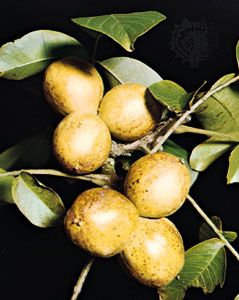
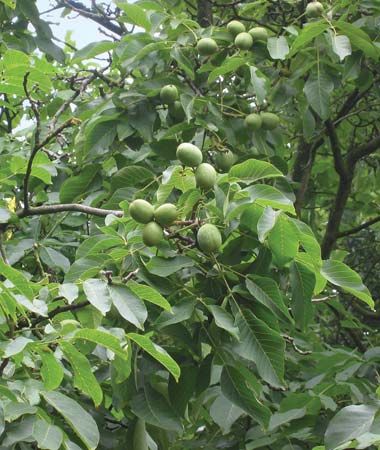
Botanically, the fruit of the English walnut is a drupe rather than a true nut1. The edible seed is protected by a woody pit enclosed within a thick husk. The tree features long compound leaves with smooth-margined, round-tipped leaflets, and it produces male and female flowers in separate catkins on the same plant. To produce high-quality nuts, these trees require fertile, well-drained soils with a medium-heavy texture.21
How do English walnuts differ from black walnuts?
English walnuts (Juglans regia) and black walnuts (Juglans nigra) are both valuable timber trees in the family Juglandaceae, but they exhibit distinct botanical and geographical differences.13
Key Differences
- Origin: The English walnut is native to Iran, whereas the black walnut is native to eastern North America.13
- Leaf Characteristics: English walnut leaves feature round-tipped leaflets with smooth margins, and the terminal leaflet is the largest. In contrast, native North American walnuts, such as the black walnut, have leaflets that are largest toward the center of the leaf and possess toothed margins.3
- Cultivation: The English walnut is widely cultivated for commercial nut production, requiring fertile, well-drained soils of medium-heavy texture to produce high-quality seeds.13
While both species produce dark, fine-grained wood highly prized for furniture, paneling, and gunstocks, they are primarily distinguished by these physical traits and their native ranges.13
Why is the fruit of a walnut tree considered a drupe rather than a true nut?
The fruit of a walnut tree is classified as a drupe rather than a true nut because of its specific botanical structure.
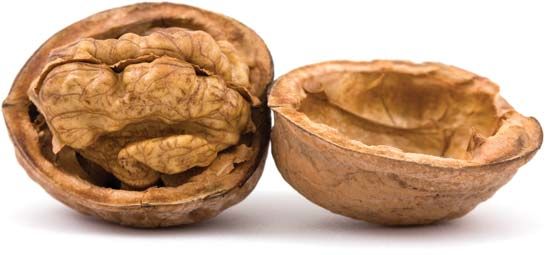
In botany, a true nut is a dry, hard fruit that does not split open at maturity and develops from more than one carpel, possessing a tough, woody wall. Conversely, a drupe is a simple fleshy fruit derived from a single ovary. It consists of three distinct layers: a thin outer skin, a middle fleshy or fibrous layer, and a hard, stony inner layer known as the pit or putamen, which protects the seedamen, which protects the seed.4
While the hard, woody shell of a walnut is often colloquially referred to as a “nut,” it is botanically the pit of a drupe. The outer portion of the walnut fruit is a thick, often fibrous husk that surrounds this stony pit. Because the walnut develops with these fleshy and stony layers characteristic of drupes, it is distinct from the dry, indehiscent structure of a true nut.564
What are the main uses for walnut wood in manufacturing?
Walnut wood, particularly from the black walnut and English walnut species, is highly valued in manufacturing for its dark, fine-grained texture. Its primary applications include:613
- Furniture: Due to its aesthetic appeal and durability, it is a preferred material for high-quality household furniture.613
- Interior Design: The wood is commonly used for decorative paneling in homes and commercial buildings.613
- Specialized Components: Its strength and stability make it a traditional choice for the manufacturing of gunstocks.613
Beyond the timber itself, the shells of the walnut fruit are also utilized in various industrial processes. Finely ground black-walnut-shell flour is used as a glue extender, a component in plastic molding powder, and as an abrasive material for cleaning foundry molds, polishing metal parts, and “sand-blasting” jet engines. Additionally, it is used to prevent drill overheating and can be applied to tires to improve traction.7
Sources
- English walnut — Encyclopædia Britannica
- English walnut — Merriam-Webster
- Walnut — Encyclopædia Britannica
- drupe — Encyclopædia Britannica
- nut — Encyclopædia Britannica
- black walnut — Encyclopædia Britannica
- Fruit farming - Waste materials, other uses — Encyclopædia Britannica
Published on · 3 min read