Bok Choy
Bok choy (Brassica rapa variety chinensis) is a leafy vegetable belonging to the mustard family (Brassicaceae). It is closely related to other vegetables…
What is bok choy?
Bok choy (Brassica rapa variety chinensis) is a leafy vegetable belonging to the mustard family (Brassicaceae). It is closely related to other vegetables like mustard greens, Chinese cabbage, broccoli, Brussels sprouts, and kale.1
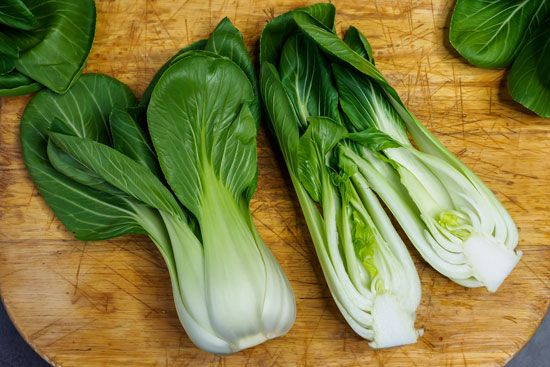
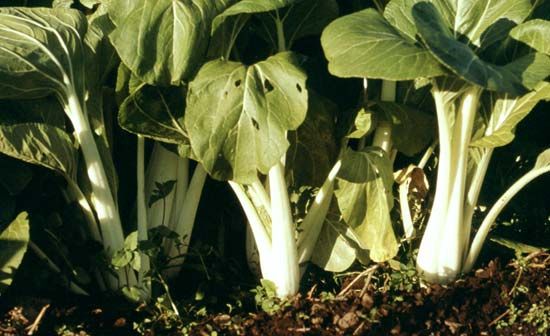
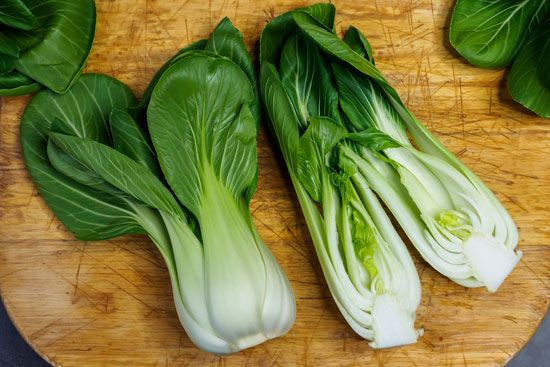
The name is derived from the Cantonese word for “white,” reflecting the vegetable’s characteristic appearance: smooth, juicy white stems contrasted with green, ruffled leaves. Because of its mild, slightly sweet flavor and ability to absorb other ingredients, it is a popular addition to soups and stir-fried dishes. It can be prepared in various ways, including boiling, steaming, or using it as a filling for dumplings. Depending on the variety, the plant can range in size from approximately 1 to 8 inches.12
What other vegetables belong to the Brassicaceae family?
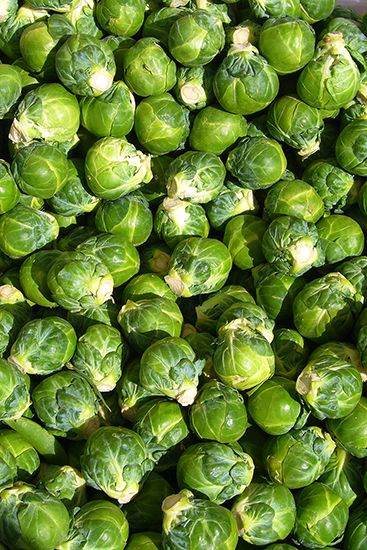
The Brassicaceae family, also known as the mustard family, includes a wide variety of economically important food crops. Many of these are members of the genus Brassica, which have been extensively domesticated for human consumption.34
Common vegetables in this family include:
- Arugula
- Bok choy
- Broccoli
- Brown mustard
- Brussels sprouts
- Cabbage
- Cauliflower
- Collard
- Horseradish
- Kale
- Kohlrabi
- Maca
- Napa cabbage
- Peppergrass
- Radish
- Rape
- Rutabaga
- Turnip
- Wasabi
- Watercress
- White mustard3
These plants are often referred to as “crucifers” or “cruciferous” vegetables because their flowers feature four petals arranged in the form of a cross. Their distinct pungent flavor is caused by sulfur-containing compounds known as glucosinolates.45
How does the flavor of bok choy differ from Napa cabbage?
Bok choy and Napa cabbage are both members of the Brassicaceae family, but they differ in their culinary characteristics.
Bok choy is noted for its subtle flavor, which is described as mildly sweet with occasional faint bitter undertones. Because of its mild profile, it is highly valued for its ability to absorb the flavors of other ingredients in soups and stir-fries. Its texture is defined by a contrast between its juicy, crunchy white stems and its thin, delicate leaves.1
In contrast, Napa cabbage—often used as a salad vegetable or the primary ingredient in kimchi—forms a tight, cylindrical head of crinkled leaves. While the provided information highlights that baby bok choy is known for having a particularly mild flavor, it does not explicitly detail the specific flavor profile of mature Napa cabbage beyond its common culinary applications in salads and fermented dishes.78
What are some traditional dishes that feature bok choy?
Bok choy is a versatile vegetable in Asian cuisine, prized for its ability to absorb the flavors of the ingredients it is cooked with. Because of its mild, slightly sweet profile and contrasting textures—featuring crunchy, juicy white stems and delicate, wilting leaves—it is a staple in several traditional cooking methods.1
Common ways to prepare bok choy include:
- Stir-fries: Its ability to soak up sauces makes it a favorite addition to various stir-fried dishes.1
- Soups: It is frequently added to soups, where it softens and integrates with the broth and other seasonings.1
- Dumplings: The leaves and stems are often chopped and used as a flavorful filling for traditional dumplings.1
- Steaming and Boiling: Due to its attractive appearance, smaller bok choy is often cooked whole, while larger varieties are halved or quartered lengthwise and then steamed or boiled.1
Sources
- bok choy — Encyclopædia Britannica
- bok choy — Merriam-Webster
- list of economically important members of the family Brassicaceae — Encyclopædia Britannica
- brassica — Encyclopædia Britannica
- Brassicales - Brassicaceae , Capparaceae, and Cleomaceae — Encyclopædia Britannica
- Brassicaceae — Encyclopædia Britannica
- Chinese cabbage — Encyclopædia Britannica
- napa cabbage — Encyclopædia Britannica
Published on · 3 min read