Oregon Grape
Oregon grape refers to several evergreen shrubs belonging to the barberry family (Berberidaceae). These plants are primarily grown for their ornamental…
What is Oregon grape?
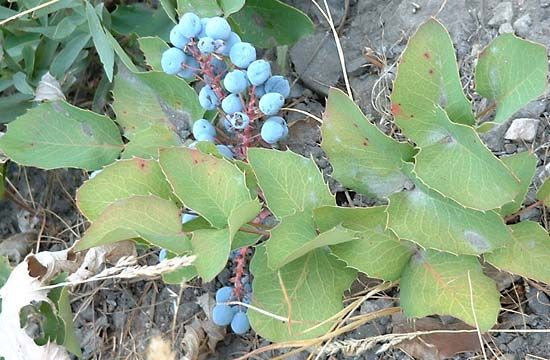
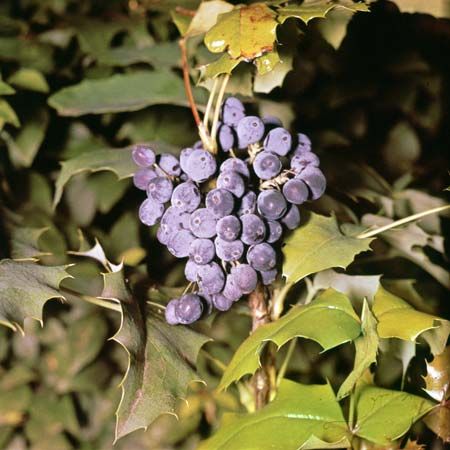
Oregon grape refers to several evergreen shrubs belonging to the barberry family (Berberidaceae). These plants are primarily grown for their ornamental appeal, characterized by glossy, leathery, spiny-edged leaves that resemble holly.1
The most common species, Mahonia aquifolium (also classified as Berberis aquifolium), is native to the Pacific coast of North America. It typically grows to 90 cm (3 feet) or more in height and produces fragrant yellow flowers in terminal clusters. These blooms are followed by small, edible blue or bluish-black berries that are often used to make jelly.12
In addition to the taller varieties, there are lower-growing species such as M. repens (creeping barberry), M. nervosa (water holly), and M. pumila. When protected from harsh winter winds, these smaller varieties serve as durable ground cover.1
Why is it called a grape if it is part of the barberry family?
The name “Oregon grape” is a common name rather than a botanical classification, and it is not a true grape. It is called a “grape” primarily because of its appearance: the plant produces clusters of small, round, bluish-black berries that visually resemble grapes.
While these berries are edible and can be used to make jelly, they are botanically distinct from the Vitis genus (true grapes) and belong to the barberry family (Berberidaceae). The “Oregon” portion of the name refers to its native range along the Pacific coast of North America, where it was first documented in the mid-19th century. Common names for plants often reflect superficial physical similarities to more familiar fruits or foliage, even when the plants are taxonomically unrelated.12
What other plants are in the Berberidaceae family?
The Berberidaceae family, also known as the barberry family, comprises 14 genera and approximately 701 species of perennial herbs and shrubs. Beyond the Oregon grape, several other notable plants belong to this family:
- Barberry (Berberis): The largest genus in the family, containing about 500 species of thorny shrubs, such as the Japanese barberry and the American barberry.34
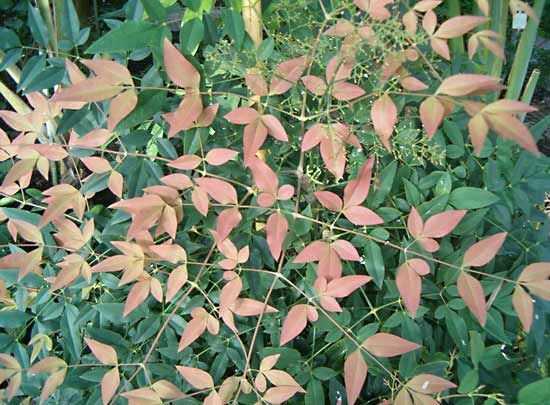
- Heavenly bamboo (Nandina domestica): Often cultivated as an indoor pot plant.3
- Mayapple (Podophyllum peltatum): A well-known woodland wildflower.3
- Bishop’s hat (Epimedium): A long-lived perennial genus frequently used as ground cover.3
- Twin leaf (Jeffersonia diphylla): A ground cover named in honor of U.S. President Thomas Jefferson.3
These plants are found in most temperate regions of the world and exhibit a wide variety of floral forms, often featuring spiny-margined leaves or thorns.3
How do animals interact with Oregon grape in the wild?
The provided search results do not contain specific information regarding how animals interact with the Oregon grape in the wild, such as which species consume its berries or pollinate its flowers. The available documentation focuses on the plant’s physical characteristics, its classification within the barberry family, and general botanical pollination strategies that do not explicitly mention the Mahonia genus.
Sources
- Oregon grape — Encyclopædia Britannica
- Oregon grape — Merriam-Webster
- Berberidaceae — Encyclopædia Britannica
- barberry — Encyclopædia Britannica
- Berberidaceae — Merriam-Webster
- Botanical Sex: 9 Alluring Adaptations — Encyclopædia Britannica
Published on · 2 min read