Eskimo Dog
It is important to clarify that the term "Eskimo dog" is often used to describe two distinct types of animals, which can lead to confusion. One is a powerful…
How does the Eskimo dog differ from other Arctic dog breeds like Huskies or Malamutes?
It is important to clarify that the term “Eskimo dog” is often used to describe two distinct types of animals, which can lead to confusion. One is a powerful Arctic sled dog, while the other, the American Eskimo dog, is a separate breed descended from the German spitz and is primarily a companion animal.12
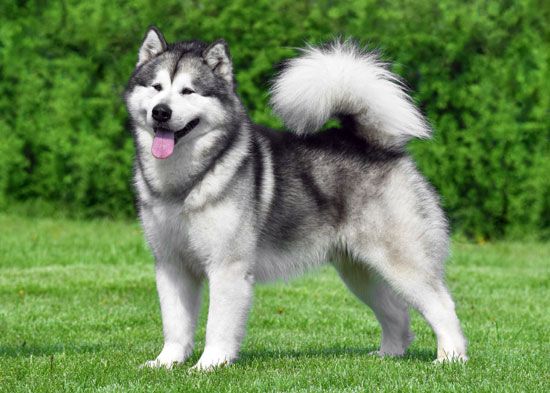
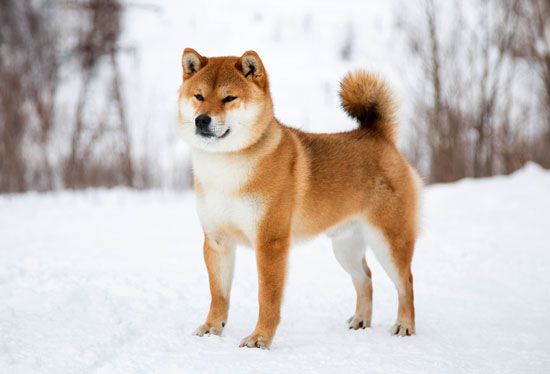
When referring to the working sled dog, the Eskimo dog shares many physical characteristics with the Alaskan Malamute and the Siberian husky. All three are large, powerful breeds with thick, waterproof double coats, prick ears, and tails that curl over their backs, specifically adapted for endurance in cold climates.13
The primary differences lie in their classification and history: the Eskimo sled dog is believed by some to be a very ancient breed or potentially descended from wolves, whereas the American Eskimo dog is a smaller, compact breed recognized by the American Kennel Club in the Non-Sporting group.1
How were Eskimo dogs traditionally used by Arctic peoples?
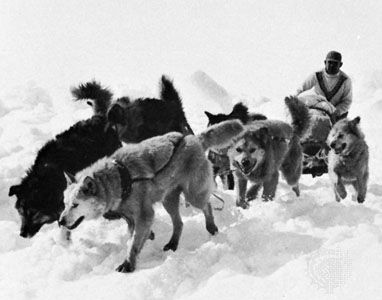
Traditionally, the Eskimo dog served as a vital multipurpose animal for Arctic peoples, functioning primarily as a sled dog and a hunting companion.1
- Transportation: Dogs were essential for mobility across snow and ice. They were used to pull sleds, which served as a primary method of transportation for people and supplies. Historically, these teams were often organized in a “fan hitch,” where each dog was attached to the sled by its own individual lead, a configuration well-suited for open country.345
- Hunting: Beyond transportation, these dogs were utilized in hunting activities, assisting in the pursuit of game.1
- Evolution of Use: While dog teams were integral to Arctic life, their use for pulling toboggans in some Subarctic regions became more prominent during the fur trade era. As diets were supplemented with European staples, it became more feasible to maintain the large quantities of meat required to feed working dog teams. During this period, they became increasingly important for transporting furs to market.6
Today, while they remain a symbol of Arctic heritage, their traditional working roles have largely been supplanted by modern technology like aircraft and snowmobiles.4
What is the origin and history of the Eskimo dog breed?
The history of the Eskimo dog is deeply rooted in the Arctic, though the term is often applied to two distinct types of animals. It is important to distinguish the working sled dog from the American Eskimo dog, as they have entirely different origins.1
The Arctic Sled Dog
The traditional Eskimo sled dog is a powerful, big-boned breed found near the Arctic Circle. Its origins are a subject of debate among experts: some believe it represents a pure breed dating back approximately 10,000 years, while others suggest it is descended from wolves. This breed is recognized by the Canadian Kennel Club as a working dog, though it is not currently recognized by the American Kennel Club.1
The American Eskimo Dog
In contrast, the American Eskimo dog is a separate breed descended from the German spitz. It gained popularity in the early 20th century as a circus performer and was officially recognized by the AKC in 1994 within the Non-Sporting group.1
Are Eskimo dogs still used for their traditional purposes today, or are they primarily kept as pets?
While Eskimo dogs were historically essential for transportation, freight hauling, and hunting in the Arctic, their traditional working roles have largely been supplanted by modern technology, specifically aircraft and snowmobiles.1
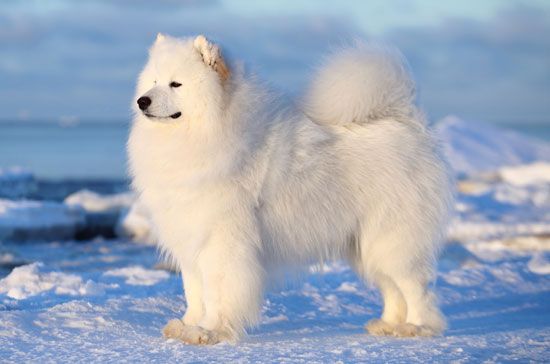
Today, these dogs are rarely used for their original subsistence purposes. Instead, most sled dog teams are kept for recreation or dogsled racing. While purebreds like the Eskimo dog, Siberian husky, Samoyed, and Alaskan malamute are still utilized in the sport, many modern racing teams favor the Alaskan husky—a mixed breed specifically developed for performance, speed, and endurance. Consequently, while the heritage of the working sled dog remains a significant cultural symbol, the daily reliance on these animals for survival and labor has transitioned into a focus on athletic competition and companionship.14
Sources
- Eskimo dog — Encyclopædia Britannica
- Eskimo dog — Merriam-Webster
- sled dog — Encyclopædia Britannica
- dogsled racing — Encyclopædia Britannica
- Did you know? — Merriam-Webster
- American Subarctic peoples - Production and technology — Encyclopædia Britannica
- Inugsuk culture — Encyclopædia Britannica
Published on · 3 min read