Samoyed
The premise that the Samoyed has adapted to warmer climates is inaccurate. In fact, the breed is specifically conditioned for cold weather due to its origins…
How has the Samoyed breed adapted to living in warmer climates?
The premise that the Samoyed has adapted to warmer climates is inaccurate. In fact, the breed is specifically conditioned for cold weather due to its origins in Siberia as a sled dog and herding dog.1
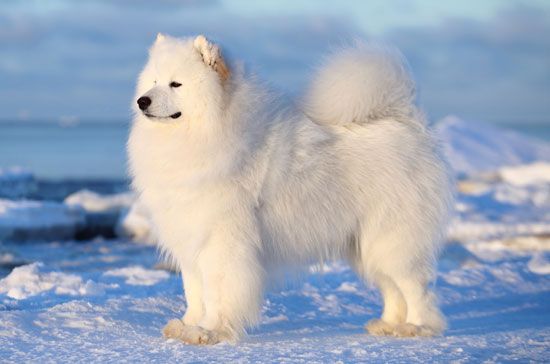
The Samoyed possesses a thick undercoat that makes the breed highly susceptible to overheating in warm climates. Because they are not biologically adapted to heat, owners must be diligent about grooming; the undercoat requires brushing down to the skin at least two to three times per week to prevent severe matting. If the coat becomes seriously matted, it may require professional shaving, which can further compromise the dog’s ability to regulate its temperature and protect its skin.1
What are some unique behavioral traits of Samoyeds compared to other spitz-type dogs?
While the Samoyed shares many general characteristics with other spitz breeds—such as independence, a mischievous nature, and a tendency to be difficult to train—it possesses several unique behavioral and physical traits:
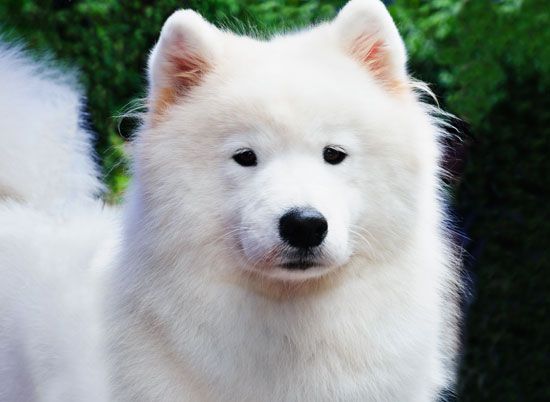
- The “Sammy Smile”: Unlike other spitz breeds, the Samoyed is famous for its characteristic “smile.” This feature consists of black lips that curve upward at the corners. Beyond its appearance, this trait serves a functional purpose: it prevents the dog from drooling, which was essential in the subzero temperatures of its native Siberia, where drool would otherwise freeze into icicles on the dog’s chest fur.
- Social Temperament: While some spitz breeds can be suspicious of strangers, the Samoyed is typically noted for being exceptionally friendly toward new people, other dogs, and other pets. It is highly affectionate toward its family, making it an excellent companion.
- Watchdog Capabilities: The Samoyed is considered an excellent watchdog, though it is a poor protection dog. Like other spitzes, it may dig or bark excessively if left alone for too long.
- Cleanliness: Often referred to as the “Teflon dog,” the Samoyed is among the cleanest of all breeds, as dirt and mud do not easily adhere to its coat.
What is the origin and history of the Samoyed breed?
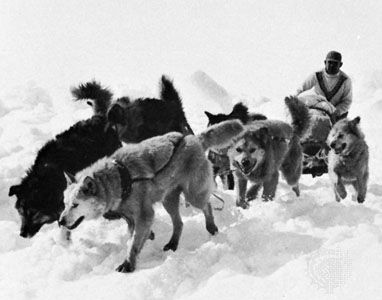
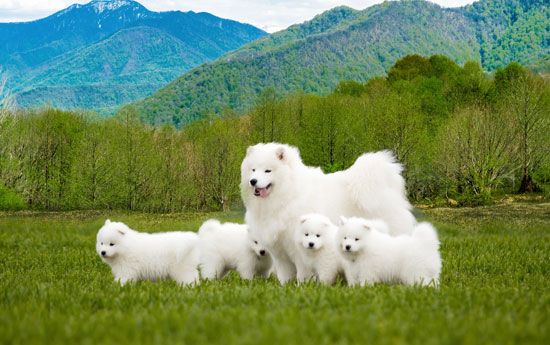
The Samoyed is an ancient breed of working dog that originated in Siberia. It was developed by the Nenets people—historically referred to as the Samoyed or Yurak people—who relied on these dogs as sled dogs, companions, and herding dogs for their reindeer.1
The breed is considered one of the most ancient, maintaining a close genetic similarity to wolves and remaining largely unaltered by selective breeding compared to many other modern breeds. Its name is derived from the Samoyed people, a group inhabiting the far north of European Russia and northwestern Siberia.13
Formally recognized by the American Kennel Club in 1906, the Samoyed is well-adapted to Arctic environments, possessing a thick coat and a unique “smile” that prevents drool from freezing on its face in subzero temperatures.14
How does the Samoyed’s temperament make it suitable as a family pet?
The Samoyed is well-suited as a family pet due to its affectionate and social nature. It is known for being a playful and adventurous companion for people of all ages, often forming strong bonds with its family members.1
Key aspects of its temperament that influence its role in a household include:
- Social Disposition: The breed is typically friendly toward new people, other dogs, and other pets, making it a generally welcoming presence in a home.1
- Adaptable Energy: While the Samoyed possesses an average energy level and enjoys outings, it is also content to rest calmly at home between adventures.1
- Watchdog Potential: It serves as an excellent watchdog, though it is not a protection dog.1
- Training Needs: Like other spitz breeds, the Samoyed can be independent, easily distracted, and occasionally mischievous or destructive if bored. However, it responds well to reward-based training and can learn quickly.1
Because these dogs are social, they may bark or dig excessively if left alone for long periods, so they thrive best when integrated into family activities.1
Sources
- Samoyed — Encyclopædia Britannica
- spitz — Encyclopædia Britannica
- Samoyed — Merriam-Webster
- sled dog — Encyclopædia Britannica
Published on · 3 min read